
Here's a German view of the situation in Afghanistan. It's not very cheery.
 Students in HIST 1505 already know this, but I thought others would be interested.
 I've just discovered a site called The War in Context, a collection of up-to-date news and analysis from a variety of sources.
 I have a long-standing interest in the history of democracy as a world phenomenon. What I've written on this subject has been done in collaboration with Phil Paine.
The fact that Prime Minister Thaksin just happened to be the richest man in the country makes it plain that his regime was "democratic" in name only. That is not what happens in genuine democracies. It is clearly no real loss to the world democratic movement that he has been ousted, even though the precedent of military action is extremely damaging. But Thailand is still left in the position of having no real democratic infrastructure.What is a democratic infrastructure? It is local democratic institutions well-integrated with higher levels of government:
In a functioning democracy, a head of state gets into their role by working their way through layers of public service, until they have proven themself responsible to larger and larger electorates. The most successful national democracies were built on foundations of democratic process on the local level.
The existence of such shell democracies or mock democracies is more of a hindrance to evolving functioning democracies than outright dictatorship. With a crude dictatorship, the problem and the alternative are clear. With shell democracies, ordinary people are left with the impression that this kind of "big man" autocracy is what the word "democracy" is supposed to mean, and so the idea of democracy itself falls into disrepute.
 Thursday October 12 (Study Week here at NU) I will be in Toronto speaking to the Friends of the Medieval Studies Society of the Royal Ontario Museum.
 I must have been pretty busy this week to miss commenting on "Lucy's baby," the most important find relevant to human origins in quite a few years. I always talk about this stuff in connection with HIST 2055, Ancient Civilizations. If this announcement had been made this time last year, it would have been quite a treat to bring it into the classroom.
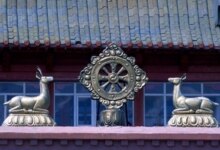 In both World History and Islamic Civilization we've discussed nomads and their environments. Here's a story from Radio Free Europe/Radio Liberty -- one of the best news services around -- about the collapse of populations of saiga antelopes in Central Asia.
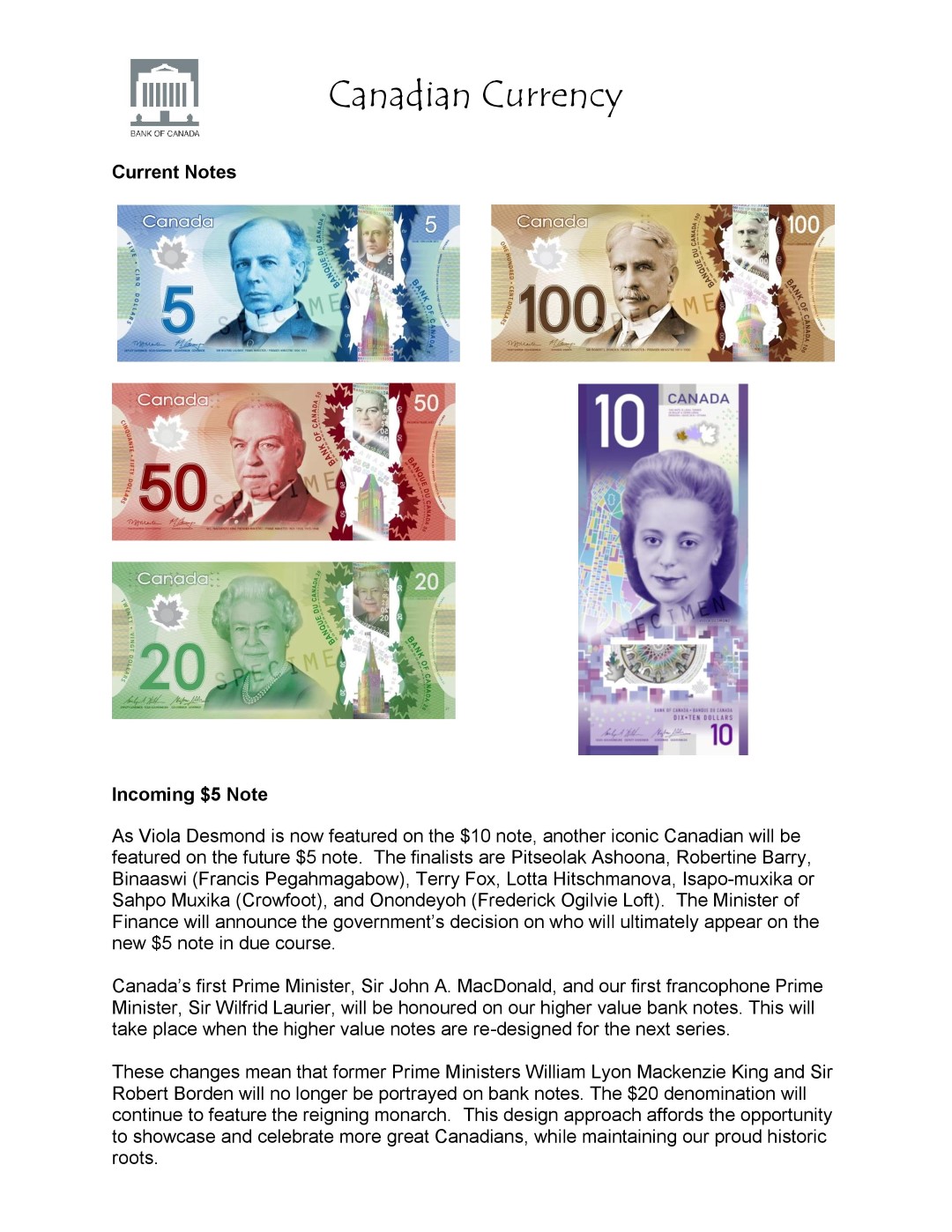 There are two kinds of students: those who know where the money is, and those who don't.
 Miland Brown of the World History Blog is hosting the latest Carnival of Bad History. Check it out!
 In a comment to my post entitled What You Can Look Like at 41, Phil Paine seconds my remarks on the historical significance of public health measures and says:
People like Dr. John Snow, who discovered the link between water delivery systems and cholera, and who fought heroicly against established powers to institute the necessary legal and technological solutions, will someday be regarded as the true giants of history.

The 13th century records of the English Hotot family preserve a story of one of their ancestors, Dionisia, who “when a maiden, clad in a tunic, with a hat upon her head and armed only with a hollow shield, about the seventeenth year of King Stephen (1151) …attacked a certain knight, with one blow of her spear bringing him to the ground, and carried off his horse.” Edmund King, ed., A Northamptonshire Miscellany (Northampton, 1983), 8.This from my Deeds of Arms, p. 3 n. 5.
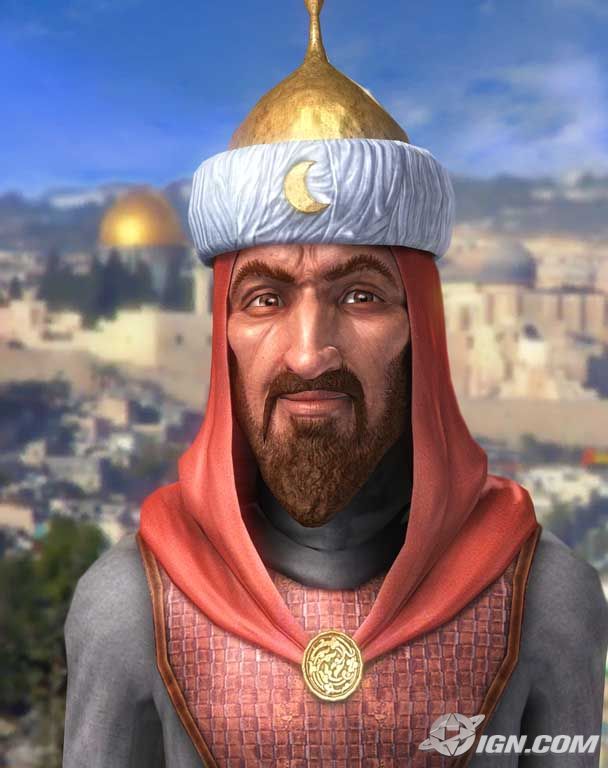 Saladin, the Kurdish warlord who recovered Jerusalem for Islam in 1187 and provoked the Third Crusade (the one in all the movies), is really famous in our time as a great and admirable Muslim leader. And he was famous in medieval times, too. In the chivalry seminar, we saw him used by an anonymous French writer -- in the Ordene de Chevalerie -- as a demonstration that even a great and admirable warrior can't be a real knight unless he was a Christian. (Lull believed that only good Christians qualified as real knights.)
I think it’s important to realize that Saladin’s name has not continuously carried resonance for Muslims ever since his life and career. Saladin appears to have been largely forgotten within a few generations of his death. The main reason for this seems to have been the career of the Mamluk Sultan Baibars, who successfully defeated the Mongol threat in 1260 at the battle of Ain Jalut. As a consequence of this, he became a major Muslim folk-hero and remained such down into the 19th century, overshadowing Saladin as a great Muslim warrior.Andrew wants it pointed out that he's not an expert on Medieval Islam, but that since he teaches the Crusades every year he's done a bit of reading. He refers the curious to the 2nd edition of Jonathan Riley-Smith's Crusades: A Short History as a starting point.
I suspect that Saladin’s eclipse was also do to his failure to create a lasting Ayyubid state. When he died, his empire was virtually bankrupt and his sons and nephew and brother immediately fell to fighting for control of the state, rapidly dismembering it.
I also suspect that it might also be evidence that Saladin was not universally hailed even in his life. His ‘official’ biographer Baha-ad-Din has to spend a good deal of effort explaining why Saladin failed to perform basic Muslim duties such as the Hajj and fasting during Ramadan. Saladin put a great deal of effort into propagandizing the Muslim world to accept him as a great defender of Islam, but it must have been obvious to many Muslims that he was trying to justify his aggression against other Muslim states.
As a result of all this, Saladin was essentially forgotten for most of the period from c.1300-c.1850, at least in the Middle East. He was not a culturally significant figure. The recovery of the memory of his character seems to have a great deal to do with Muslims who traveled to western Europe for educational purposes in the later 19th century, and there discovered the medieval European version of Saladin, a great and noble warrior with sincere religious convictions. (But see below!) When they returned home, they brought the memory of Saladin as well as the memory of the Crusades back with them. The earliest Arabic history of the Crusades was only published in 1898 (if I remember the date correctly). Soon after that, ‘Saladin’ was adopted as the pen name of a Syrian writer opposed to European imperialism in the Middle East, and Saladin was transformed into an anti-imperialist warrior who rose up to defend Muslims out of sincere religious conviction (instead of the political ambitions that seem to have truly motivated him). The modern Muslim world has enshrined him as a (if not the) prototype of the mujaheed, the Jihad warrior. Political leaders such as Hafez al-Asad and Saddam Hussein sought to maintain his memory for political purposes, and Hussein actively depicted himself as a second Saladin (somewhat ironically, given that he actively persecuted Saladin’s people, the Kurds). Similarly, Muslim terrorists have found Saladin an extremely useful figure for their own purposes.
My point in all of this is that Saladin is not an example of the Muslim world having extremely long memories. Rather, the figure of Saladin, essentially discarded by the Muslim world, was revived in the 20th century for political purposes and altered to suit the needs of a modern struggle. A rough modern parallel might be the way that certain of the American Founding Fathers have been co-opted by modern American fundamentalists in an effort to prove that America was founded as a Christian nation. This is not an example of the memory of the Founding Fathers as Christian paragons surviving into the 21st century, but rather an example of how modern Americans have sought to recast convinced Deists as passionate Christians for 21st century political purposes. Another example is the Milosevic government’s very successful campaign to revive the memory of the 14th century battle of Kosovo as part of a campaign against Kosovar Albanians.

There is a case of a clearly military order of knighthood for women. It is the order of the Hatchet (orden de la Hacha) in Catalonia. It was founded in 1149 by Raymond Berenger, count of Barcelona, to honor the women who fought for the defense of the town of Tortosa against a Moor attack. The dames admitted to the order received many privileges, including exemption from all taxes, and took precedence over men in public assemblies. I presume the order died out with the original members.
 I've read the speech Pope Benedict XVI made at the University of Regensburg (in a provisional translation posted by the Vatican at its own site) and I'm not quite sure what he was saying about Islam or why he referred to Islam at all.
Show me just what Mohammed brought that was new, and there you will find things only evil and inhuman, such as his command to spread by the sword the faith he preached.
 Many of us university professors rather hope that some of our best students will follow in our footsteps, go to graduate school, and become professors themselves -- and tell stories in their senior seminars about Old What's Iz Face, the beloved and eccentric character who encouraged them on their way.
 There I was, searching in what might be a vain quest (if you are in HIST 2805, see below). A voice called out to me from a cave. There he was, the wise hermit of Arthurian lore, standing before his acolytes, expounding on chivalry. He turned to me and made his demand -- why was it that Arthur, regretting the breaking up of his Round Table as the knights prepared to quest for the Holy Grail, commanded them to perform one last great joust?
 From today's Washington Post, a map of the Federally Administered Tribal Areas, which as the Post notes, are only nominally under the control of the Pakistani government. It may be that Osama bin Ladin is hiding here. It's certainly a region where local politics reigns supreme, with the men with the guns indifferent to who sits in palaces in Kabul, Islamabad, Washington, or Moscow.
.jpg) In the later Middle Ages, prominent people were buried in churches and had monuments erected to them. In the twelfth and thirteenth centuries, such monuments were restricted to royalty and bishops, and were three-dimensional stone effigies. In the fourteenth century and later, engraved brass effigies, usually set in the floor of the church, made such monuments more widely available. You only had to be rich, not filthy rich.
In the later Middle Ages, prominent people were buried in churches and had monuments erected to them. In the twelfth and thirteenth centuries, such monuments were restricted to royalty and bishops, and were three-dimensional stone effigies. In the fourteenth century and later, engraved brass effigies, usually set in the floor of the church, made such monuments more widely available. You only had to be rich, not filthy rich. (Click for a bigger view of this neat map.)
 Today is the first day of classes for Arts and Science students, and an appropriate time to say hello to students -- or anyone else at Nipissing University -- who may be discovering this blog for the first time.
 I have taught ancient history for long enough that I am fascinated by the phenomenon of the Marsh Arabs of lower Iraq.
  This Saturday, in conjunction with the Severn Bridge Fall Fair near Washago, Ontario, International Jousting Association-Canada will be holding the IJA-Canada 2006 National Championships and Falconry Hunt. Not too many details, unfortunately, and the Fair doesn't seem to have a website of its own.
 Last weekend some friends of mine in the Dark Ages Re-creation Company (DARC) did something rather spectacular -- they smelted iron from ore using techniques common to northern Europe before the 12th century. The fuel was commercial charcoal pounded small by hand; the ore was rock ore from an abandoned American mine of the 18th century; the furnace was built on the spot out of clay and hay, and the fire was stoked by hand, using a bellows built to resemble what few pictures we have of such things at an early period.
