Wednesday, February 26, 2025
2025


Tuesday, January 28, 2025
Do you know the Cairo Geniza? Let's have some positive content in this blog
What is the Cairo Geniza? Why is it important?
The authors explain:
Almost one thousand years ago, the Jews of Old Cairo began to place their worn-out books and scrolls into a hidden storage room – a genizah – of their synagogue. Over the years, they added all sorts of writings to the pile, sacred and secular texts alike. When the chamber was emptied at the end of the 19th century, it held hundreds of thousands of paper and parchment fragments. Now known as the ‘Cairo Genizah’, it has become one of the most important sources of knowledge for the history of the Middle East and the Mediterranean world. This book offers the first illustrated introduction to the unique collections of Cairo Genizah manuscripts at Cambridge University Library. Join Genizah experts Nick Posegay and Melonie Schmierer-Lee as they take you on a journey of discovery through more than 125 years of research at the University of Cambridge, showcasing over 300 stunning, full-colour manuscript images across 12 thematic chapters. From ancient Bibles to medieval magic and Renaissance printing presses, 'The Illustrated Cairo Genizah' reveals the forgotten stories of Jewish, Muslim, and Christian communities at the centre of a millennium of world history.They have posted a free sample at Academic.edu. > Have a look. You may be stunned, like I was.<p></b>
This is one result of an amazing multi-generational scholarly project that's been going on since the 19th century. This should remind us that there are an uncountable number of similar projects out there, mostly the product of people who, given their expertise, are paid very little and receive the appropriate appreciation only in a limited circle -- if even there. If it weren't for Academia.edu and Medievalists.net you might not have heard of this one.
Academics are getting smarter. Lots of them now realize that "ordinary people" are a big audience for their work, if it's appropriately packaged and priced. The genius scholars and publishers have managed to price this book at $60 US. Compare this to other academic books with less demanding technical and personnell requirements published in PDF versions at $120.
We hear a lot about the evils of too few rich people trying to control the half of global wealth they don't already control. This is a very bad, even evil situation. But there have been good things accomplished by rich people, even people who might be considered evil in general and acting from dubious motives when they did something worthwhile. For instance Andrew Carnegie didn't make his name as a great philanthropist, but he built a lot of public libraries, which I and my neighbors have benefitted from for many years.
A final point inspired by this book, though I've had it before. Egypt is an important and creative country which should be known for more than their early expertise in piling stone blocks --though they were awfully good at that. When the Crusaders showed up in Egypt in the 13th century, they were hicks from the sticks (even though the Europeans had gotten pretty good at handling stone blocks by then). And in general, imagine what we might know if other cultures had a custom like the Genizah.Go, have a look. You'll thank me.
Monday, April 03, 2023
Rewriting history
Thursday, October 06, 2022
A good summary of Walter Goffart's contribution to the history of Late Antiquity and the Middle Ages
The Migration Age is still envisioned as an onrush of expansionary Germans pouring unwanted into the Roman Empire and subjecting it to pressures so great that its western parts collapsed under the weight. Further developing the themes set forth in his classic Barbarians and Romans, Walter Goffart dismantles this grand narrative, shaking the barbarians of late antiquity out of this Germanic setting and reimagining the role of foreigners in the Later Roman Empire. The Empire was not swamped by a migratory Germanic flood for the simple reason that there was no single ancient Germanic civilization to be transplanted onto ex-Roman soil. Since the sixteenth century, the belief that purposeful Germans existed in parallel with the Romans has been a fixed point in European history. Goffart uncovers the origins of this historical untruth and argues that any projection of a modern Germany out of an ancient one is illusory. Rather, the multiplicity of northern peoples once living on the edges of the Empire participated with the Romans in the larger stirrings of late antiquity. Most relevant among these was the long militarization that gripped late Roman society concurrently with its Christianization. If the fragmented foreign peoples with which the Empire dealt gave Rome an advantage in maintaining its ascendancy, the readiness to admit military talents of any social origin to positions of leadership opened the door of imperial service to immigrants from beyond its frontiers. Many barbarians were settled in the provinces without dislodging the Roman residents or destabilizing landownership; some were even incorporated into the ruling families of the Empire. The outcome of this process, Goffart argues, was a society headed by elites of soldiers and Christian clergy--one we have come to call medieval.
Monday, September 19, 2022
(Queen Invisible)
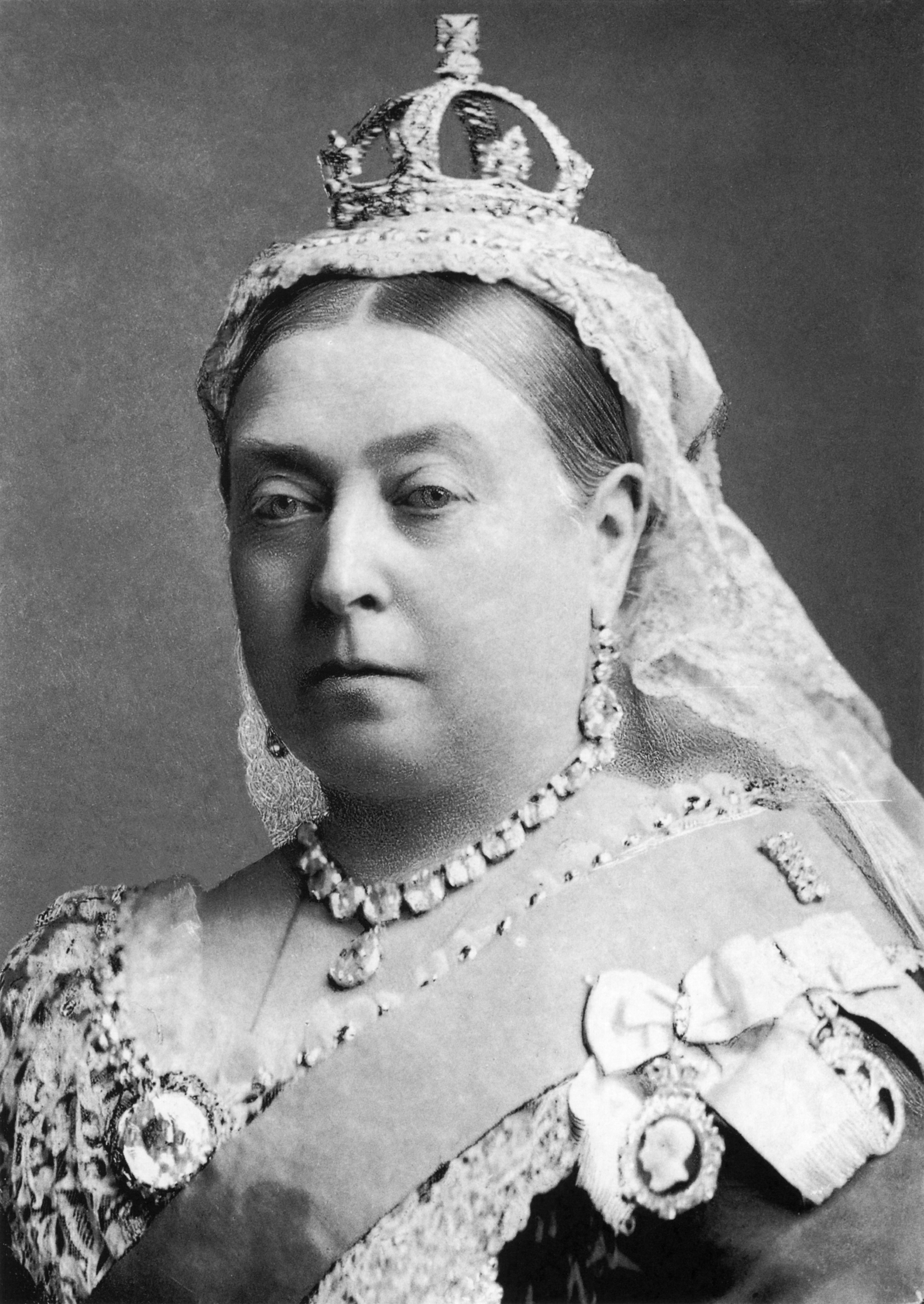
I've been following the death of the Queen fairly closely, somewhat to my own surprise. I shouldn't have been. I'm a historian with an interest in the celebration of power..I have been fascinated by the efforts of commentators to put Elizabeth in historical perspective. And what have they been saying?
Next to nothing!
Well, more specifically (my own summary, not entirely fair):
- Elizabeth was the longest reigning monarch ever
- None of us can remember when she wasn't Queen (actually an interesting point)
- She was Head of the world-wide Commonwealth (which people aren't entirely unhappy with)
- She sat on the same throne as Elizabeth did.
- Her reign was very close to being as long as Elizabeth's.
- She was also head of a world-wide organization, though it had a different name
Wednesday, July 31, 2019
What I thought everybody knew -- Man has baby
One question thrown out to one of the debaters was to finish a famous quote by Montreal mayor Jean
Drapeau in his promotion of the 1972 Olympics:
"The Olympics can no more lose money than a man can have a baby."Of course the Montreal Olympics lost millions. And just about everyone quoted Drapeau if they had any motivation to oppose a sports boondogle.
I was surprised, then, that the Calgary crowd didn't react at all.
Of course, these were Albertans being indifferent to Quebec; and I think the Debaters appeals to a younger crowd; and by no means do I count as young.
But it is another lesson in the dangers of assuming you know that "everybody" knows what you know, even recent historical events.
Friday, July 26, 2019
Heroic female historians in old Korea
Goo Hae-Ryung is a young noblewoman sometime in the early modern period (at a guess). She loves literature, Korean, Chinese and European. She may also be Maehwa, the author of the latest fad in Korean romance novels. Or maybe it's the young prince second in line to the throne who is Maewha.
The Korean state at this time works like the Chinese system. Applicants for government jobs study classic literature and write exams based on that material. The highly-educated office holders look down on the material written in Korean alphabets, on Korean novels, and on the people who read them. Goo Hae-Ryung is a promoter of popular literature. Lots of teenage girls are crazy for romances and when they hear that Maehwa is going to sign copies of his/her most recent book they practically riot.
The royal councillors decide to repress this "movement" by recruiting female historians OR forbidding the recruiting of female historians. The King, who has been the target of bureaucratic criticism, takes the opportunity to open history offices to young women...Of course the male historians resist...
I am liking this series for its cinematography and the humorous depiction of character. The music's good, too, which you might expect at a time when South Korea is strutting on the world music stage.
If you by chance run into me in person, I'll tell you both my Korean bureacrats' story and my Demilitarized Zone (DMZ) story.
Monday, March 04, 2019
Matt Gabriele, Peter Burke and Historians as Remembrancers

Sunday, October 07, 2018
Narrative history no good?
The real imperative of my book is to try to get people to see that neuroscience has, in the last 20 years, begun to teach us about the nature of the brain and its relation to the mind and, of course, how this undermines theory of mind [the ability to guess other people’s thoughts and motivations]. There have been startling developments that have won Nobel Prizes and begun to answer the most profound questions people have been asking about human thought as far back as Aristotle and Descartes: how the brain could be the mind, exactly what it is about the machinery of neural circuitry that constitutes thought and cognition. If you pay attention to research and developments in these areas, you discover the way the brain actually realizes the cognitive properties that govern human experience is nothing like what consciousness tells us it is.
[Interviewer Angela Chen]
Before we get into the neuroscience part, how exactly does history get things wrong? And why do you find narrative so unconvincing?
[Neuroscientist-historian Alex Rosenberg]
I myself am the victim of narrative. I love narrative. It’s the only thing I read, and it’s fantastically seductive. When I say “narrative,” I don’t mean a chronology of events; I mean stories with plots, connected by motivations, by people’s beliefs and desires, their plans, intentions, values. There’s a story. The problem is, these historical narratives seduce you into thinking you really understand what’s going on and why things happened, but most of it is guessing people’s motives and their inner thoughts. It allays your curiosity, and you’re satisfied psychologically by the narrative, and it connects the dots so you feel you’re in the shoes of the person whose narrative is being recorded. It has seduced you into a false account, and now you think you understand.
Rosenberg's ideas are treated at length in his book, How History Gets Things Wrong: The Neuroscience of Our Addiction to Stories, just out from MIT Press.

Wednesday, January 03, 2018
Be proud, heralds!
I am translating a fifteenth-century set of treatises by a man who went under the title Sicily Herald. He was big on the historic foundations of heraldry and armory. This morning I was looking at his account of the history of heraldry and read this:
Concerning the seven ages of the world in which are comprised the commencement, the middle and the end of the noble office of arms,Don't blush!
Friday, December 01, 2017
Josh Marshall's excellent Christmas book list

Image: Chris Wickham, one of the excellent historians listed here.
Josh Marshall is the editor and publisher of TalkingPointsMemo, my favorite source for news out of Washington, DC. I think he is pretty smart and judicious. Marshall, it seems, was trained as a historian, and I think it shows.
When not writing or managing, Marshal reads history. He has made available some of the best histories he's read recently, and his list shows remarkable good taste. I'm including most of that post here.
Enjoy!
* The Reconstruction of Nations: Poland, Ukraine, Lithuania, Belarus, 1569–1999

* Pathfinders: A Global History of Exploration

* The Horse, the Wheel, and Language: How Bronze-Age Riders from the Eurasian Steppes Shaped the Modern World


* The Triumph of Empire: The Roman World from Hadrian to Constantine (History of the Ancient World)

* The Inheritance of Rome: Illuminating the Dark Ages 400-1000 (The Penguin History of Europe)

Wednesday, September 06, 2017
St. Catherine's monastery delivers again
 At the base of Mount Sinai in Egypt there is a very ancient monastery, St. Catherine's, which may have been patronized by Constantine's mother Helena and was apparently built by the emperor Justinian. The monastery is best known for its collection of manuscripts, which include some of the most important sources for the text of the Bible.
The most famous manuscripts from St. C's were discovered and studied in the 19th century, while other mss (=manuscripts) were found in caves in the 20th. Now scholars are using advanced technology to read the original texts of reused mss. The Independent explains:
The scholars seem to be most excited by finding writings in obscure or dead languages, like the one spoken in Caucasian Albania (not the same as the Albania next to Greece). But I find this mindblowing:Monks originally wrote their texts down on parchments which were later scrubbed off and used to write the Bible by future generations who spoke more modern languages. But a new technique developed by researchers allows them to see the original text hidden from the naked eye in a development hailed as a “new golden age of discovery”.
Researchers took photographs of the material using different parts of the light spectrum and put the electronic images through a computer algorithm.
The method allows them to see the first writing laid down on the parchments, which at the time were highly valuable; before they were re-used in later years.
“I don’t know of any library in the world that parallels it,” said Mr Phelps [from the Early Manuscripts Electronic Library in California]. “The monastery is an institution from the Roman Empire that continues operating according to its original mission.”
“I don’t know of any library in the world that parallels it,” said Mr Phelps [from the Early Manuscripts Electronic Library in California]. “The monastery is an institution from the Roman Empire that continues operating according to its original mission.”
Image: By Berthold Werner - Own work, CC BY-SA 3.0, https://commons.wikimedia.org/w/index.php?curid=12215773
Tuesday, December 06, 2016
Great Events in Religion, edited by Florin Curta and Andrew Holt

A while back I was recruited by Andrew Holt to write some articles for an encyclopedia of the history of religion. I took him up on it, even though he was asking for articles not particularly close to my current research interests. It was an interesting challenge.
Just a couple of hours ago my contributor's copy came to my door. I hadn't thought about the encyclopedia for quite a while, even though Andrew and I correspond fairly frequently, and as a result it was a bit of a shock to see the finished work.
Part of the surprise was the sheer size of the thing, which is a three-volume work. I shouldn't be surprised, of course, because it is after all aiming at describing a whole important aspect of human existence. There are, however, plenty of things calling themselves encyclopedias that have huge holes in their coverage. Now I'm not sure yet that Great Events covers everything that I might think it should cover -- remember I've had it for two hours or so -- but it does have an awful lot of stuff.
Likewise I did know, somewhere in my fallible memory, that it was going to be "an Encyclopedia of Pivotal Events in Religious History," but perhaps I hadn't really thought about what that might mean. What it does mean is that all religious history is treated in chronological order, which gives the whole thing a comparative history emphasis. For me, that's a big plus. I am tempted to just sit down and read it through and see what I learn. (I am unlikely to be able to do that.)
I have to admit that I have always been skeptical of the usefulness of encyclopedias -- something I share with many historians -- but there is a chance that this one might be useful. The rare reader who has the time and access to the whole thing may get a much fuller view of world history than I did l when I read Arnold Toynbee's A Study in History in my high school library.
I am genuinely pleased to see this. As to how well it succeeds, I will get back to you.
Contest: I am not sure this will have a prize, and it has as much intellectual content as clickbait promising to show you how the stars of some shows in the 70s look today. In other words, you will be guessing. Guess what three pivotal events I wrote up for Great Events. To narrow the field a tiny bit, I wrote nothing on chivalry or the crusades. Do it for laughs.
Saturday, November 26, 2016
Objectivity and the teaching historian
Objectivity and and the classroom: ten historians respond.
There are no big surprises, but the similarity of views here might be of interest to non-academic readers.
Friday, November 20, 2015
Who reads this stuff?
But how many such readers could there be?
Well, this week I got a note from the Academia.edu site telling me that a Russian scholar was interested in having a look at the old article. I brushed it off and sent it off to the site. She saw it and thanked me.
Two days later the site has recorded 27!!!views. Good grief!
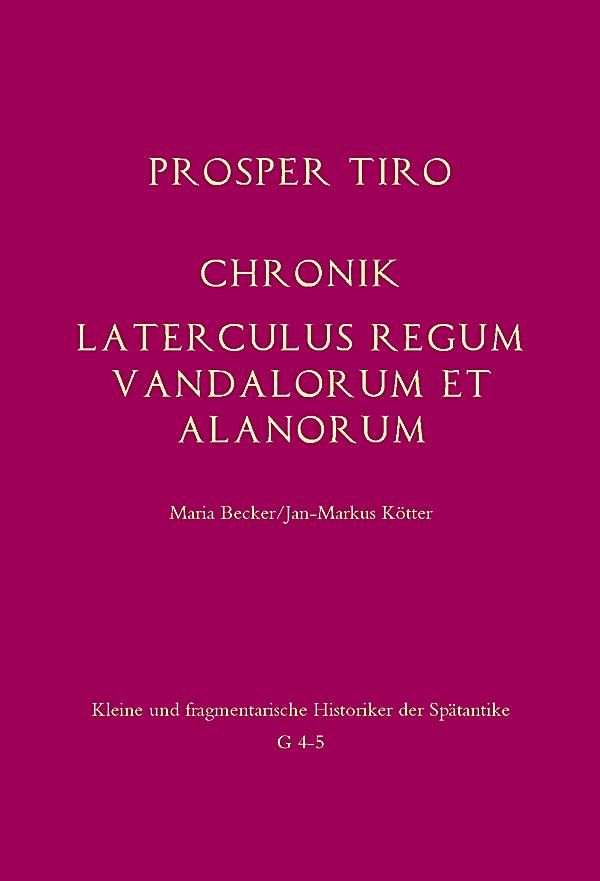
If any of you readers is really interested in the historiography of the Later Roman Empire and the origins of the medieval Latin chronicle tradition, the book version of The Fifth-century Chroniclers is still in print.
But if you are just vaguely curious about the answer to the question in the article's title: I said, probably not.
Image below: Somebody else's book on Prosper.
Sunday, May 31, 2015
Guy Halsall: think with history, act in the present.
The point is this: HfB [Historians for Britain] and its opponents share exactly the same, entirely conventional approach to the ‘relevance’ of history to current political debate; in other words, to ‘why history matters’. That relevance, as is clear from any close reading of almost all of the contributions to the exchange, consists entirely in the deployment of historical ‘fact’. I find this, to be blunt, more than a tad wearisome. [The involvement of historians in the referendum on Scottish separatism took exactly the same tedious form.] What seems largely to be at stake is who can assemble the biggest pile of facts. This is not going to make much of a difference, let alone decisively carry the day, either way. By way of demonstration, and if you can bear it, just read ‘below the line’ on the on-line version of the ‘Fog in the Channel…’ piece. To quote the (in my estimation) criminally underrated Andrew Roachford, ‘I don’t want to argue over who is wrong and who is right’. Let me row back from the extreme position that might be inherent in that statement. First, it is very important to deploy historical fact to counter misleading public presentations of what ‘history shows us’. This was another reason I signed up to the ‘Fog in the Channel…’ letter. There were some seriously dubious elements in Abulafia’s piece ... However, as I have said too many times to count, history (as opposed to chronicling or antiquarianism) is the process of thinking, interpretation, explanation and critique, carried out on the basis of those facts, it does not stop at the latter's simple accumulation (most historical 'facts' are, to me, not especially interesting in and of themselves: this happened; that did not happen – factual accuracy is a duty not a virtue). More seriously, both sides essentially see the course of history (as established by these facts) as providing a set of tramlines governing the proper path we should take in future. This removes any kind of emancipatory potential from the study of history. Put another way, and to restate the counter-factual posited earlier, suppose you agreed with Abulafia (and after all he’s not wrong about everything) that Britain’s history was, fundamentally, profoundly different from that of mainland Europe and had run a quite separate course (there is a case that could be put to support that contention that would have to be taken seriously, even if it is not the one put forward by HfB). But suppose that, unlike him, you thought that this had been a terrible thing and thought that Britain needed to incorporate itself more fully in Europe. Or suppose that you thought that the authors of ‘Fog in the Channel…’ were fundamentally right that Britain’s history was entirely entwined with that of the mainland but that you thought that this was wholly regrettable. In still other words, suppose that – like me – you thought that the course of the past had no force and provided no secure or reliable guide at all to what ought to be done in future. So, what would one be able to contribute to a debate on these (or other) issues if one held a (superficially) seemingly nihilistic view, like mine, of history as random, chaotic, ironic, and unpredictable, and of the past as having no ability in and of itself to compel anyone to do anything? What, so to speak, would be the point of history? Why would it matter? In his excellent blog-post – in my view, the best intervention in this discussion by some way (impressive not least for its concision) – Martial Staub draws attention to the discontinuities of history that subvert any attempt at a unified narrative or quest for origins. This seems to me to point us at a much more valuable and sophisticated means by which the study of history (rather than ‘History’ itself, that somehow mystic object, or objective force) can make a political contribution. Every dot that is later joined up to make a historical narrative represents a point of decision, of potential or, if you prefer, of freedom, where something quite different could have happened. To understand any of these decisions, as again I have said many times before, it is necessary to look at what people were trying to do, at what the options open to them were, or those they thought were open to them, what they knew – in short at all the things that didn’t happen, which frequently include the intended outcomes. You cannot simply explain them as steps on a pre-ordained path towards a later result, or as the natural outcomes of the preceding events. Any present moment of political decision represents the same thing: a point of choice, of decision, which requires serious thought. It should not be closed down by the idea that some 'burden of history' or other compels us to go one way rather than another. Those decision points that I just called the dots joined up to make a story were, at their time, points of freedom when any number of things were possible. The unpicking of narrative constructions makes this very clear and that – in my view – is the point that emerges from historical study. This lesson, for want of a better word (I mistrust ‘lessons from history’), points at a string of possible subversions. Staub points out the subversion of the ‘national’ story but at the same time it subverts any similar ‘European’ master narrative. Britain can be said to have had a history different from that of other European countries – true enough - but to no greater extent than any other region of Europe has a history different from the others. It may be true that at some points British history seemed to run on a course that bucked European trends, but exactly the same can be said of, for example, Italian or Spanish history at various points. What is Europe anyway? Is it any more natural a unit of analysis than any other? In the Roman period, the idea of thinking of the north of Africa as somehow a different area from the northern shore of the Mediterranean would be very odd. Indeed the Mediterranean basin can be seen as a unified area of historical analysis (who, after all, knows that better than David Abulafia?), rather than as different continents divided by a sea – perhaps one with different histories from northern Europe or the North Sea cultural zone (which obviously includes Britain). All of these points also contribute to a historical critique and dismantling of the idea of the nation (any nation) itself, not simply the national story (see also here). All historical narratives are constructs so (unless one is based upon the misuse or fabrication of evidence, or not staying true to the basic 'facts' of what did or did not happen) one cannot be claimed to be more accurate than another. No one can win an argument on that basis. The best that can happen (and it is important) is the demonstration that there is more than one story to be told. Above all, what I find to be one of the most important contributions that historical study can make, in terms of social/political engagement, is the subversion of all reifications, of all attempts to render contingent categorisations as natural. And of course it similarly subverts claims to represent contingent oppositions as eternal or natural. All these subversions arise from what I have repeatedly argued on this blog are historical study’s most important benefits: the critique of what one is presented with, as evidence, and the simultaneous requirement to see similarity – shared human experience – in difference and diversity, or to listen to and understand that evidence). So I would contend that the view of history sketched above is very much not a disabling, nihilistic one but quite the opposite. The careful, sympathetic yet critical investigation of the traces of the past, the deconstruction of narrative, nation and so on, can and should free us from the burdens that people want to impose on us in the name of history. The appreciation of the once possible but now impossible potentials at the decision-points of the past can and should allow us to think twice about what people tell us are now impossibilities and open our minds to the potentials and possibilities of the present. If you want a catchphrase, try this: think with history, act in the present.
Monday, May 18, 2015
Griping about the word medieval
Sure enough, some of those sessions (which I should point out were very good and interesting) included a lot of griping and grouching about the misuse and ambiguity of the word medieval. You would think that a bunch of scholars who by their very nature of their discipline are experts in the evolution of the meaning of words would by now have gotten over the fact that though it doesn’t make a lot of sense to call “the Middle Ages” by that term, and that coming up with a really good, chronological definition of those ages is impossible, we are stuck with the words medieval and Middle Ages anyway. But no, there is a lingering feeling that it should be possible to nail down these terms – Middle Ages, medieval – once and for all. Or ditch them. If all the experts agreed, everybody else would have to fall into line – right?
You know that’s not going to happen.
Scholars of the Middle Ages, like experts in any other field, feel they should be in control of the terminology that defines their work and gives them legitimacy. But the truth is that any important subject is contested between a whole bunch of different individuals and groups who have an interest in that field. A single word – medieval – is shattered into a variety of definitions, many of which are out of date – at least in the eyes of people working on the cutting edge of, say, “medieval studies.” Old assumptions and terms and generalizations which current practitioners have rejected hang on in popular and nonspecialist discussions.
This can be intensely irritating for people who know that certain phrases and analyses lost their cogency back in 1927 and want to talk about what their friends are doing in the field now. Nevertheless people whose business is words should really accept the fact that words like “medieval” have a number of popular meanings, and when one of them shows up in current discussion (when, for instance, a Game of Thrones shows up and is widely labelled as medieval, even though the world of Game of Thrones is not our earth at all), the fact can be dealt with a good-humored way. It certainly would reflect credit on any field where a good-humored approach was the norm.
David Parry made the most sensible remark of the entire week when he pointed out that an imprecise word like medieval has a lot of cultural value for people who make their living interpreting that era. Indeed there is a financial payoff being associated with it. As he said, “the word makes students registering for courses press the button on the screen that says ‘enroll.’ The phrase ‘early modern’ doesn’t have that effect. ”
Friday, April 24, 2015
Antoine de la Sale, Jean de Saintré. My review of a new translation
Tuesday, March 17, 2015
Scholarly editions and databases online

Friday, February 20, 2015
The Age of Extremes: A History of the World 1914-1991, by Eric J. Hobsbawm
This is not a book that I think I would ever read from cover to cover. It is a long one. However, it is so interesting in its many details and its many passages of analysis that I got a lot out of it even just reading a few pages at a time more or less at random.
Here's one fact of 1 million: Hobsbawm points out that of the leaders of the various countries of the world in 1970, a year when baby boomers were coming of age, almost all were people who had been adults at the end or even at the beginning of the First World War. No wonder there was a lack of sympathy between the establishment and the young rebels! It is typical of Hobsbawm's style that he illustrates the point thus: professors of economic history in France were people who had grown up on or vacationed on farms, and had a pretty good idea of how agriculture worked. They faced students in their classes with no idea what milkmaids did or the usefulness of manure piles to a working farmer.
Anecdotal history? I love it nonetheless.