Showing posts with label Will McLean. Show all posts

Sunday, December 26, 2010

Excerpt from the Abstract: Outrance and Plaisance

Abstract: Outrance and Plaisance (an excerpt)

Will McLean “Outrance and Plaisance” in Journal of Medieval Military History 8 (2010): 155-170

Modern writers on medieval deeds of arms often use the term à outrance to describe combats fought “using the normal weapons of war” and à plaisance to describe combats using “specially modified weapons with sharp edges removed or blunted”.

However, during the 15th century, when the terms were most often used to describe contemporary deeds of arms, writers in Burgundy, France, Spain and England used the terms very differently. Sharp weapons of war and blunt weapons could be used in both sorts of combat. Instead, arms à outrance were distinguished by the willingness of the champions to fight until one side or the other was captured or killed, unless the judge or judges stopped the fight. This could happen either in the context of a judicial duel or a high stakes combat by mutual consent.

Arms à plaisance were less extreme, and would typically end as soon as an agreed number of blows were struck, or as soon as a combatant was carried to the ground.

The author quotes contemporary accounts of the extraordinary combats that 15th century writers described as à outrance. They show what happened in the rare cases when they were fought to the finish, as well as the less uncommon fights that were halted or proposed but not accepted. He also quotes 15th century accounts of a more limited combat à plaisance that was nonetheless fought with sharp weapons.

Combats à outrance were extraordinary events and their potential to end in legalized homicide presented the judges with a dilemma. Their response gives a measure of how extraordinary these combats were. In deciding whether and how far to allow deeds of arms to proceed under their control, rulers struck a delicate balance among competing goals: displaying their own power, fairness and authority, gratifying noble subjects, entertaining the populace and maintaining good order in their realm.
The complete abstract is here.

Image:  some are still at it.

Saturday, January 23, 2010

Revised thoughts on two of Charny's questions

Those of you who were interested in this post and the conversation with Will McLean in the comments and on his blog may want to know that I've revised my position. Thanks to Will for pushing me to revise and rethink. A serious, engaged critic is extraordinarily valuable.

As I once said of a very helpful senior scholar who looked over some of my unfinished material, "Even when he's wrong he's right."

Here's the current key passage on men-at-arms being dead, captured, or desconfit.
I interpret these questions to mean that the idea of being defeated, desconfit, was so unwelcome that even the dead would reject it. We can easily imagine that being called "defeated" stung, but it seems that there is more to it. Desconfit does not mean defeated in some neutral sense. One relevant but general sense means "destroyed, broken, ruined, reduced to nothingness." There is also is an old and more specific military sense in which desconfit means "routed," a concept of both moral and practical significance for horsemen. Given the existence of the different meanings for this loaded adjective, we can see that there would be room for disagreement about who could be called desconfit and how bad that label might be. Was it a state worse than death? Could running away open a man at arms to an accusation of the deepest dishonor? Desconfit certainly could conjure up a picture of a man at arms running from danger with the enthusiastic help of his horse, for which running away was the most natural response; and the picture is a disgraceful one, at least for the man.
See also Will's personal answer to another Charny question.

Saturday, January 02, 2010

Favorite posts, 2009


Will McLean, who has more good ideas than most people I know, has just inspired me to select my favorites among my own posts of 2009. Just click here.

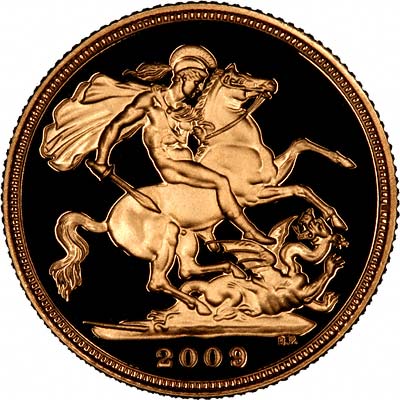
Image: a British gold quarter-sovereign from 2009.

Wednesday, October 01, 2008

October Fool's Day


Short and sweet from Will McLean's A Commonplace Book. Life in the future/the present/Will's parallel universe is far more entertaining than the usual lies that make up the news. Unlike the regular news, this is all true.

Image: Pope Gregory VII and his own aerial protector.

Saturday, June 14, 2008

What the sources say about the golden angel

With help from Will McLean and Google I am able to post what contemporary writers said about the golden angel which took part in Richard II's coronation.

First, the chronicler Thomas Walsingham, with what is supposed to be straight reportage:

The city was in every way most richly adorned, and the conduits ran with wine for three hours. In the upper end of the Cheap was erected a castle with four towers ; on two sides of which ran forth wine abundantly. In the towers were placed four beautiful virgins, of stature and age like to the King, apparelled in white vestures; these damsels, on the King's approach, blew in his face leaves of gold, and threw on him and his horse counterfeit golden florins. When he was come before the castle, they took cups of gold, and filling them with wine at the spouts of the castle, presented the same to the King and his nobles. On the top of the castle, betwixt the towers, stood a golden angel, holding a crown in his hands ; and so contrived, that, when the King came, he bowed down and offered him the crown.

William Langland, a poet, seems to include this scene (argues Scott Lightsey's Manmade Marvels) in an allegorical/fantastic view of the kingdom in Piers Ploughman,:

Then looked up a lunatic · a lean thing withal,
And kneeling before the king well speaking said:
`Christ keep thee sir King · and thy kingdom,
And grant thee to rule the realm · so Loyalty may love thee,
And for thy rightful ruling · be rewarded in heaven.'
Then in the air on high · an angel of heaven
Stooped and spoke in Latin · for simple men could not
Discuss nor judge · that which should justify them,
But should suffer and serve · therefore said the angel:

`Sum Rex, sum Princeps: neutram fortasse deinceps;
O qui jura regis Christi specialia regis, hoc quod agas melius Justus es,
esto pius!
Nudum jus a te vestiri vult pietate; qualia vis metere talia grand sere.
Si jus nudatur nudo de jure metatur; si seritur pietas de pietate
metas.'
Then an angry buffoon · a glutton of words,
To the angel on high · answered after:
`Dum rex a regere dicatur nomen habere,
Nomen habet sine re nisi studet jura tenere.'
Then began all the commons · to cry out in Latin,
For counsel of the king · construe how-so he would:
`Praecepta regis sunt nobis vincula legis.

I am not feeling confident enough in my Latin at the moment to translate those passages in their entirety, but it seems that this passage pits the angel and the rich commons of the kingdom (or the parliamentary Commons), who are anxious to give a pious king divine power, against buffoons and lunatics who say "Since the king (rex) gets his name from guiding (regere), he has that name to no purpose unless he strives to keep the law."

Hardly relevant to today's concerns, eh?

Update: Thanks to Scott Lightsey's book (p. 46), I can now include what the Anonimalle Chronicle says:

Set up in the middle of the Cheap stood tower of painted canvas, curiously constructed, over timber support-beams; about the tower were four turrets, in which stood four damsels, exceedingly lovely and beautifully arrayed, and these said damsels threw gold coins in the direction of the prince's coming. Within the said tower had also been built a small belfry, and on the belfry stood an angel bearing a golden crown holding it out towards the said prince, to do him comfort.

Friday, April 18, 2008

How on earth do you find these things?


I asked that question of Will McLean, author of A Commonplace Book, when he came up with an obscure trove of information about historic archery. He was kind enough to answer the question in this post.

The essence of the post is here:
In trying to recreate the Middle Ages, the 17th and 18th c. are useful places to look for hints if you can't find the information in a medieval source. It’s not perfect, but a lot better than using your enormous 21st c. brain to attempt to deduce things you don’t know from first principles. Diderot’s Encyclopedie was a great help to me in trying to recreate medieval scabbards, for example.

Will knows whereof he speaks. He has seen many enormous re-enacting brains come a-cropper, some as long ago as the 20th century, and has done lots of good work using, you know, scholarship.

A list of some of his favorite resources is here.

Image: Will, in one fabulous suit of armor.