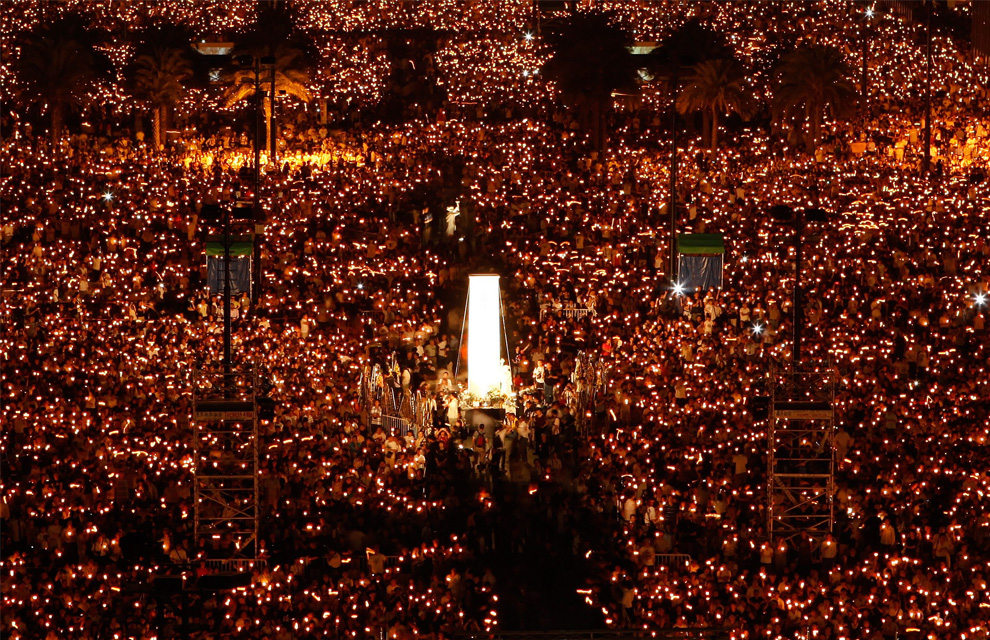
Friday, June 06, 2014
41,000


Monday, June 03, 2013

Thursday, January 10, 2013
It's time again for the Harbin Ice and Snow Festival!


Wednesday, February 15, 2012
Another version of the big lie: People in [name that country, culture, or religious group] don't really want democracy
Prof. John Keane of the Sydney Democracy Initiative comments on the situation in China:
Sunday, January 22, 2012
Festival time in Harbin

Tuesday, June 21, 2011
More on China -- "Too early to say"
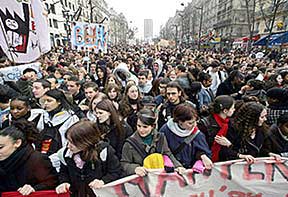
Phil Paine forwards me this post from Delanceyplace.com:
In today's excerpt - the Chinese have often been invoked as having a longer-term perspective on history compared to the West, and to buttress this view, the story is often repeated of Premier Zhou Enlai's response when asked to discuss the impact of the French Revolution. His answer? "Too early to say":Phil says:
"The impact of the French Revolution? 'Too early to say.'
"Thus did Zhou Enlai - in responding to questions in the early 1970s about the popular revolt in France almost two centuries earlier - buttress China's reputation as a far-thinking, patient civilisation.
"The former premier's answer has become a frequently deployed cliché, used as evidence of the sage Chinese ability to think long-term - in contrast to impatient westerners.
"The trouble is that Zhou was not referring to the 1789 storming of the Bastille in a discussion with Richard Nixon during the late US president's pioneering China visit. Zhou's answer related to events only three years earlier - the 1968 students' riots in Paris, according to Nixon's interpreter at the time.
I'm often amazed at the way even serious journalists and historians abandon all critical faculties when talking about China, and think in cliches, vague images, and old sayings and quotations. Imagine the same guys analysing the Netherlands in terms of wooden shoes and windmills and taking sayings like "dutch treat" or "Dutch courage" as if they were profound. Or concluding that they can predict American foreign policy by watching old episodes of The Lucy Show.
Image: 1968
Monday, June 20, 2011
Place your bets, ladies and gentlemen!

In the midst of what looks like an investment scandal involving a Canadian forestry company active in China, various business writers and commenters are arguing about whether China is now a good place to invest. There are plenty of China-boosters saying that its economy will go up, up, up, presumably forever; and then there is this writer, who thinks there are good reasons to steer clear, for instance:
Lack of transparency: China is a dictatorship where analysts find it difficult to perform due diligence on prospective investments – just ask any analyst who has tried to research a Chinese company. What’s more, official Chinese statistics are notoriously unreliable, leading some observers, such as Stratfor, a private intelligence consultant, to label the country’s economy an unsustainable Ponzi scheme.Few China fans address this charge, which should have a lot of force. Think of all the countries that are not dictatorships and which do have traditions of transparency that had crashes in 2008-9 because large parts of the economy were, despite the advantages of past good governance, Ponzi schemes.
Do you really think that the most powerful people in China, many of whom were raised under Maoism, play fairer than the Icelanders?
Really?
Image: The great teacher.
Friday, February 04, 2011
And people complain about Aljazeera!
As I never tire of saying, China Daily is my favorite newspaper in the world.
But it's conceivable that not every visitor to the Washington Post's web site would know the reason for my fondness and loyalty. China Daily is the state-controlled English-language voice of the Chinese government to the outside world. Sometimes this makes it a useful source of intel about the line the government wants to push. For instance, its recent revelation that "most nations" opposed the choice of Liu Xiaobo as winner of the Nobel Peace Prize. Very often the hyper-earnestness of its approach makes it a delight. For example, here and here, or my favorite of all headlines, "Happiness abounds as country cheers."
Recently the Washington Post has started carrying China Daily's US edition as a physically separate advertising supplement to the printed paper, as described here. Fine: it's clearly labeled, and we've all gotta stay in business. But now the Post is doing the same thing on its website. Look at this part of the "Washington Post"'s site as it appears just now, and tell me how obvious it is that you're seeing a paid presentation of official Chinese government propaganda perspective...

Sunday, January 09, 2011
A new era?
Brazil saw the swearing-in of a new president, Dilma Rousseff, who is best known for being a former guerrilla rebel against Brazil’s military dictatorship. That was all in the past – a time when the politics and economics of Brazil, and most non-wealthy countries, were entirely defined by relations with the great former colonial powers to the north and west.
In those days, countries like Brazil had a choice: They either sold raw materials and cheap goods at low cost to the Yankees and Europeans and played by their rules, or resisted them with closed borders, Kalashnikovs and command economies.
This was 2011, though, not 1981, so Ms. Rousseff had no need for such a choice. After her inauguration, she immediately set to work boosting export investments in value-added industries and cutting government spending to keep the Brazilian currency from inflating.
She also, tellingly, authorized a deal in which the huge Chinese company State Grid purchased seven of Brazil’s electrical-transmission utilities for $1-billion, essentially putting the country’s electrical-distribution grid under Chinese ownership, even though her government had weeks earlier placed import tariffs on Chinese toys during the Christmas season in order to avoid hurting her country’s trade surplus. In the poor half of the world, trade relations are not a matter of simple tit-for-tat retaliations.
...
I believe we are witnessing the end of the post-colonial era in politics and economics. In China, Brazil and a dozen other countries, the type of thinking known as “post-colonial” – defined as a stark choice between angry resistance or humiliating subservience – has simply ceased to matter in political and business relations.
The post-colonial era began in earnest in the years after the Second World War, when Britain, France and the United States ceased to be formal colonizers, allowing southern and eastern countries to have their own governments (in places like Brazil, it had begun decades earlier). The end of the Cold War and the Soviet empire kicked it into high gear.
Post-colonial governments had responded to the external, commercial and globalized nature of their erstwhile colonial rulers very often by becoming nationalist, closed to trade and investment. Sometimes they were opposed to capitalism itself – witness the waves of Marxist and Maoist regimes that swept across Africa and South America, without Soviet prodding, during the postwar decades. Or they were dictatorial and violent and co-operative with the industries of their former empires.
While post-colonialism clings on in Cuba, Venezuela, North Korea, Zimbabwe and a handful of other places, it has vanished from most of the world with amazing speed.
Sunday, December 05, 2010
Sunday morning, and Explorator comes to my mailbox...
One of the nice things about this e-mail news compilation is that it supplies me with links to the little stories.
For instance, I don't get excited about the power, wealth and claims to divinity of Greco-Egyptian queens, but who would not want to see this amazing coin/medallion on Sunday morning?

And I find it pleasant to have nonsense about "Roman Chinese" systematically dealt with.
I'm grateful both to David and the originating sources.
Saturday, September 25, 2010
Thursday, June 10, 2010
A nod to China

I generally don't say much about China, since I don't teach China save occasionally in World History. Shame on me.
I felt I could not overlook this Daily Kos diary about the reaction to a wave of suicides in Foxconn's very, very large electronics factory in Shenzhen (see image showing a Foxconn produced motherboard from a couple of years back). The diary cites this New York Times article, which I excerpt:
The Foxconn Technology Group, a giant contract electronics manufacturer that experienced a series of worker suicides, said it would raise salaries by at least 30 percent, more than previously indicated.According to the DK diary, there has been a wave of strikes in China. See the diary for more information.... “It’s been a while since we increased wages, hence the decision,” Mr. Ding said on Wednesday. The company supplies Apple, Hewlett-Packard and other large technology companies.
At least 10 people have died this year at Hon Hai’s manufacturing complex in Shenzhen, and the police are treating the deaths as suicides.
Foxconn’s chairman has rejected accusations from labor rights groups that the firm is a sweatshop and last week opened the Shenzhen plant to the media.
Huge export-oriented factories controlled by the communist elite of China have been a key factor in the world economy for quite some time now. If these strikes are being met by concessions, this could have a big impact on us all. It does make me wonder what is behind them.
It's hard being an oligarch, out on the street.
Sunday, February 14, 2010
A creaky old country
It really is a disgrace that China with all its resource problems and under the leadership of the Communist Party seems to have a much more forward-thinking attitude about some really basic stuff. It's like Americans have given up on practicality in favor of theological conflict -- about evolution, marriage equality, and "don't ask, don't tell."
Two weeks ago, as I was getting ready to take off for Palo Alto, Calif., to cover a conference on the importance of energy and infrastructure for the next American economy, The Times’s Keith Bradsher was writing from Tianjin, China, about how the Chinese were sprinting past everybody else in the world, including the United States, in the race to develop clean energy.That we are allowing this to happen is beyond stupid. China is a poor country with nothing comparable to the tremendous research, industrial and economic resources that the U.S. has been blessed with. Yet they’re blowing us away — at least for the moment — in the race to the future.
Our esteemed leaders in Washington can’t figure out how to do anything more difficult than line up for a group photo. Put Americans back to work? You must be kidding. Health care? We’ve been working on it for three-quarters of a century. Infrastructure? Don’t ask.
Thanks to Brad DeLong for the heads-up.
Thursday, December 03, 2009
"...the Premier took the Prime Minister to the woodshed."
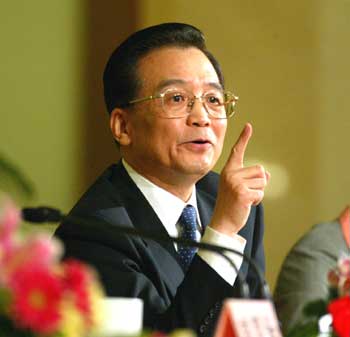
Not a good sign (as told by the Globe and Mail):
In an unprecedented diplomatic breach, Chinese Premier Wen Jiabao publicly upbraided Prime Minister Stephen Harper today for failing to visit China sooner.Mixed feelings here: I consider Harper to be a sycophant to imperial power, and here he is being an incompetent sycophant. OTOH, this display by a displeased imperial power is chilling.“This is your first visit to China and this is the first meeting between the Chinese premier and a Canadian prime minister in almost five years,” Mr. Wen told Mr. Harper through an interpreter.
Mr. Harper listened, stone-faced, in front of Canadian, Chinese and international media.
“Five years is too long a time for China-Canada relations and that’s why there are comments in the media that your visit is one that should have taken place earlier.”
Such a public scolding is unheard of in a meeting between heads of government.“I agree with you Premier that five years is a long time,” Mr. Harper said in response. “It’s also been almost five years since we had yourself or President Hu in our country.”
He went on to invite the Premier or President Hu Jintao to visit Canada “in the not too distant future.”
Image: You'd better learn this face.
Sunday, November 29, 2009
Someone in China doesn't want you to read Phil Paine
Tuesday, November 17, 2009
Nine nations: A China primer
 I will be away from blogging till at least the weekend, so I came to the computer today feeling some obligation to leave you with something good. I was completely uninspired until Brad DeLong -- again -- came to the rescue by providing me with a link to Patrick Chovanec's Atlantic article on the Nine Nations of China. Like Mr. Chovanec, I was influenced by the 1981 book by Joel Garreau's Nine Nations of North America, in which he redivided Canada and the United States into economic and cultural areas that more reflected reality than the international and state/provincial divisions on most maps. It was a fresh approach that has since gone stale, as lazy people keep referring to it like nothing important has changed since the 1970s. But once again it renders yeoman service by inspiring this new article. I do not endorse the authority of the Nine Nations of China, since I'm about two or three steps above simple ignorance, but I found it interesting. Here's an excerpt:
This week, President Obama makes his first state visit to China. What kind of country will he find there? We tend to imagine China as a monolith: 1.3 billion people sharing the same language, history, and culture. The truth is far more interesting. China is a mosaic of several distinct regions, each with its own resources, dynamics, and historical character.As a traveler, teacher, and professional investor who has been exploring China since 1986, I’ve come to think of these regions as the Nine Nations of China (inspired, in part, by Joel Garreau’s Nine Nations of North America). Taken individually, these “nations” would account for eight of the 20 most populous countries in the world.
As China’s economy becomes more integrated, these regional differences are taking on greater importance than ever before.
Saturday, September 19, 2009

Thursday, July 09, 2009
Wednesday, July 08, 2009
Big trouble in China
If you want to know how serious this trouble is, see the picture below, showing paramilitary police assembled in the Xinjiang capital of Urumqi. It's one thing to hear "20,000 police" on CBC Radio and another to see this:
 More at the Big Picture.