Showing posts with label Department of History. Show all posts
Showing posts with label Department of History. Show all posts
Monday, June 09, 2014
A tribute site for Anne Clendinning
Tributes to Anne Clendinning by both students and colleagues can be found here. You're free to add your own.


Tuesday, June 03, 2014
Loss of a colleague -- Dr. Anne Clendinning

From Dr. Katrina Srigley, Chair of History, Nipissing University
Historian, mother, sister, friend, Dr. Anne Clendinning started her life adventure in Ingersoll, Ontario and ended it in North Bay on June 1, 2014. She lived her life to the fullest. She loved to learn. She was fierce and determined. She was beautiful and the master of her own fate. She met the love of her life, Dermot Wilson, hiking in the Kananaskis Valley. Together they travelled around the world for two years. Travel was always a passion and source of inspiration for Anne because she wanted to understand other peoples and cultures. Her younger sister Lynda will always remember her as the cool older sister with wonderful tales to share about her latest adventures. Dermot and Anne had two beautiful daughters, Imogen and Aurelia. As infants they attended doctoral classes and a dissertation defence at McMaster University. Before she left us she made a point of telling her girls she was so proud of them.
A farm girl at heart, Anne had a way with plants and, unbeknownst to most people, studied horticulture at the University of Guelph. She loved visiting the land of her childhood where her father, Eugene Clendinning, still farms today. Her siblings include: Lynda, Joyce, David and Douglas.
Anne was always by disposition a historian. She was a skillful storyteller. She had a mind for detail. A women's and gender historian of Victorian England, her first book examined the impact of the gas industry on women. She was passionate about her latest project on the gendered world of The Wembley Exhibition of 1924/25. It broke her heart not to finish it. Anne was also a mentor to her students. She took such pleasure in sharing her ideas and time with them, and delighted watching them develop as young scholars. She thrived working through complex ideas and watching their minds open up in different ways. Like with all people she came into contact with, she deeply respected her students and teaching them gave her great joy and satisfaction.
Her friends admired her strength, dignity and wit. They loved her style and choice "finds," which she so generously shared. She developed a preeminent international Mode Barbie and Ken collection, the last piece of which is yet to arrive. She was an artist in the kitchen, particularly with pies. She was very proud of her apple pie, and for good reason; she often talked about her mother Marjorie at these times. Anne was deeply interested in popular culture. She wanted to write to the director of Mad Men to request he release the last episodes.
Anne was a passionate historian, loyal friend and devoted mother. She was deeply loved and will be sorely missed by everyone. Most of all she was a dignified, strong and compassionate woman.
Donations can be made to the newly formed "Dr. Anne Clendinning Scholarship Fund" at Nipissing University in the following ways:
Online: www.nipissingu.ca/giving
Mail: Make cheque payable to Nipissing University
Nipissing University- Development Office100 College Dr.,North Bay, ON P1A 3W2
Phone: 705 474-3450 x 4361
Thursday, February 06, 2014
How time flies…
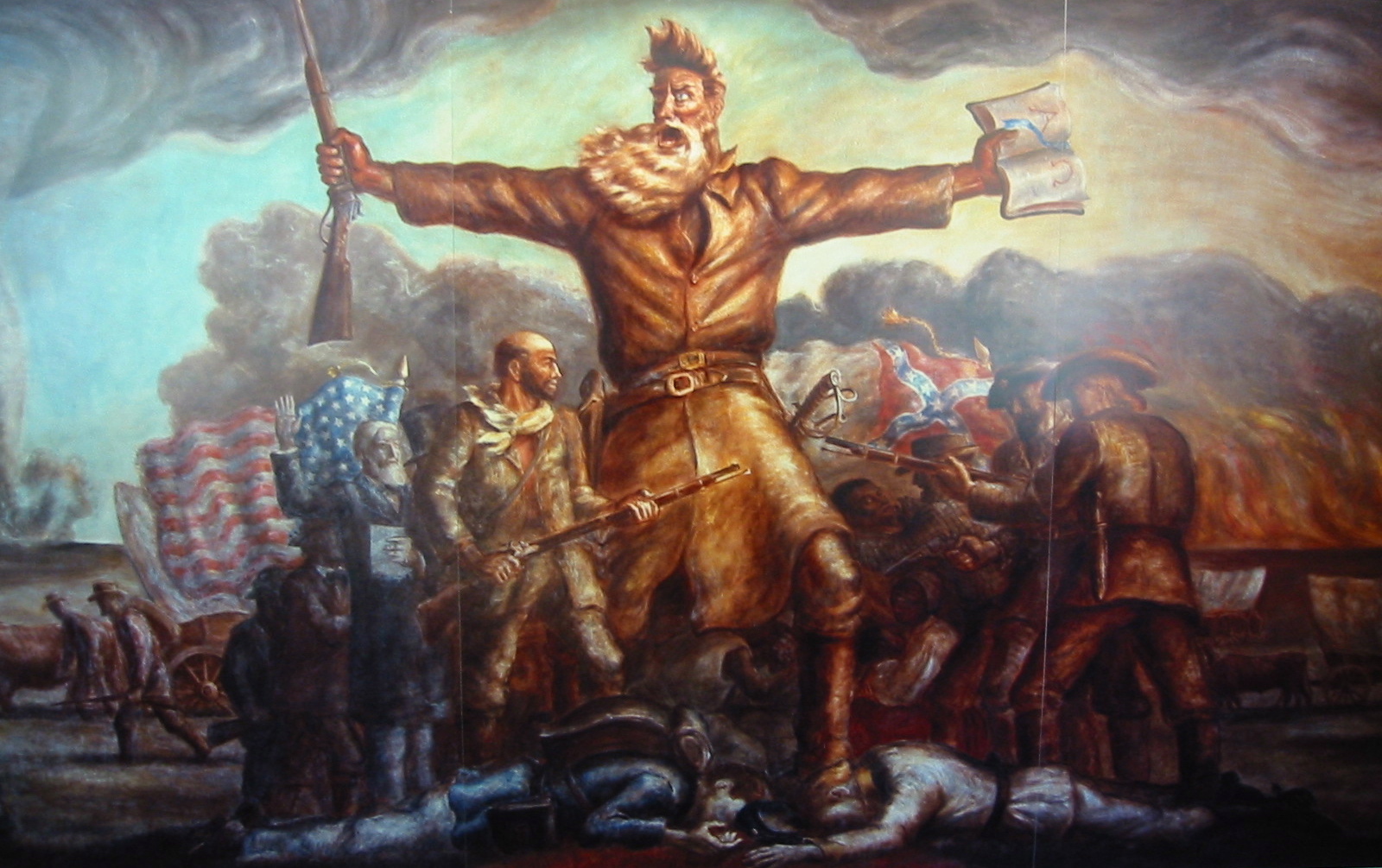
Our history grad students were presenting historiographical surveys of their major research papers to the members of the history graduate faculty. One paper was about the representation of the Vietnam War in comic books of the time. It turned out that I was the only person in the room who remembered the Vietnam War. Man, that was fast!
A student working on that project made the statement that it was one of the most important events in American history. I said, "Really? I was around back then and I don't think so. Yes it was important, but it was no Compromise of 1850."
Much mirth resulted.
You will wait in vain for a historian of modern times to make such a good witticism about the Middle Ages.
Image: John Brown at Harpers Ferry.
Saturday, February 01, 2014
Margaret E Owens, Afterlives of the Royal Funeral Effigies

How can I, who have worked fairly extensively in late medieval England, and have visited Westminster Abbey at least twice, been completely unaware of this? Humbling, I call it.
Anyway, if you are interested, you can perhaps go here and poke around. The Abbey doesn't make it particularly easy to find these effigies. I would have a webpage that links to all of them. If there is such a page I haven't found it.
Thursday, February 07, 2013
Senegal, Madagascar and Dr. Amadou Ba
Dr. Ba, who teaches history at Nipissing and Laurentian Universities, yesterday presented a paper entitled "African Soldiers in the French Colonial Army during the Conquest and Colonization of Madagascar."
The several points of interest included:
The several points of interest included:
- the fact that there were a lot of colonial wars in Madagascar, which pretty much no one knows anything about. (Madagascar must count as the most obscure country in the world.)
- that the French waged these wars mainly with West African troops, who were all called Senegalese, whether they came from Senegal or not.
- that there are descendants of the Senegalese still in Madagascar, where they are a despised symbol of colonial oppression.
- that the French are not blamed at all for the abuses of their regime. Indeed they are remembered as mitigating the brutalities of their Senegalese enforcers.
- that no one in Senegal is at all aware of this Madagascar connection.
Somehow it was that last point --- that lost history -- that struck me the most. There is so much that falls through the cracks.
UPDATE 2023-02-04
I don't know if Madagascar still counts as the most obscure in the world. It showed up in newsfeeds several times in the last week or so in connection with the papal visit to Africa. Madagascar is now a typical poor country with food security problems. South Sudan also now gets attention as "South Sudan," as a country and not just as a part of Sudan afflicted by civil war. Why? Papal visit. And a papal visit brought the Democratic Republic of the Congo for something beyond internal warfare motivated by a desire for valuable rare earths.
Papal visits! Some time around 1000 CE it was papal recogition (and recognition by the German emperor, representing Rome the empire) that made the King of Poland a real Christian monarch.
Another case of "the more things change..."
Tuesday, September 18, 2012
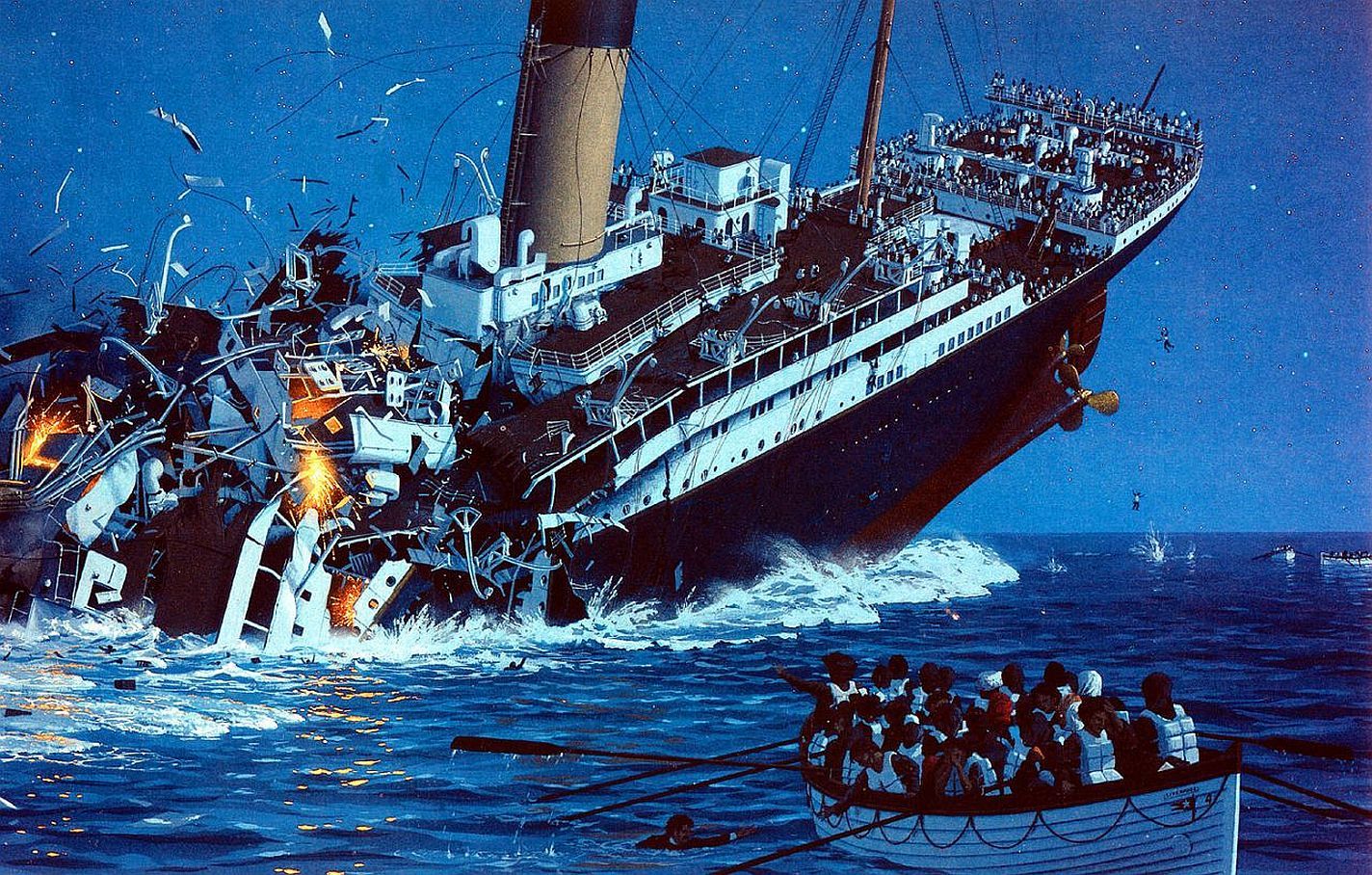
Anne Clendinning speaks on the aftermath of the Titanic
The History Seminar Series presents
Anne Clendinning speaking on:
Sir Cosmo Duff Gordon and the “Money Boat”: Class and Cowardice at the Board of Trade Titanic Inquiry
Friday, September 21, 2012
2:30–4:00 pm
A226
Everyone welcome
Refreshments provided
Contact: Derek Neal derekn@nipissingu.ca
Saturday, September 15, 2012
Historical maps, their meaning and their uses

Last night's round table on the War of 1812 attracted an audience of 35, not bad for a rainy Friday night opposite a hockey game. We had faculty, students and people from town, and they were interested enough to stick around right up to 10 pm.
One of the most interesting discussions concerned the role of Natives in the war and diplomacy of the time, and whether that role has been ignored or misrepresented, and still is. One point at issue was the map above, which was being used to display basic geography. The priority of the maker was clearly to emphasize American expansion. Notice how solid the American states and territories look, and the lack of provincial boundaries in British territory. Even more remarkable is the absence of any Native settlements or territories. This led one participant to state that the map was "false."
Yes and no, say I. What practical meaning did the boundaries of the Mississippi Territory have in 1812? Weren't the Creek Indian settlements attacked by Andrew Jackson a lot realer? On the other hand the state boundaries established in the 1810s are real and practical today.
This returns me to a point I made to my Crusade and Jihad students in our first class meeting, when I was showing them various maps depicting Christian and Muslim expansion in late antiquity and the early Middle Ages. The maps "lied" (= "were false"), I said.
It is more accurate to say that ANY map, historical or otherwise, is very much an oversimplification for analytical or propagandistic purposes.
Thus I say that the appropriate response of a historian to a historical map is not to draw a quick conclusion but to ask more questions.
Which is pretty much what we were doing with this map last night.
Saturday, September 08, 2012
The War of 1812: A Round Table at Nipissing University
1812 -- Turning Points
On the face of it a small frontier conflict, the War of 1812 had world-wide causes and
consequences. It was not just
one turning point but several, for Canada, the United States,
Native North America and the British Empire.
In this bicentennial year, the Department of History of
Nipissing University presents a Round Table, 1812: Turning Points, for the
benefit of the University and the wider North Bay community. We hope to explore
all aspects of the war, what it meant at the time and what it means today. Your
participation will be welcome.
Friday, September 14, 2012 7:30 PM – 10:00 PM
The Nipissing University Theater, Nipissing University (North Bay campus)
Contact: Steven Muhlberger -- Stevem@NipissingU.ca --705 – 4744 – 3461 ext 4458
Sunday, April 22, 2012
What my students took away from History of Islamic Civilization
Egypt -- ready for democracy?
Egypt -- democracy, Islamism, Western concerns
Tunisia -- instability threatens the revolution
Iran -- nuclear program and foreign concerns
Egypt -- significance of the revolution
Iran -- society on edge, politics divided
Iran -- if war breaks out
Egypt -- a corrupt election?
Egypt -- challenges of democratic transition
Syria -- why the revolution may not succeed
Syria -- effects of Syrian crisis
Egypt -- religion and democracy
Tunisia -- summary of revolution
Iran -- the sanction regime
Iraq -- attacks on Christians
Iran -- counter-productive Western and Iranian policies
Turkey -- AKP success
Tunisia -- summary of revolution
Iran -- domestic and foreign conflicts
Iran -- what's at stake in current confrontation
And here's to those students: Well done. You rose to the challenge.
Image: Canadian students, but not actually mine.
Monday, March 26, 2012
Darren Ferry speaks on Mechanics' Institutes: Friday March 30, 2:30 pm
From Dr. Derek Neal:
Greetings to all,
The Department of History invites you to join us for our final presentation of the academic year, Friday, March 30 at 2:30 pm in room A122. Darren Ferry, of Nipissing's Muskoka Campus, will present a paper entitled "Open to All Classes on Terms of Perfect Equality: The Association of Mechanics' Institutes and the Establishment of Adult Education in Ontario, 1868–1895."
For a generation before 1895, what we would now call adult education in Ontario was largely undertaken by the Mechanics' Institutes, which provided a much wider range of instruction than their name would imply. Historians have generally considered their efforts unsuccessful, but Dr Ferry will challenge this received opinion, with reference particularly to the farmers, bookkeepers, clerks and young women who took advantage of the Institutes' evening classes during this period.
As always, the talk is free of charge, refreshments are provided, and everyone is welcome.
Hoping to see you there,
Derek Neal
Greetings to all,
The Department of History invites you to join us for our final presentation of the academic year, Friday, March 30 at 2:30 pm in room A122. Darren Ferry, of Nipissing's Muskoka Campus, will present a paper entitled "Open to All Classes on Terms of Perfect Equality: The Association of Mechanics' Institutes and the Establishment of Adult Education in Ontario, 1868–1895."
For a generation before 1895, what we would now call adult education in Ontario was largely undertaken by the Mechanics' Institutes, which provided a much wider range of instruction than their name would imply. Historians have generally considered their efforts unsuccessful, but Dr Ferry will challenge this received opinion, with reference particularly to the farmers, bookkeepers, clerks and young women who took advantage of the Institutes' evening classes during this period.
As always, the talk is free of charge, refreshments are provided, and everyone is welcome.
Hoping to see you there,
Derek Neal
Monday, March 12, 2012
Borislav Chernev speaks: "The Future Depends on Brest-Litovsk": March 16, 2012, 5 pm
From Derek Neal:
The Department of History is pleased to invite you to a special presentation on Friday, March 16 at 5:00 pm in Room A226, entitled "'The Future Depends on Brest-Litovsk': War, Peace, and Revolution in Central and Eastern Europe, 1917–1918."
Our guest speaker is Mr. Borislav Chernev, doctoral candidate in History at the American University in Washington, D.C.
Mr. Chernev will discuss previously overlooked aspects of the Brest-Litovsk Peace Conference which took place between December 1917 and March 1918 in an attempt to resolve the hostilities in the Eastern European theatre of the First World War. Focusing on the importance of Austrian, Bulgarian and Ukrainian delegations, the presentation will emphasize the domestic implications of peacemaking, and ask how the conference contributed to transmuting World War I into later national and social revolution in the vast region affected by the treaty.
As in the History Seminar Series, the talk is free of charge, everyone is welcome and refreshments will be provided.
Monday, January 16, 2012
Ian McKay speaks -- the annual Department of History Keynote Lecture, January 26

From Jamie Murton:
The History Department is very pleased to announce the visit to North Bay of one of the leading historians of Canada working today, Dr. Ian McKay of Queen’s University. McKay’s recent book, Reasoning Otherwise: Leftists and the People's Enlightenment in Canada won the 2008 John A. Macdonald prize from the Canadian Historical Association for best book of the year. His article "The Liberal Order Framework: A Prospectus for a Reconnaissance of Canadian History,” is remaking how historians understand the Canadian past. He works on Canadian cultural history, working-class history, the history of Canadian socialism and the history of Nova Scotia.
At Nipissing University McKay will deliver the History Department’s annual keynote lecture, “Warrior Nation: the Use and Abuse of History in Harper’s Canada,” on Thursday, Jan 26, at 7:30 pm in H106.
As well, he will participate, along with our own Dr. Larry Patriquin, in a panel discussion “Unite the Left North Bay?
A Community Conversation,” on Wednesday, Jan 25, at 8 pm at the WKP Kennedy Gallery, 150 Main St E, North Bay.
For more information e-mail Jamie Murton at jmurton@nipissingu.ca or Catherine Murton Stoehr at mstoehr@nipissingu.ca
Monday, December 05, 2011

Friday, November 25, 2011
Thanks to my audience
In North Bay, Ontario, you can fill a room late Friday afternoon, late in dreary November, with faculty members, students, non-university community members and a dean or two, to listen to a paper on the fears and insecurities of 14th century men-at-arms.
Who knew?
Thanks for coming, people.
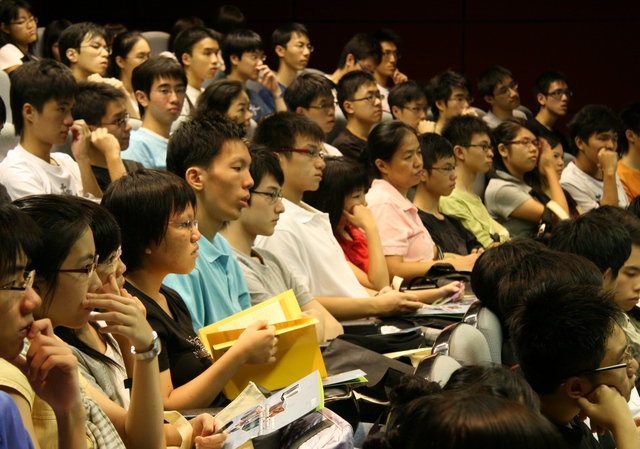
Image: Someone else's seminar, in Hong Kong. They had a bigger audience.

Who knew?
Thanks for coming, people.
Image: Someone else's seminar, in Hong Kong. They had a bigger audience.
Monday, November 21, 2011

Saturday, September 10, 2011
Course materials for my students

Apologies for the ugliness due to the loss of formatting. HTML is so complicated these days that I am going to need expert help just to find the problems.
Tuesday, May 10, 2011
Next fall's courses
Here's what I am teaching:
HIST 3116--officially listed as a "topics" course, this fall it will be offered as "crusade and jihad.". It is a 3 credit course.
HIST 3805--History of Islamic Civilization, from the beginning or even earlier up to the present (April 2012). 6 credits.
HIST 4505--this year this fourth-year seminar will be on "The World of Gregory of Tours"--early medieval France (AD 500-595). Past students, at NU and elsewhere, have really enjoyed this subject. Note that this too is officially listed as a topics course. 6 credits.
HIST 3116--officially listed as a "topics" course, this fall it will be offered as "crusade and jihad.". It is a 3 credit course.
HIST 3805--History of Islamic Civilization, from the beginning or even earlier up to the present (April 2012). 6 credits.
HIST 4505--this year this fourth-year seminar will be on "The World of Gregory of Tours"--early medieval France (AD 500-595). Past students, at NU and elsewhere, have really enjoyed this subject. Note that this too is officially listed as a topics course. 6 credits.
Friday, April 15, 2011
Graduate Research Conference, April 19, 2011 at Nipissing University
The conference will take place at the Monastery, Room M106
9:45-10:00
Welcome & Opening Remarks from Dean Bavington, MA History Graduate Advisor
10:00 – 11:00
Newspapers & History
Chair: Derek Neal
Whitney Croskery
“Constructing the Beastess: The Trial of Irma Grese and the British Media, 1945”
Rory Currie
"North Bay Ontario: The Victory Bond campaign during the Second World War”
11:00 – 11:15
Break
11:15 - 12:15
The Cold War in Foreign Policy and on the Big Screen
Chair: Steven Connor
Matthew Laur
“Multilateralism and Red Fear: Canada and the Indonesian Revolution”
Sterling Crowe
“Dying Hard: Popular Culture as Cold War Weapon, 1984-1989”
12:15-1:15
Lunch
1:15-2:15
The Local Angle: From Fisheries Management to Fishers of Men
Chair: Françoise Noël
Nancy Pottery
“Crises and Control: Fisheries Management on Lake Nipissing, 1968-2008”
Jakob Bauer
“Opposition from ‘Enemies’ and ‘Scoundrels’: Resistance to Rev. William Bell and his Religious Enterprise in Perth ON 1817-1833”
2:15-2:30
Coffee Break
2:30-3:30
Reading Discourses of Nationalism
Chair: Anne Clendinning
Jordan Crosby
“The good Canadian nationalist first must be a good Imperialist: Sam Hughes and the South African War, 1899-1900”
Ian Laplante
"The Violent Poetics of Space: Reading the Battle of the Bogside, 1969"
3:30 – 3:45
Closing Remarks from Nathan Kozuskanich, 2011-2012 MA History Graduate Advisor
9:45-10:00
Welcome & Opening Remarks from Dean Bavington, MA History Graduate Advisor
10:00 – 11:00
Newspapers & History
Chair: Derek Neal
Whitney Croskery
“Constructing the Beastess: The Trial of Irma Grese and the British Media, 1945”
Rory Currie
"North Bay Ontario: The Victory Bond campaign during the Second World War”
11:00 – 11:15
Break
11:15 - 12:15
The Cold War in Foreign Policy and on the Big Screen
Chair: Steven Connor
Matthew Laur
“Multilateralism and Red Fear: Canada and the Indonesian Revolution”
Sterling Crowe
“Dying Hard: Popular Culture as Cold War Weapon, 1984-1989”
12:15-1:15
Lunch
1:15-2:15
The Local Angle: From Fisheries Management to Fishers of Men
Chair: Françoise Noël
Nancy Pottery
“Crises and Control: Fisheries Management on Lake Nipissing, 1968-2008”
Jakob Bauer
“Opposition from ‘Enemies’ and ‘Scoundrels’: Resistance to Rev. William Bell and his Religious Enterprise in Perth ON 1817-1833”
2:15-2:30
Coffee Break
2:30-3:30
Reading Discourses of Nationalism
Chair: Anne Clendinning
Jordan Crosby
“The good Canadian nationalist first must be a good Imperialist: Sam Hughes and the South African War, 1899-1900”
Ian Laplante
"The Violent Poetics of Space: Reading the Battle of the Bogside, 1969"
3:30 – 3:45
Closing Remarks from Nathan Kozuskanich, 2011-2012 MA History Graduate Advisor
Thursday, February 03, 2011
History Seminar Series: Andrew Taylor, University of Ottawa, speaks on oral tradition and written record
From Dr. Derek Neal:
Our next History Department seminar will feature University of Ottawa medievalist Andrew Taylor, who will speak on:
Written Record to Memory: Delgamuukw vs. British Columbia and the Modern Historian
Friday, February 4, 2011
2:30-4:00 pm
Room A 226
Andrew will be using the landmark Delgamuukw land claims case as a starting point to illustrate what we can learn by thinking simultaneously about medieval European history and the history of Canada's relationship with First Nations. In both of these histories, there is a contested relationship between memory, or oral tradition, on the one hand, and the authority of the written word on the other, that greatly affected power dynamics between different groups of people.
Thursday, January 27, 2011
Dr. Mark Crane on scholasticism vs. humanism; another colleague shows his stuff
I don't think I can send out copies, as with the link to the Murton podcast just below, but let it be known that Mark Crane has also been busy, producing this article:
Mark Crane, "A Scholastic Response to Biblical Humanism: Noel Beda against Lefevre d'Etaples and Erasmus (1526)," Humanistica Lovaniensia 59 (2010): 55-81.
Mark Crane, "A Scholastic Response to Biblical Humanism: Noel Beda against Lefevre d'Etaples and Erasmus (1526)," Humanistica Lovaniensia 59 (2010): 55-81.
Subscribe to:
Posts (Atom)