An excerpt:
But, to begin with, I’ll call up the memory of my earliest experience of democracy.
When I was a small child, in Northern Ontario, there was a game played by the local children. It was a complicated version of “hide-and-go-seek”. Two teams of children would form up, one of which would leave a central gathering point on a complicated trail, and select a hiding place, leaving team members at strategic points, also hidden. One of their number would then return to the central point, meeting up with the other team. He or she (while the game mostly appealed to boys, girls were not excluded) would then draw a map on the ground, honestly representing the hiders’ route to their points of concealment, but omitting the crucial information of compass direction. With this partial information, the other team would set out in search, under the direction of a leader. The the leader of the hiding team would accompany the searching team. He or she would shout out coded words and phrases, which had been agreed upon by his or her team mates. These would convey information such as “the searchers are near but headed away from you” or “they are searching too far to the south of you”, etc. Some of the signals were meaningless, meant to mislead or confuse the searchers. The searching team also made use of coded signals to co-ordinate their search. One signal, however, was crucial, as it would trigger a mad scramble to reach the map and erase it. This was complicated by the ability of any scout to tag another, making him “freeze” on the spot, and the ability of any other scout to “unfreeze” the frozen ones. Neither team knew who was leader of the other team, since each had been selected after they had separated. Each team made use of various ruses, with scouts and leaders acting in various ways to confuse their opposite numbers.
It was an amazingly complex game for small children to play. I don’t know if it is still played. Later, as an adult, investigation led me to conclude that the game was of Native Canadian origin. This came as no surprise to me, as its elements are particularly suited to the Canadian physical environment and to its Native cultural environment. The hunting and tracking element, and the reliance on grasping the “high view” of a landscape are both significant.
But what is relevant here is that the game was as much a training for democracy as it was for hunting and tracking. Each stage of the game was characterized by a formal electoral process. Each team leader was elected by majority vote in each cycle of the game, and no leader could serve more than one consecutive “term”. Nomination and voting were carried out by specific procedures which, in later life, as a historian, I found documented among Native and Métis peoples in the Canadian north. It was to no team’s advantage to keep choosing the same people for the same tasks — the pattern would soon be useful to the opposition. But at the same time, a competent or experienced person was the optimal choice. Wildly competitive as the game was, it was also characterized by a consistent demand for fairness and equity. It is significant that nobody doubted that the map drawn in the ground would be an honest representation.
I grew up with this game as part of my mental furniture, and it came as a surprise to me when I found whole populations of people who had no childhood experience with any kind of democratic component. Their childhoods, I came to realize, were dominated by the experience of tyranny: parents laying down the law at home; teachers laying down the law in school; bullies laying down the law everywhere else. It is no wonder that many people have great difficulty dealing with the concept of democracy. It is no wonder that many people today cannot imagine democracy as anything more than some incomprehensible rigamarole preceding the appointment of a tyrant, who will then tell them what to do.
More on Phil's blog and more to come.
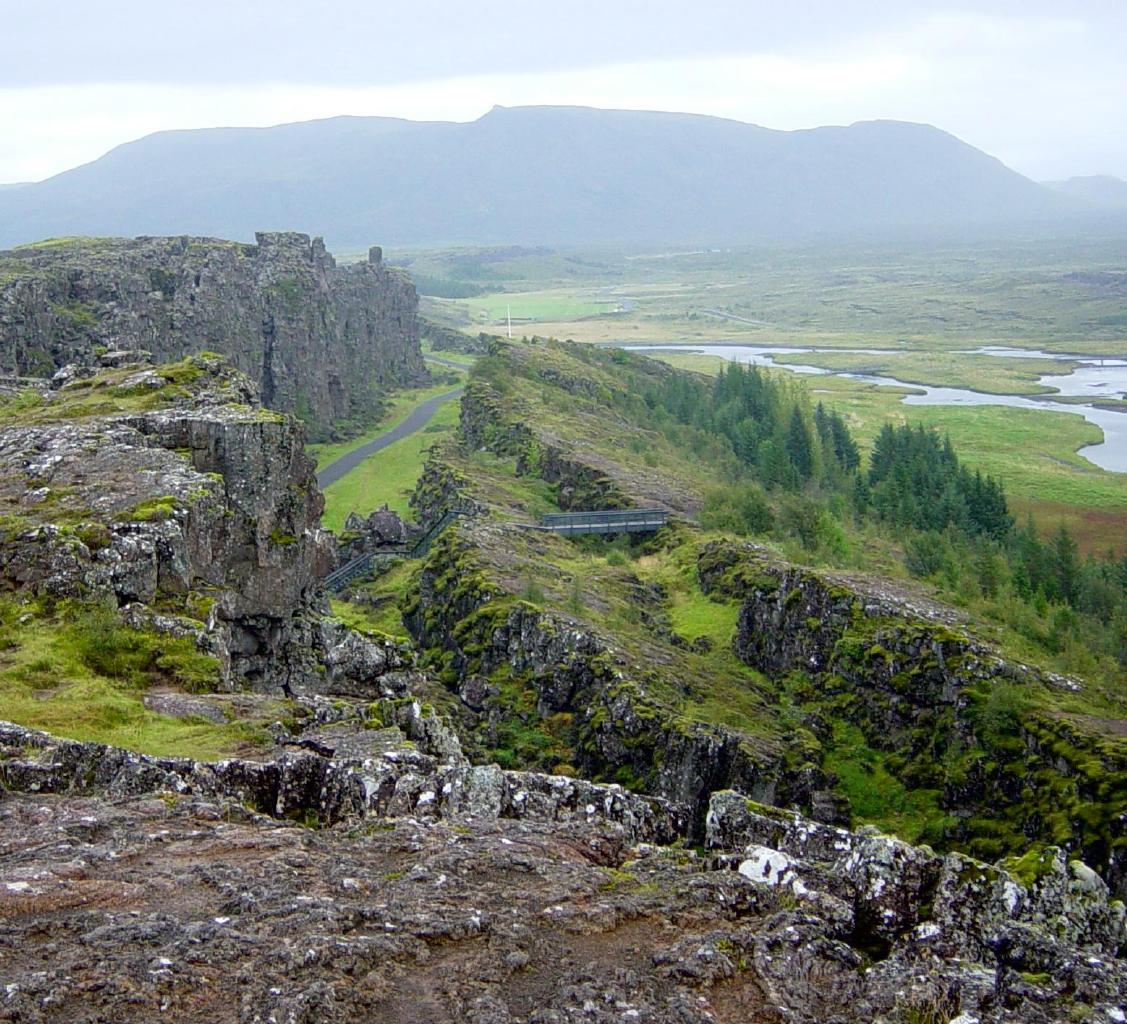
Image: the old meeting site of Iceland's thing.


