From Jack Vance's sf novel The Book of Dreams. ...Gersen sauntered along Corrib Place, looking into shops, which here affected a special eclat and offered only goods of eclat and distinction and elegance...Gersen paused ten minutes to watch a pair of puppets at a game of chess. Thhe puppets were Maholibus and Cascadine, characters from the Comic Masque. Each had captured several pieces; each in turn, after deliberation, made his move. When one captured a piece the other made gestures of rage and agitation. Maholibus made a move and spoke in a creaking voice:"Checkmate!" Cascadine cried out in anguish.He struck himself on the forehead and toppled backward off his chair. A moment later he picked himself up; the two arranged the pieces and started a new game....
Showing posts with label Jack Vance. Show all posts
Showing posts with label Jack Vance. Show all posts
Tuesday, March 17, 2026
A small piece of the "real" Jack Vance
Here's what I meant t0 include:


Monday, November 10, 2025
Kirth Gersen goes shopping
From Jack Vance's sf novel The Book of Dreams.
...Gersen sauntered along Corrib Place, looking into shops, which here affected a special eclat and offered only goods of eclat and distinction and elegance...Gersen paused ten minutes to watch a pair of puppets at a game of chess. Thhe puppets were Maholibus and Cascadine, characters from the Comic Masque. Each had captured several pieces; each in turn, after deliberation, made his move. When one captured a piece the other made gestures of rage and agitation. Maholibus made a move and spoke in a creaking voice:"Checkmate!" Cascadine cried out in anguish.He struck himself on the forehead and toppled backward off his chair. A moment later he picked himself up; the two arranged the pieces and started a new game....
Monday, October 20, 2025
Jack (the real) Vance -- as I see him
Jack Vance -- the sf and fantasy writer, not the guy who is US VP-- was a wonderful writer. He hhad a unique talent. His vast vocabulary, the place names, some of his proper placenanes which were wonderful,made his prose unmistakeable. Most of his characters, too.
One of his more obvious traits was the use of detail: One is seldom in any doubt what a character is wearing, especially what the colors of their costume. Consider this brief passage from The Star King. The action takes place at Smade's Tavern on Smade's Planet, which is entirely inhabited by Smade and his family.
"Will you drink?"[two pages later]Without waiting for assent he signaled one of Smade's daughters, a girl of nine or ten, wearing a modest white bouse and a long black skirt. "I'll use whiskey, lass, and serve this gentleman whatever he decides for himself".
Gersen signaled, and young Araminta Smade brought whiskey on a white jade tray, upon which she herself had painted a red and blue floral border.And that's all we hear about young Araminta Smade! Nothing happens to her, good or bad. She's just part of the background --though I don't think of her as just... She is part of Vance's effort to make his universe real
You should see what he does with landscapes! More on Vance. Yes, Araminta is a real if rare name.
Tuesday, August 08, 2023
Salman Rushdie, Jack Vance, and magic realism
I finally finished Salman Rushdie's novel The Enchantress of Florence and boy, what a read it is. The Scotsman quite accurately says
this book would do instead of food and drink.Everything you need is in there.In fact, I found it extraordinarily rich. As in the case of a very few books I have read, I often stopped in amazement at how much story Rushdie crammed into a paragraph, a half-paragraph, or a bit more. The Enchantress was sometimes (too?) rich. At least, I often stopped, put the book down and did not pick it up again. Was The Enchantress a too rich dessert? Rather, I think that it was made up of so many threads that it was hard to find my place. Is this a flaw in the book? I would point instead to another feature of the book, its vast scope. The tale stretches from Medici Florence to Delhi in the time of Akbar, the Mughal emperor who tried to an established, tolerant religion in his huge empire. Rushdie describes Akbar's line of thought in great detail. More: he does much the same for Akbar's male friends. And he does as much for the ladies -- several of whom wield mighty influence behind and before the throne, even though some of them are dead. Geography (this is the age of discovery) likewise is as important as character. Rushdie clearly was fascinated by the era, the cultures, the debates, and he wants his readers to be fascinated, too. He may have thought, if anyone asked, "Mr. Rushdie, is this a novel or a history?" that he could hardly answer. (Would he have better luck answering if he and his interlocitur were discussing Greek literature of the 2nd century CE?) His desire to have his reflections on the history of Hindustan and Renaissance Italy taken seriously shows up in his four-page bibliography (a good one) and his concluding offer to correct any errors in citation. As I was finishing up the book I was beginning to think how embarrasing my comparison of Rushdie to Jack Vance was. But then I picked up Vance's Showboat World and immediately saw why I had made the comparison and why it was not ridiculous after all. Vance and Rushdie have written magic realism (or science fiction and fantasy, let's be honest). Their novels often involve long journeys through exotic and mundane landscapes. Their characters often sadly reflect on the peculiar customs of the people they meet. The big difference between the two is that Rushdie anchors his tales in reality (you could call The Enchantress history)while Vance just makes things up (his glory). Yes, Rushdie is the better writer, but Vance is his cousin.
Monday, January 30, 2023
Jack Vance as a 13th century Armenian historian
Or maybe it's the other way around.
Jack Vance was an eccentric science fiction and fantasy writer who had a keen sense of the vast variety of human experience and especially of religion and social arrangements. I have no idea if he read the \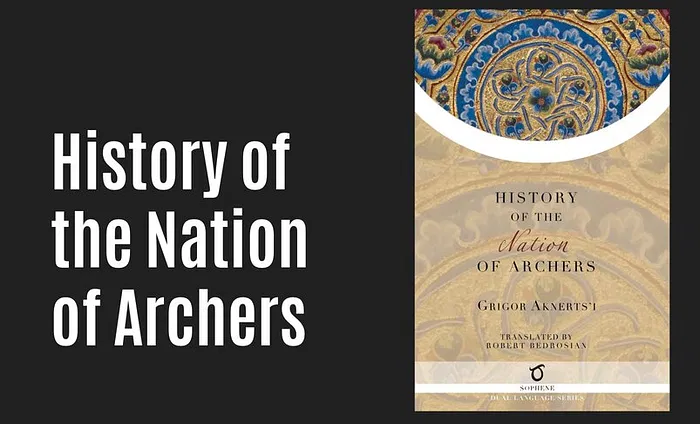
Wednesday, May 29, 2013
Jack Vance, fantasist extraordinaire, is dead.

Will McLean sends me sad but not unexpected news: One of my favorite writers, Jack Vance, is dead. He was nearly 100 years old. Here's an article that talks about his work.
My own take on Vance: when I was a kid and read his stuff, I thought it was intriguing exotic. And indeed many people will say even today that he was great at creating exotic situations and characters. But as I got older and more well-read in history, I came to the conclusion that Vance's characters in particular were much more realistic than I supposed.
Vance's characters often had seemingly irrational beliefs and practices; these were generally observed by commonsensical characters, sometimes from Earth, and one could easily identify with the observer and feel superior to the others, the exotics. I remember well the day when my own exoticism rose up and took control of me and I realized I could never feel superior to a Jack Vance character again. In other words, Vance's work was reportage more than it was invention. He just had a keen eye and a talent for recording what he saw.
Update: a much more substantial appreciation of Jack Vance.
Tuesday, May 04, 2010
Frederik Pohl on Jack Vance
One classic SF writer (and editor) reminisces about another: one of my favorite writers, Jack Vance.
Saturday, February 13, 2010
A great Canadian work of art
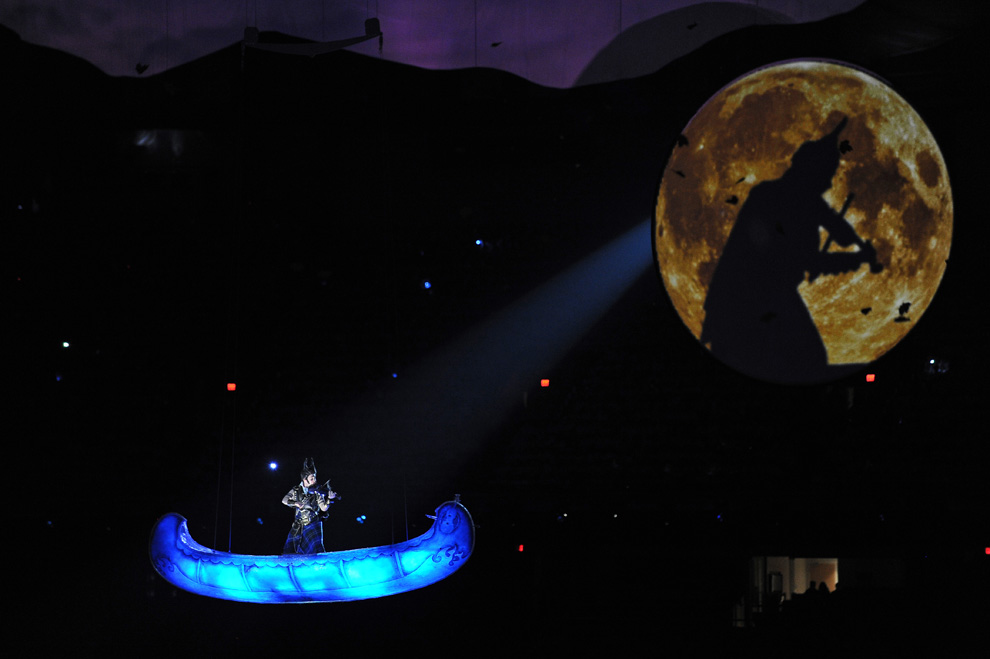 I have said elsewhere that I am a sucker for great ephemeral works of art, for instance (some) Olympic opening ceremonies.
Last night's pagentry was not perfect, but it had perfect moments.
My first reaction, sparked by the beginning act featuring representatives of First Nations, was to think, almost seriously:
"I hear that Jack Vance is blind, but I have a feeling he may have scripted this anyway. He sees things more vividly with his inner eye than most of us with the outer ones."
But really it was better than that; not the creation of a 92-year-old American I admire very much, but of much younger Canadians I don't know with dazzling technical skills and first-class creative ideas. And performers who could dance energetically for an hour straight! And fly!
Even if you saw it on TV, you owe it to yourself to see the Big Picture presentation, to remind you, and see details you might have missed.
Image: One of those perfect moments. I had a hard time choosing.
Thursday, July 16, 2009
The New York Times finally notices Jack Vance...
 ...now that he's 92 and blind. A development right out of Vance's fiction, which is always more like "real life" than you might suspect at first blush. To say the least.
Carlo Rotella is to be congratulated on an excellent article. Thanks to Brad DeLong for pointing this out.
Friday, April 18, 2008
A simple pleasure

One inobvious pleasure of being a professor is that I am introduced in every year and in every course to a list of student names. I have always loved the variety of names, their history, their idiosyncrasies. And some names are just pleasant.
Some of what I'm talking about is probably pretty obvious. I get to watch the name fads of 20 years ago march across my class lists, climb into prominence, peak, then fade out or perhaps make a comeback. Right now in Ontario the name Kaitlin ( various spellings) is coming on strong, while Jason seems to be less popular in my student cohort than it was a few years ago. I get to note such facts as the astonishing frequency of Francophone surnames among Ontarians people who probably don't think of themselves as Francophones -- at least their French is nonexistent. (And no, few of them are from Northern Ontario, where you might expect this.) Occasionally someone with a fictional or historical name of some fame shows up in my classes.
But the most fun of all is finding beautiful and unusual names in a class list. What I mean is, names that aren't obviously common in any language I know, that to me are just beautiful syllables, about which one can endlessly speculate. Are they in fact names that are common someplace unfamiliar to me, or are they made up by people with a lot of taste?
This year was a good one for the simply beautiful. Unfortunately, I can't share them with you, certainly not in this forum. That would be a terrible abuse of people's privacy. But there is nothing to stop you from looking around your wordy environment for this simple pleasure.
Image: names as inversions by Scott Kim, puzzlemaster.
Subscribe to:
Posts (Atom)
Sophene Books
ISBN: 978-1-925937-52-7
Excerpt (translated by Robert Bedrosian):
As we heard from some of them, this [Mongol] people arose from their land of Turkestan and moved to some area to the east, dwelling there in extreme poverty for a long time as robbers and wild men. They had no religion except for felt images which they carried with them for witchcraft. They were in awe of the sun, as though it were a divine power. Then suddenly they came to their senses, very straitened by their wretched and poor life. They called upon the aid of God, creator of Heaven and earth, and swore a great oath to Him to be faithful to His commands.
By the command of God, an angel in the form of an eagle with golden feathers appeared to their chief named Ch’ankez, calling out to him in the dialect of their own language. [Ch’ankez] went and stood opposite the angel in the form of an eagle out in the open at a distance of an arrow shot. And then the eagle, speaking their own language, related all the commands of God.
It's available from Sophene Books - ISBN: 978-1-925937-52-7. Thanks to medievalists.net for bringing this to my attention.