Showing posts with label comparative history. Show all posts

Monday, September 19, 2022

(Queen Invisible)

 I've been following the death of the Queen fairly closely, somewhat to my own surprise.  I shouldn't have been. I'm a historian with an interest in the celebration of power..I have been fascinated by the efforts of commentators to put Elizabeth in historical perspective.  And what have they been saying?

Next to nothing!

Well, more specifically (my own summary, not entirely fair):

  • Elizabeth was the longest reigning monarch ever 
  • None of us can remember when she wasn't Queen (actually an interesting point)
  • She was Head of the world-wide Commonwealth (which people aren't entirely unhappy with)

What struck me first was the total absence of comparisons to (Queen Invisible).(Queen Invisible) is such an obvious comparison point. 
  • She sat on the same throne as Elizabeth did.  
  •  Her reign was very close to being as long as Elizabeth's. 
  •  She was also head of a world-wide organization, though it had a different name 
I only have only heard one commentator refer to the most obvious point:  If you bundle the last few years of her father's reign with Elizabeth's, you see the disappearance of the (world wide organization which (Queen Invisible) was head of , which we will not name.)

Now I can see that in the celebration of  a monarch's life you might not want to discuss at length such an embarrassing  fact.  But the complete disappearance of (Queen Invisible)'s very name! A woman whose very name is stamped on every continent, on islands, waterfalls, provinces, major cities, and country crossroads.  (Queen Invisible) is gone because she is a background for everything.

A whole era was named after (Queen Invisible) in recognition of her symbolic place in world culture.  Will there be a Second Elizabethan era? a Carolean era? Ah, here I may surprise you by plumping for EII.  People my age woke up one day (1973) to find that  the clunky old furniture that their parents hid in the attic were now valuable antiques.  Other things were already named after (Queen Invisible), who receded farther into the past. needed a symbol for the new historical awareness they gained.  Elizabeth filled the bill. She was after all old enough to be an historical figure based on the idealized Great-Grandmother. In the near term, this excludes the more controversial public record of  Elizabeth as an institution.  

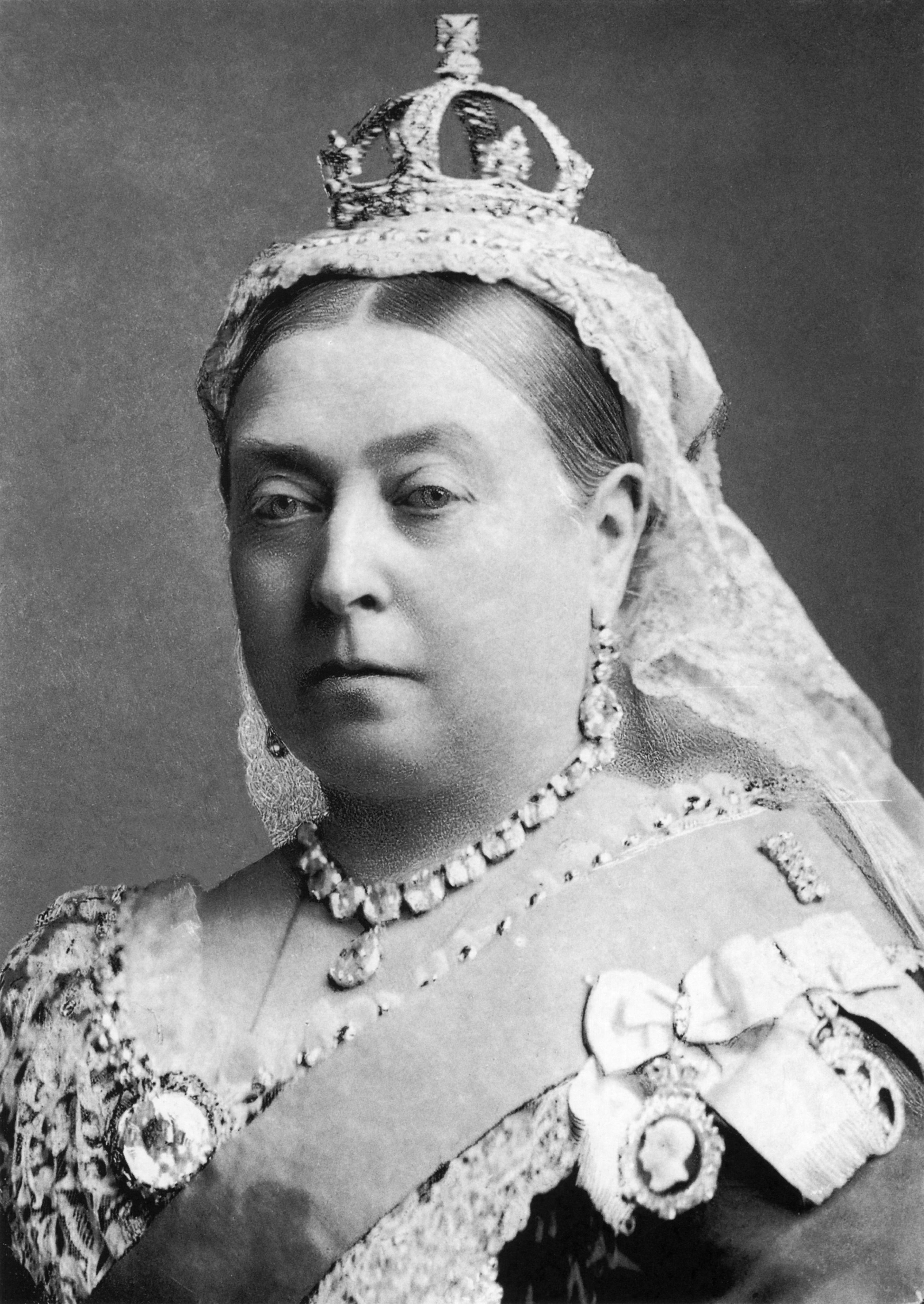
Image:  > Who is this woman? 


Wednesday, August 17, 2011

Go away and just see what happens

Often enough when I go away camping in August, and am paying no attention, something dramatic happens.  In 1989, I re-entered the world of news to hear that Hungary was taking down its stretch of the Iron Curtain.  In 1991, the coup against Gorbachev took place, followed quickly by the collapse of  the Soviet Union.

A lot of stuff happened this August, but for all the import of British riots and American Russian roulette with the economy, I think the beginning of the trial of Hosni Mubarak in Cairo wins the prize.

Cairo is the place, it is Paris in 1791.  Mubarak is Louis XVI and his judges are...?

When Louis fled France in rejection of the new constitutional monarchy, and was captured doing so, Thomas Paine told the revolutionaries  that how they treated the ex-king would determine the course of the new  republican regime.  He particularly warned against blood vengeance against the traitor-king, which would lead to more blood, and even more.  He was emphatically right.

Hosni Mubarak deserves to answer to a court for his actions, but the trial has its dangers.  The course and meaning and the consequences of the Egyptian revolution may well be determined in that courtroom.  Whether the Arab Spring keeps its potential for humane progress or descends into vengeance -- we shall see.

For a less hopeful set of developments, see these reports and reflections in Syria Comment.

Thursday, July 07, 2011

Advice to Arab democrats

Juan Cole lists ten mistakes made by the USA that he hopes can be avoided by the young revolutionaries of the Arab world. In the course of it he says what must not be said:

5. Make a bill of rights central to your new constitutions, and be specific about what rights people have and what actions infringe against those rights. Include electronic rights to privacy, such as freedom from snooping in private emails or warrantless GPS tracking. You have suffered from intensive secret police spying on your populations, and should know that rights to freedom of speech, worship, press and publication, privacy, a fair and speedy trial, and protection from torture are hallmarks of any democratic system. We have given up most of these essential rights to our secret police, without admitting we have done so and without calling them secret police. But you have lived through domestic surveillance and would easily recognized the violations of individual rights that have become routine in the United States and which are defended by our increasingly corrupt judicial authorities, including a whole series of attorneys-general.

And:
The blood of your martyrs for revolution is too recent and too precious, and too often belonged to young people who sacrificed a bright future, for you to squander this once-in-a-century opportunity to put liberty and democracy on a firm foundation in your countries. You are young, and you still weep at the thought of freedom, and of those who died for it. You are having your weddings at Tahrir Square to celebrate a new beginning. Be careful. Be very careful. In my lifetime I have seen the American state spiral down into a brutal tyranny that tortures, spies, union-busts, engages in illegal wars, and plays dirty tricks on dissidents. We used to have something much more like a democracy. Maybe we can learn from you how to safeguard something so precious.

Who would have thought in January that the world would look so different in July?

Friday, June 25, 2010

Boy, do I feel dumb! Afghan railways


I like to think of myself as smart and well-informed, more interested in world history and comparative history than other people, and sensitive to the little details that change the big picture.

I guess I have to revise that self-image. I just found out today, thanks to Eugene Robinson in the Washington Post, that Afghanistan has never built a railway of any particular length, that it is not connected to the greater network of Asian railways.

Here is my excuse: back in the 1920s, Afghanistan had a modernizing King named Amanulla. After reading Before Taliban about two years ago, I was aware that he built or at least started to build, a railway from Kabul. I know that he came to a bad end and was replaced by a more standoffish government, in typical Afghan style, but it never occurred to me that this was pretty much the end of railway building in Afghanistan! The Soviet military had big plans and actually laid some track, but the anti-Soviet resistance took care to see that it didn't get very far. In more peaceful times, the Kabul government has usually been opposed to the extension of foreign lines into Afghanistan, since those plans were almost always sponsored by the government of British India or the government of Russia.

I really should have known, since I've seen lots of pictures of the Khyber Pass. If you have seen them too, you'll notice that there's nary a track, and no place to hide one, either. Furthermore, that I was teaching first-year world history, I found that it was difficult to talk about and illustrate 19th-century developments without lots of pictures of locomotives. It was the prestigious symbol of modernization and development in those times -- and into the 20th-century, too. I should've been sensitive to the fact that there are no such pictures of Afghanistan, and what pictures of Afghanistan there are have no locomotives.

The lack of rail transport in Afghanistan is not just a symbol of the country's rejection of the outside world, it is one of the major concrete policies that Afghan governments have usedto guarantee of outsiders will not, in somebody's words,plunge a knife into the vitals of the country. (Of course they have had to deal with large-scale air transport for long time now, and there are highways, but that doesn't take away from the original point. See what Eugene Robinson has to say about the prospects of mining in Afghanistan.) I am sure that not everyone feels that way about the outside world, but enough do.

If you're interested in the railways of Afghanistan, such as they are, see this excellent article on the web and its various links.

Image: somebody else's railway.

Friday, June 04, 2010

Medieval Afghanistan?


  1. The area we now call Afghanistan existed during the Middle Ages, and back then it was not much like it is now, or like France or England at that time. Studying Afghanistan's actual historical development, from home of empires (instead of football of empires) to the decentralized home of Pashtunwali, might just be more relevant than trying to visualize Afghanistan as a rather slow off-the-mark Europe.
  2. These pictures. How does categorizing Afghanistan as much like medieval Europe account for the fact than an independent Afghanistan, not yet occupied by foreign forces, looked like this just four decades ago? Remember that some of the people in those pictures are still alive, in Kabul, or Peshawar, or Columbia, Maryland, or Toronto. In what way have their lives been like that of medieval Europeans? Be precise.
In some ways, we don't generalize enough in history. Generalization is all too often avoided by the prudent scholars and left to daring souls who, as a friend of mine once said, "extrapolate from the last two points on the graph." Or plunk down a handy "Western" analogy on a distant culture because it is more convenient than learning the details of its own specificity.

I wouldn't say "just.stop.generalizing." Rather, "check your generalizations carefully, and don't insist your analogy is a magic key to everything." It's not always Munich in 1938, nor Paris in 1793. The dead, as Modern Medieval says on its masthead, still have something to say, but they won't do the hard work of understanding for you.

Image: Not the Loire Valley, or the Welsh border.

Monday, April 26, 2010

The comparative present

Thanks to Brad DeLong, from whom many good things come, I have just been alerted to the existence of the publication called Business Insider, which seems to have a real predilection for charts and lists illustrating current trends. This kind of thing can be either very useful or very deceptive, but I love it, even if a given example doesn't hold up very well under strict examination. Comparative material has a lot of potential to make people think, if they don't take the first analysis they see as the final word.

Business Insider first two lists of can which I found interesting. Some readers may remember that I am skeptical about alarmism in connection with demographic crises, especially crises of shrinking population. Business Insider offers us a list of 10 countries heading for a demographic crisis, and what is interesting here is that includes both countries with too much and too little population growth, and some detailed discussion of each. I haven't had the time to read it properly myself, but at least I think it will be worth reading.

The second list discusses 10 countries that have significant oil reserves
and can be expected to pump away in the "distant future," long after places like Saudi Arabia have run dry. Of course it is hard to say what the world will be like then anyway, but the list does alert me to a couple of things. One, Iran has a lot of oil, and so will continue to be a "trouble spot" no matter what the ideology of the people in charge. Two, Canada is on that list, which I find quite alarming but not entirely surprising. I would rather not be a "trouble spot."

Thursday, February 25, 2010

Is the past another country?

Brad DeLong gave me the opportunity today to put a deeply-felt conviction of mine into words.

Brad was quoting from a blog called The League of Ordinary Gentlemen, whose author, Rufus F., was reflecting on the Odyssey.

[Brad]: Rufus F. on the Homecoming of Odysseus:

Homer “The Odyssey” | The League of Ordinary Gentlemen: I find his homecoming strange though. After winning a test of strength, Odysseus and Telemachus slaughter the suitors. The whole scene is excessive; he claims to kill them for their outrageous violence, but it amounts to boorish behavior and a failed plot to kill Telemachus. It would make more sense to run them off: “Scram, wimps!” Instead, Odysseus kills every last man for having dropped in for a visit and deciding to stay for several years...

[Brad:] It's considerably worse than that: consider the servant-women of Odysseus's palace who had consorted with the suitors:

"I will tell you the truth, my son," answered Euryclea. "There are fifty women in the house whom we teach to do things, such as carding wool, and all kinds of household work. Of these, twelve in all have misbehaved, and have been wanting in respect to me, and also to Penelope....

[T]he women came down in a body, weeping and wailing bitterly.... [T]hey took the women out and hemmed them in the narrow space between the wall of the domed room and that of the yard, so that they could not get away: and Telemachus said to the other two, "I shall not let these women die a clean death, for they were insolent to me and my mother, and used to sleep with the suitors."

So saying he made a ship's cable fast to one of the bearing-posts that supported the roof of the domed room, and secured it all around the building, at a good height, lest any of the women's feet should touch the ground; and as thrushes or doves beat against a net that has been set for them in a thicket just as they were getting to their nest, and a terrible fate awaits them, even so did the women have to put their heads in nooses one after the other and die most miserably. Their feet moved convulsively for a while, but not for very long...


Here's what I said in comments (touched up a little):

I am not so sure that the past is another country... Can't you imagine a similar scene taking place in another neighborhood in our own time, with the woman killers giving a similar justification? Remember that even in his own time that Odysseus was a smalltime pirate; today, unless he got particularly ambitious and inconvenienced the big guys,perhaps by hijacking a ship off the Horn of Africa, he would rate no space in the New York Times. Certainly the killing of the insolent women would get no coverage. Neither would the destruction of their elementary school or women's health clinic.


My point was, that the past is not one country, and our time is not a single country either, and the differences between different countries in any one era are very big sometimes' and broad similarities exist between some past countries and some in the present. Not everything that existed in the past exists in some corner of our own world now, but I believe that many things that existed in the time of, say, the Greek dark ages have rough analogues today. The failure to recognize that, I think, leads to one of the big errors of historical understanding: focusing on one country, one short period, one culture, one imperial court, one literary circle, and saying "this was the human experience on planet Earth at such and such a time."

And another serious mistake is to believe that some phenomenon that you find impressive or repulsive is absolutely unique in human history.

Tuesday, November 17, 2009

Nine nations: A China primer

I will be away from blogging till at least the weekend, so I came to the computer today feeling some obligation to leave you with something good. I was completely uninspired until Brad DeLong -- again -- came to the rescue by providing me with a link to Patrick Chovanec's Atlantic article on the Nine Nations of China. Like Mr. Chovanec, I was influenced by the 1981 book by Joel Garreau's Nine Nations of North America, in which he redivided Canada and the United States into economic and cultural areas that more reflected reality than the international and state/provincial divisions on most maps. It was a fresh approach that has since gone stale, as lazy people keep referring to it like nothing important has changed since the 1970s. But once again it renders yeoman service by inspiring this new article. I do not endorse the authority of the Nine Nations of China, since I'm about two or three steps above simple ignorance, but I found it interesting. Here's an excerpt:
This week, President Obama makes his first state visit to China. What kind of country will he find there? We tend to imagine China as a monolith: 1.3 billion people sharing the same language, history, and culture. The truth is far more interesting. China is a mosaic of several distinct regions, each with its own resources, dynamics, and historical character.

As a traveler, teacher, and professional investor who has been exploring China since 1986, I’ve come to think of these regions as the Nine Nations of China (inspired, in part, by Joel Garreau’s Nine Nations of North America). Taken individually, these “nations” would account for eight of the 20 most populous countries in the world.

As China’s economy becomes more integrated, these regional differences are taking on greater importance than ever before.

Friday, September 25, 2009

What I said about Spain and India -- a follow-up to the "Bad Samaritans" post

Ha-Joong Chang said in his book Bad Samaritans that "cultural explanations" of economic development often seem to be self-justification based on 20/20 hindsight. Here's what I said in 2005 at a conference at the Political Science Department of the University of Delhi about how similar discussion of the world history of democracy often misses the point.

What we need, as the record of modern democracy becomes longer and more detailed, is to focus on two things: distinct cases (to avoid the lifeless, silly, or counterproductive overgeneralizations); and the connections between democratic developments across borders and across cultures, so that we can progress from a number of national or regional histories of democracy, to a true world history.

To illustrate the importance of this effort, let’s look at the case of Spain, a provocative puzzle for any historian of world democracy. Spain was early on affected by the French Revolution, but for more than a century and a half thereafter, Spanish democracy seemed like an impossible dream. Spain appeared doomed by its culture and history to either authoritarianism or chaos. Yet in the mid-1970s democracy emerged in post-Franco Spain, and despite separatist sentiment and intermittent domestic terrorism, it has survived and flourished. The case of Spain, like the similar case of neighboring Portugal, confounds easy generalizations about the historical roots of democratic development.

For a very long time it was obvious to historians and commentators of all sorts that Spain, with its absolutist monarchical tradition and its intolerant religious establishment, must be outside the grand democratic tradition of the “West;” yet somehow despite all that historical baggage, in a moment and without attracting much attention, Spain transformed itself into a member in good standing of the democratic club. I cannot claim that this democratic transition has not been studied.[1] But one wonders how many historians not concerned with modern Spain have thought seriously about it, and whether any of them have revised their understanding of Spanish or European history in light of it. As a historian I can hardly argue that “historical baggage” is irrelevant to the life of a society; but clearly in the case of Spain a focus on historical baggage, on the national history and cultural history of Spain, narrowly conceived, deceived us all. Spain deserves more study, and it deserves to be put into a wide context, not as an odd exception, but as a prime datum in the political history of the late 20th century world.

The same can be said, even more forcefully, for India. That India is not like other successful democracies is a well-worn clichĂ©. For non-Indians, how much thought follows the phrase “world’s largest democracy?” Very little, I suspect. The importance of India’s success so far, for the world as a whole, may not be widely appreciated in India, either. Let me briefly state my point of view, which is based on a simple comparison of India with some other, well-known countries.

Imagine the world in 1900. Informed observers examine the prospects of four important regions over the upcoming century: Germany, China, Russia, and India. Which would be picked as the most likely to succeed? And which has, in retrospect? Restrict the criterion of success to “lowest casualty count,” to my mind a more sensible criterion than per capita GDP. Who comes out ahead? I think it is inarguable that, even keeping in mind the tragedies of Partition, the consequent wars on the subcontinent, and many other incidents of violence and disorder, that the casualty count has been much lower in India than in the other three. This alone is a significant fact of 20th century world history. But of equal importance is the explanation for that fact. Indian aspirations for democracy, and Indian implementation of democratic institutions deserve the credit. Again, do the thought experiment. Take away the aspiration, take away the implementation, what would the subcontinent look like today?


[1] Indeed, one of the first systematic treatments of the new democratic developments of the late 20th century was partly inspired by the Spanish case: Guillermo O’Donnell and Philippe C. Schmitter, Transitions from Authoritarian Rule (Baltimore: Johns Hopkins U.P., 1986).

Bad Samaritans, by Ha-Joon Chang

I just discovered this book, which came out a couple of years ago, thanks to Brad DeLong, who provided a link to a pre-print to chapter 9, "Lazy Japanese and Thieving Germans
- Are Some Cultures Incapable of Economic Development?"


Phil Paine and I have been working from a similar set of ideas when we discuss the world history of democracy (or political systems of other kinds). If I were teaching first-year World History, this might be the first thing I would have my students read. Anyone interested in world or comparative history should be exposed to this.

Here are some killer quotes:

So there you go. A century ago, the Japanese were lazy rather than
hardworking; excessively independent-minded (even for a British socialist!)
rather than loyal “worker ants”; emotional rather than inscrutable; lighthearted
rather than serious; living for today instead of considering the future
(as manifested in their sky-high savings rates). A century and half ago, the
Germans were indolent rather than efficient; individualistic rather than
cooperative; emotional rather than rational; stupid rather than clever;
dishonest and thieving rather than law-abiding; easy-going rather than
disciplined.
These characterisations are puzzling for two reasons. First, if the
Japanese and the Germans had such “bad” cultures, how have they become
so rich? Second, why were the Japanese and the Germans so different from
their descendants today? How could they have so completely changed their
“habits of national heritage”?

...

Not being able to see this, culture-based explanations for economic
development have usually been little more than ex post facto justifications
based on a 20/20 hindsight vision. So in the early days of capitalism when
most economically successful countries happened to be Protestant Christian,
many people argued that Protestantism was uniquely suited to economic
development. When Catholic France, Italy, Austria, and Southern Germany
developed rapidly, particularly after the Second World War, Christianity,
rather than Protestantism, became the magic culture. Until Japan became
rich, many people thought East Asia had not develop because of
Confucianism. But when Japan succeeded, this thesis was revised to say that
Japan was developing so fast because its unique form of Confucianism
emphasised cooperation over individual edification, which the Chinese and
Korean versions allegedly valued more highly. And then Hong Kong,
Singapore, Taiwan, and Korea also started doing well, so this judgment
about the different varieties of Confucianism was forgotten. Indeed
Confucianism as a whole suddenly became the best culture for development
because it emphasised hard work, saving, education, and submission to
authority. Today, when we now see Muslim Malaysia and Indonesia,
Buddhist Thailand, and even Hindu India doing economically well, we can
soon expect to encounter new theories that will trumpet how uniquely all
these cultures are suited for economic development (and how their authors
have known about it all along).

...

Fortunately, we do not need a cultural revolution before economic
development can happen. A lot of behavioural traits that are meant to be
good for economic development will follow from, rather than being
prerequisites for, economic development. Countries can get development
going through means other than a cultural revolution, as I explained in the
preceding chapters in this book. Once economic development gets going, it
will change people’s behaviour and even the beliefs underlying it (namely,
culture) in ways that help economic development. A “virtuous circle”
between economic development and cultural values can be created.
This is essentially what happened in Japan and Germany. And it is
what will happen in all future economic success stories. Given India’s recent
economic success, I am sure we will soon see books that say how Hindu
culture – once considered the source of sluggish growth in India (recall the
once-popular expression, “Hindu rate of growth” 29) – is helping India grow.
If my Mozambique fantasy in the Prologue comes true in the 2060s, we will
then be reading books discussing how Mozambique has had a culture
uniquely suited to economic development all along.

Thursday, June 25, 2009

Two book reviews from Phil Paine


The most widely read person I know is Phil Paine. (Some of my colleagues consider me widely read, but next to Phil I am a piker.) Over on his website, Phil has a monthly list of books, articles, and online resources that he has read, with occasional reviews of things he finds particularly noteworthy -- which is not necessarily to say, "good." Today he posted (June, 2009 section) two reviews, one critical and one very appreciative.

Critical:
(Samuel P. Huntington) The Clash of Civilizations and the Remaking of World Order

This is a stupid book. Unfortunately, it's also been a very influential one.

Huntington starts out by playing the old "civilizations" game, popular from the late 19th century onward. Nobody any longer takes you seriously if you talk about nationalities in a silly, anthropomorphic way ("The Dutch are cheese-eating, practical people, but they are doomed to failure as nation because they smoke too much marijuana and their feet must hurt from wearing wooden shoes"). But if you shift the discussion to "civilizations", big segments of the globe defined by arbitrary criteria, you can get away with it. You can define these "civilizations" any way you want, but usually they end up being nothing more than a map of the world's major religions. This is not surprising, since these mega-religions are usually accompanied by enough visual cues that you can quickly guess which one you are in by the shapes of buildings, clothing, or other material evidence. There is, of course, some common-sense truth to the observation that places where Islam is predominant have similarities, and places where Christianity is practiced are connected to each other, etc. It is an easy, but intellectually dubious further step to assume that the human race is divided into mega-tribal subdivisions, almost like species, and that these can be neatly drawn on a map. Anthropomorphizing these divisions is merely the old fallacy of "innate national character" writ larger. It appeals to the impulse to see the world in cartoons. This is exactly what Huntington does, way, way too much to make his work credible....

Huntington's knowledge of cultures is pretty shallow, because his main interest is really in the "clash" part of the book's title. The book is really about dividing the world into football teams so that you can imagine strategies of play between them... who should align with whom, and who is the "natural" enemy of whom. That's why the book appeals to so many armchair political pundits. You only need to remember a handful of "civilizations" and their accompanying cliché phrases to "get" everything. No need to bother remembering the names of hundreds of countries, or even consider the motives of individual human beings. Easy peasy.

What Huntington is really about becomes evident toward the end of the book, when he engages in a tirade against the evils of "multiculturalism", a phenomenon which he grotesquely misrepresents. The human race is, in his view, divided into distinct species, and, surprise surprise, nothing but trouble can result if they mingle. He kind of sneaks up on it with hundreds of pages of stuff about regions and religions, but what it's really about is how dirty foreigners should be kept out of America because then it will "no longer be America". Why? Because they don't have "Western values", And what are these "Western values"? Well, among them he repeatedly lists "pluralism and tolerance". So Americans and Europeans should, it seems, exclude people of different ethnicity in order to protect "pluralism"!! He even casually states, as if it were a forgone conclusion, that if the U.S. went to war with China, then Mexican-Americans would automatically refuse to participate, because it would "not be their war". This was so silly that I actually bust out laughing when I read it, startling fellow riders in the subway. The subway car was a typical Canadian one --- utterly and sublimely multicultural --- so the silliness of it was particularly delicious. It's plain that underneath Huntington's wacky logic and feigned scholarship, there is nothing more than another sclerotic old man having an apoplectic fit because he went to the corner store and saw signs in the window in funny-looking alphabets....
Appreciative:
(Edward L. Ochsenschlager) Iraq's Marsh Arabs in the Garden of Eden

This is a brilliant book. Ochsenschlager was engaged in an important archaeological project in Iraq, starting in 1968. The site was the Sumerian city of Lagash. Puzzled by some unglamorous, but intriguing artifacts, he started looking for analogies among the local people to interpret them. The local people included Bedouin tribes, the agricultural Beni Hasan, and the famous Mi'dan [Marsh Arabs] who lived in the reed-filled swamps at the conjunction of the Tigris and Euphrates. All these people (in 1968, at any rate) lived material lives thought to very closely resemble that of the ancient inhabitants of the land when it was Edinu, the Biblical Eden (hence the book's title). Thus, the author was drawn into the peculiar discipline of "ethnoarchaeology", in which most archaeologist still feel uncomfortable. Archaeologists are comfortable with places and objects. They aren't anthropologists. When they try to be, even in the laudable quest to understand ancient artifacts, they can easily screw up. Ochlenschlager is unusually sensitive to the pitfalls. ...

Ochlenschlager examined the making, use, and transformations of every article he could find --- weapons, storage containers, cookware, boats, musical instruments, children's toys. This could only be done in a serious way over many years, with extreme sensitivity in dealing with people, earning their trust and overcoming the perils of misdirection and misinterpretation. None of this is easy, and he shows exactly how it can be done right, or badly. Almost anyone who reads historical or archaeological interpretations of material evidence should read this book.

Some of the most delightful parts concern children's toys, and they reveal one of the marvelous subtleties of human behaviour to which most historians are oblivious:

In 1968 children in the villages over the age of 3 or 4 always made their own toys out of mud. Abandoned mud toys could be found everywhere in village courtyards, alongside the canals and marshes, and even in the fields. Unfortunately, domestic toy making disappeared rapidly. Manufactured plastic toys, available in nearby market towns, gradually replaced them. By 1970 a wide variety of cheap plastic toys was available to those of every economic level. Most children were attracted to these plastic toys because of their bright colors and their relative durability. At first children would continue to make toys that were not available in the market out of mud, but that came to an abrupt end in 1972. So popular had the new plastic toys become that most villagers could find no reason to continue using mud toys short of lack of money. Indeed cheapness came to be thought the sole criteria for continuing to make toys out of mud, and this impacted that part of the father's honor which depends on his ability to provide adequately for his family. To make a mud toy under these conditions was to bring dishonor on the family.

Without some knowledge of the role of honor and its requirement that men provide strong financial support to their families in these villages, what reasons would archaeologists give for the sudden and complete disappearance of mud toys? Bold colors and increased durability seem the most reasonable, and in part logical, answers, as the villagers found these attributes attractive at first. But logic alone does not begin to explain why old forms disappeared completely and with such speed; the compelling power of color and durability must not be overestimated. The children themselves were a real problem. When they had only the few animal forms sold in the suk to play with, they sometimes had to be forcibly stopped from making additional toys of mud. They missed the freedom of making any toys they could imagine and playing any game they wished. The kind and number of toys available now limited their games. Attractive colors and durability may have given impetus for the change, but it was the challenge to family honor that made parents forbid their children to make mud toys.

It takes a remarkable person to make such an observation. This book is full of such things.They'll inspire an acute reader to understand not only the culture of the marshes, and the artifacts of the ancient civilization of Lagash, but also many puzzling aspects of human life in general.


Plenty more stuff where that came from!

Image: A Marsh Arab settlement.

Tuesday, September 23, 2008

Memories of Rome (President's Choice?)

At home, Americans are arguing over whether the financial system will collapse or whether the rich will be allowed to turn everyone else into debt slaves. Meanwhile, in South Asia, American forces have been crossing the border from Afghanistan into Pakistan, and Pakistan has been shooting down American drone airplanes. And no one much seems to be paying attention to the second. Or the fact that the Pakistani government almost almost got blown up en masse a few days ago.

This reminds me of those good old Roman days when the entire provinces might rise in revolt because of senatorial money lending practices, and when the senators involved were forced to commit suicide, it was in regards to some entirely unconnected matter, like pure imperial animus.

Image: the death of Seneca, whom Abelard and Eloise thought was a great philosopher, but whose moneylending contributed to the great British revolt against Rome. I wonder if A and E knew about that? I doubt it. Painting by Gerrit von Honthorst.

Friday, May 16, 2008

Those people seem to be especially pious

In a couple of American op-ed articles the claim has been made that Barack Obama should not be viewed as a potential American leader who can reach out to the Muslim world, just because his father was a Muslim. In fact, say these pundits (no compliment here), Obama as president would be a complicating factor in American foreign policy: he would be regarded as an apostate and therefore subject to prosecution and the death penalty for apostasy. Edward Luttwack, a longtime purveyor of specious generalizations on very complex subjects (Roman military policy for instance), says for instance:

Because no government is likely to allow the prosecution of a President Obama — not even those of Iran and Saudi Arabia, the only two countries where Islamic religious courts dominate over secular law — another provision of Muslim law is perhaps more relevant: it prohibits punishment for any Muslim who kills any apostate, and effectively prohibits interference with such a killing.

At the very least, that would complicate the security planning of state visits by President Obama to Muslim countries, because the very act of protecting him would be sinful for Islamic security guards. More broadly, most citizens of the Islamic world would be horrified by the fact of Senator Obama’s conversion to Christianity once it became widely known — as it would, no doubt, should he win the White House. This would compromise the ability of governments in Muslim nations to cooperate with the United States in the fight against terrorism, as well as American efforts to export democracy and human rights abroad.

This is nonsense, as Juan Cole, a real expert in Shiite Islam, points out on his website Informed Comment. His commentary is well worth looking at.

Cole's discussion raised another point which has often occurred to me but which seldom seems to enter into intellectual discourse, whether it's about current events or historical phenomena. Cole says:
Another error is to see persons of Muslim heritage as necessarily religious. Frankly, most Muslims nowadays don't pay any attention to those kinds of minutiae.
That line reminded me of a conversation with a friend a long time ago. I had grown up in an area where Protestants were the majority but there was a large minority of Catholics. Catholics were regarded as being unusually pious. After all, they went to Mass every Sunday, had their own version of the Lord's Prayer which they insisted upon, and sent their kids to Catholic schools -- except of course when it was too expensive or inconvenient. My friend had grown up in a Catholic-majority area, where being a Catholic was pretty important to local identity, but it was the minority Protestants who were thought to be pious, since they seemed to be the ones going to church on regular basis, not the Catholics, who were just baptized and married in church.

Reading a short general description of what North American Catholics and Protestants were supposed to believe would do nothing to reveal the realities we had grown up with.

Educated people who want to be well informed often fall into a trap simply because they are open-minded and when studying religion that is not familiar to them, go to the library and pick up a book by a member of that religion, usually a member of the clergy or an academic theologian. Those people, however honest and outreaching they are, will probably give their readers what they consider the right slant, but a narrow one, on a very varied tradition, mostly followed -- or not -- by people who have never been to theological school and never considered entering the clergy for a second.

About 15 years ago I read a book on the history of Buddhism -- unfortunately I can't remember its name -- which tried to give the basic facts in about 200 pages. I came away from it very impressed by the variety of that tradition. In fact, I realized a general truth. Any big-time religion must contain a tremendous variety within it or it would never have become a big-time religion in the first place.

This insight, if accepted, should be especially useful for my students in the Crusade and Jihad class. Just because someone is labeled a Muslim or Christian, don't leap to assume that you know what that means for their social and political attitudes and priorities. Look and see what they really were, if the sources allow. Maybe some of the people you are studying weren't unusually pious after all.

Friday, August 24, 2007

Discovering the Global Past, Vol. 2, 3rd edition

On the off chance that some of the students in the upcoming Modern World History course, HIST 1505, may already be reading this, and for other teachers of world history who might be interested, I thought I'd say a few words about the document reader we will be using in that class: Merry Wiesner et al. (= and others), Discovering the Global Past, Vol. II: Since 1400, 3rd edition.

Mark Crane, HIST 1505's seminar leader, located this volume a couple of years ago and we are in his debt for finding it. It is a reader in which original documents are organized not only by theme ("Constitutional Responses to European Expansion") but in a clearly comparative way ("Constitutional Responses" compares the Gold Coast (Ghana) to Hawaii). As I am not only lecturing in HIST 1505, but leading one of the seminars, I looked much more closely at this book
than I had before, and it made fascinating reading when taken all together.

Here's what I liked:

  • Fabulous selection of themes and individual sources.
  • Very good editorial discussion of themes and documents (if not quite as fabulous as the selection).
  • Taught me a number of things I did not know.
  • Made me look forward to discussing them with students.
Will students like this book and learn from it? Who knows? Students, years, and classes are all different. But at least I won't be working with second-rate material.

Thursday, June 28, 2007

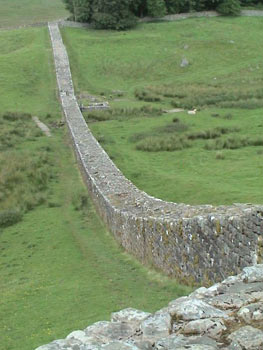
What was Hadrian's Wall built for? What is George Bush's fence meant to do?


Usually off-the-cuff analogies between famous historical events or institutions and things that are in the news right now are shallow or even risible. However, I found this mini-essay by Tony Keen at Memorabilia Antonina pretty impressive (if not necessarily correct). Keen obviously knows more about the Roman Empire than you find in survey treatments, and has an understanding of sources and political motivation that I find sympathetic.

Sunday, June 24, 2007

Bogota, Colombia: happier all the time?


Yesterday, Toronto's Globe and Mail had a series of articles on happiness, what it is and how to get it. The articles varied in interest, but I was fascinated by this one on Bogota, Colombia. It seems that Bogota's mayor, in an effort to make it possible for people to be happier, is working to eliminate something that really makes people miserable -- commuting based on pro-automobile development. I'd like to know more about this, but anything that reduces the murder rate is worth looking at. Here's another article on bicycles in Bogota.

Wednesday, June 20, 2007

Strange Turkish maps of a divided USA


A Turkish site referenced in a comment at Strange Maps shows the results of a contest for maps showing alternative versions of the USA: the Divided States of America. They are ludicrous, but that I think was the point of the contest, to show all those American amateur commentators who love to argue for partition in the Middle East what it would be like if the shoe was on the other foot.

Strange Maps

Andrew Sullivan's blog at the Atlantic alerts me to the existence of a blog called Strange Maps. Wow! It's already on my list of blogs to track.

The map above is what caught Sullivan's attention. It labels US states with the name of the country closest to it in Gross Domestic Product. Note that New Jersey is labeled as "Russia." This not only tells you that Russia is poorer than you think, but that New Jersey is richer.

Note that Saudi Arabia for all its supposedly fabulous wealth is only as rich as Tennessee.

Wednesday, June 13, 2007

Living in the future (?)-- battling Apocalypses

Brad DeLong says it best in his post Battling Apocalypses, where he cites other linked material. The story, briefly, is that the location of Jesus' appearance on the Last Day has become a minor (we can hope) issue in the American presidential campaign. And as Brad points out, there are international implications...

This reminds me that Robert Heinlein's pioneering science fiction series "Future History" featured a theocratic dictatorship in the USA.