Saturday, October 01, 2011

The threat of sectarian violence in Syria

From Foreign Policy, via Brian's Coffeehouse:

From the start of the Syrian revolution, the Assad regime's media have portrayed the overwhelmingly peaceful grassroots protest movement as a foreign-backed military assault. Its preferred catchall term to describe the tens of thousands of patriots it has kidnapped and tortured, as well as the thousands it has murdered, is "armed gangs." Despite a series of televised "confessions," the regime has not provided any serious proof of the supposed American-French-Qaeda-Israeli-Saudi-Qatari plot against the homeland. Nor has it explained the evident contradictions between its narrative and the thousands of YouTube videos and eyewitness accounts of security forces shooting rifles and artillery straight into unarmed crowds.

Of course it hasn't. Yet its propaganda is taken seriously by Russian and Chinese state media, certain infantile leftists, and a vaguely prominent American academic.
Tragically, the propaganda is also taken seriously by members of Syria's minority sects -- not by all of them by any stretch, but perhaps by a majority. It's tragic because perceived minority support for this sadistic regime will inevitably tarnish intersectarian relations in Syria in the future.

Those Sunni Syrians who are (understandably) enraged by the minorities' siding with the dictatorship should remember first that many Alawis and Christians, as well as many more Druze and Ismailis, have joined the revolution and that many have paid the price. Second, Sunnis should remember that Alawis and Christians have good reason to fear change, if not to believe the propaganda.


Alawis have a complex, esoteric religion that throughout history has been savagely denounced, and its adherents savagely oppressed. Ultimately it's a matter of political interpretation whether or not Alawis are to be considered Muslims. The Ottoman Empire didn't even consider them "People of the Book," which meant that unlike Christians, Jews, and mainstream Shiites, Alawis didn't enjoy any legal rights. The ravings of the influential medieval scholar Ibn Taymiyya (who thought Alawis were "greater disbelievers than the Jews, Christians, and Indian idol-worshipping Brahmans") contributed to their oppression and justified the theft of their lands around Aleppo and their forced retreat into the mountains. Until the 1920s, the Alawis were stuck in those mountains. Antakya (Antioch) was the only city where Alawis lived with Sunnis, and Antakya was gifted by France to Turkey before the independence of the modern Syrian state.

Most Alawis today are not particularly religious. Far from pushing Alawi tenets on the general populace, the Assads discouraged the study of the faith and repressed the traditional Alawi clerics. As a result, if individual Alawis do turn to religion, most tend to practice Sunni or mainstream Shiite rituals.


Of course, as far as the business of state is concerned, it should be entirely irrelevant whether or not Alawis are Muslims or even People of the Book. As Syrian citizens they should be guaranteed the same rights and the same access to political office as anyone else. It would help a great deal if revolutionary leaders and Sunni clerics were to state this as clearly and as often as possible. The blatant anti-Alawi sectarianism of Sheikh Adnan al-Arour (given prominence by Saudi Arabia) and Sheikh Yusuf al-Qaradawi (given prominence by Al Jazeera), both supposed friends of the revolution, does not help at all. Speaking to "those [Alawis] who stood against us," Arour recently promised, "I swear by God we will mince them in grinders and feed their flesh to the dogs."

The one thing the regime has done intelligently in the last six months is to play on minorities' fears. ...

 The two scenarios that most terrify the minorities (and almost everyone else) are, first, the rise of intolerant Islamism, and, second, sectarian civil war. Unfortunately, both scenarios become more likely with every moment the regime remains in power. The experience of being shot at, besieged, and tortured will inevitably drive some toward more extreme views. In addition, the military units slaughtering the people are overwhelmingly Alawi and commanded by Alawis. The regime's shabiha militias in Hama, Homs, and Latakia are Alawis recruited from the surrounding villages. These are the people torturing Sunni women and children to death, burning shops and cars, beating and humiliating old men. Their actions will have consequences. If the regime falls soon, the consequences will be legal and targeted solely at the guilty. If the regime doesn't fall soon, the consequences may be violent, generalized vigilante "justice." Then Iraq and Lebanon will become Syria's models.

Ontario election trivia--UFO and NOHP

Early in the 20th century, Ontario was governed by the UFO -- United Farmers of Ontario.  Such a party would be a non-starter today.

Another probable non-starter is the Northern Ontario Heritage Party, which wants provincial status for the North.  NOHP can't field candidates for more than 2 of the 11 northern ridings -- but somehow has a candidate in downtown Toronto.  So if you live in the St. Paul riding and want to cast a real protest vote, NOHP is available...

Friday, September 30, 2011

State of the Revolution in Egypt -- from Arabist.net

FIVE JANUARY 25 GAINS THAT HAVE (SO FAR) SURVIVED THE COUNTER-REVOLUTION By Steve Negus September 30, 2011 at 12:12 PM Share As quite a few commentators have gloomily noted, an Egyptian counter-revolution appears to be in full swing. The Supreme Council for the Armed Forces has vowed to step up its use of Emergency Law and demonstrating a willingness to crack down on street protesters, strikers, critics of the military, NGOs who receive foreign funding, and anyone else who might trouble their hold over the country. Newspapers are again being censored. The Interior Ministry seems to have successfully resisted real reform, at least for the time being. Supporters of the revolution are trying to count the tangible achievements of the January uprising and coming up short, sober observers are reminding us that those who create a revolution rarely get to determine its outcome, and some Edmund Burkes are surveying the scene and declaring that they knew all along that the naive youth of Facebook could never seriously shape the course of Egypt's future, except as pawns. I would agree that the vision of Egypt's future articulated by protesters in Tahrir is still far from being realized. However, they have already accomplished far more than many would give them credit for doing. Some examples: 1) Egypt's media and political political landscape has become vastly more pluralistic. SCAF has been cracking down on the media, but in a very piecemeal fashion, a few pebbles tossed against the torrent of licensings of newspapers and television channels licensed in the first months after Mubarak's departure. Every major political trend in the country has been allowed to form its own political party. This means, among other things that parties have more internal democracy: Islamists no longer have to huddle together under the semi-tolerated protective umbrella of the Muslim Brothers to avoid prosecution for illegal political activity, but have been free to split off into smaller groups that express their discontent with the parent organization. 2) Liberals have established themselves as a real force in Egyptian politics. Electorally, they may not be as organized as the Islamists, but the leftist/liberal secular-leaning youth are the acknowledged heroes of January. Groups like April 6 and the Revolutionary Youth Coalition now have major name recognition, and polls suggest that they are at the very least competitive with the Muslim Brothers. Prior to January, very few people would have mentioned the Islamists and the liberals even in the same breath as political forces of comparable power. 3) Egypt's political discourse has become increasingly liberal. The demands of the January uprising have hardened the consensus that Egypt needs to have a democratically elected government. And we're not talking about the "democratic transition" offered by Mubarak, where Egypt may be allowed to elect their 20 years down the road, if conditions are absolutely perfect -- pretty much everyone has agreed in principle that the next government must be fairly elected under the supervision of an independent judiciary. And with the exception of a few Salafis, pretty much every group insists that the government be "civil" -- ie, not an Islamic state. You may or may not believe that the Muslim Brothers would not establish a theocracy if given the chance. But in order to implement a radical agenda, a would-be radical vanguard party usually needs to pitch itself as offering a major alternative to the current order. Very few Egyptian politicians seem to have calculated that there is a market for religious radicalism. The revolution also seems to have strengthened the consensus in favor of individual rights -- leading Islamists have acknowledged a right for Muslims to convert out of Islam, for example, while Coptic activists have become more vocal in demanding that the Church should no longer have the capacity to regulate their personal lives, in particular their right to divorce. 4) Hundreds of thousands of Egyptians have become politically active -- not just in the crowds in Tahrir, but in the workplace as well. Egypt was never quite as compliant as it was portrayed to be, and workers, government employees, professionals, tenants, and other aggrieved groups have always staged strikes and demonstrators to further interests. But under Mubarak, the regime was usually able to keep these groups focused on their specific needs and fairly easily appeased with small concessions. Now, workplace organizations are far more militant, and far more likely to mix their own parochial demands with pressure to keep up reforms at a national level. Also, Egyptian institutions from labor unions to al-Azhar have signalled that they will no longer tolerate their leadership being appointed by the state, and insist on autonomy. 5) The calculus of running the country has been changed. No future government can assume, as Mubarak's did, that it can violate its pledges or make an utter mockery of elections, and only a small handful of activists will turn out to protest, outnumbered by the Central Security forces which surround them. No future autocrat can quite as cocky about rigging elections, about promoting a family member as heir, or otherwise ignoring the desires of the Egyptian public. None of these successes is irreversible. None are cast-iron guarantees of fair and democratic elections. But they are major obstacles in the path of any would-be strongman who wishes to reestablished an entrenched and lasting autocracy.

Monday, September 26, 2011

Where did the money go?


From NPR:
The amount the U.S. military spends annually on air conditioning in Iraq and Afghanistan: $20.2 billion, according to a former Pentagon official.
That's more than NASA's budget. It's more than BP has paid so far for damage from the Gulf oil spill. It's what the G-8 has pledged to help foster new democracies in Egypt and Tunisia.
"When you consider the cost to deliver the fuel to some of the most isolated places in the world — escorting, command and control, medevac support — when you throw all that infrastructure in, we're talking over $20 billion," Steven Anderson tells weekends on All Things Considered guest host Rachel Martin.
From Dan Froomkin at Huffington Post:
With just over three months until the last U.S. troops are currently due to leave Iraq, the Department of Defense is engaged in a mad dash to give away things that cost U.S. taxpayers billions of dollars to buy and build....
The most colossal relics of the U.S. invasion of Iraq will be the outsize military bases the Bush administration began erecting not long after the invasion, under the never explicitly stated assumption that Iraq would become the long-term staging area for U.S. forces in the region...
Most of the $2.4 billion was spent building about a dozen huge outposts that, in addition to containing air strips and massive fortifications also have all the comforts of home. The Al-Asad Airfield in Anbar province, for example, covers 25 square miles -- about the size of Boulder, Colo. -- and is known as "Camp Cupcake" due to its amenities.

The 15-square-mile Joint Base Balad, as Whitney Terrell wrote earlier this year for Slate, is "home to three football-field-sized chow halls, a 25-meter swimming pool, a high dive, a football field, a softball field, two full-service gyms, a squash court, a movie theater, and the U.S. military's largest airfield in Iraq."
 Imagine, a whole new Boulder in Iraq!

Image:  Al-Asad Airfield in its glory days.


Sunday, September 25, 2011

For the proud daughters

Speak to me of summer,
Long winters longer
Than time can remember,
Setting up of other roads,
Travel on in old accustomed ways.
I still remember the talks by the water,
The proud sons and daughters
That knew the knowledge of the land,
And spoke to me in sweet accustomed ways.

Saturday, September 24, 2011

Clash of civilizations time?

Since I am teaching both  Islamic Civilization and Crusade and Jihad this term, you can see how this piece, summarized from an Arabic source  in Syria Comment, could not help but draw my attention.
Why don’t the Christians in both Lebanon and Syria immigrate to Europe is allegedly what Sarkozy asked the Maronite religious leader on his recent visit to France.  According to the article, Christians had no place in the Middle East given the clash between Christianity and Islam.  The Maronite leader was shocked by what he heard which prompted the French leader to point to a document that cites how over three million Christians immigrated from Lebanon over the past 20 years and that the Middle East will face many problems in the future.
One wonders, but not very much, what the French president thinks about all those Muslims in France.

Monday, September 19, 2011

Another impressive re-enactment I missed: WMAW


That's "Western Martial Arts Workshop" to you, and it took place in Chicago this past weekend.  Get a gander at that gorgeous armor!

Sunday, September 18, 2011

About that Overview of Late Antiquity

Back  when I came to Nipissing University in the late 80s and early 90s, I was finishing up my first book, on fifth-century Latin ecclesiastical chronicles, and casting around for a new project.  One idea that occured to me was a zippy textbook on Late Antiquity, with lots of maps and pictures and punchy, straightforward language, not to mention fearless generalization.  After all, I had spent well over a decade reading intensively about the period, and I had a pretty good idea of how to fill the  major holes that remained in my personal knowledge.

So I happily began to read, write, and sketch maps.

When it was more or less done, I kind of chickened out.  I thought this "Overview of Late Antiquity" was pretty good, and accessible to a student or general audience -- a big priority -- but was it commercial?  Shouldn't it perhaps go as far as the First Crusade? Undercutting myself, I showed it to no publishers (DON'T DO THIS!) and put it on the shelf.

If it hadn't been for the Web, that would have been it.

But the Web did come along, I was approached by ORB to put together a section on Late Antiquity, and one of the first things I did was web the Overview.  At least, the text plus links to pictures elsewhere on the Web.  Regretfully, I never turned the sketch maps into polished images.

The Overview has been freely available on-line since about 1995, and I am sure it has been read by many more people than would have seen it if it had been put into print.  Currently, I am using it again to supply background material to my seminar students in the course "The World of Gregory of Tours."

And you know, I think it's pretty good.  You can see what you think if go here, or  if that doesn't work, here.

Image:  A late-antique version of heaven, from a 6th-century church in Ravenna.

Students in HIST 4505

There seems to be a problem accessing the Overview Of Late Antiquity. Try this direct link to chapter 1 section 1. http://www.nipissingu.ca/department/history/muhlberger/orb/ovc1s1.htm

Saturday, September 17, 2011

Friday, September 16, 2011

Time and a word


This evening  I listened to the second album by Yes, Time and a Word, from about 1971.  Did it take me back?  Perhaps, but maybe not to the actual 1971, but to the alternate world they created with their music in 1971.

I feel the same way about the Beatles, heard most recently on CBC1 as we drove home from North Bay.  Timeless -- but the music was timeless then.

Not to be missed: conjuring up Rome in AD 600


Dr. Beachcombing imagines the near-ghost town it must have been:

Let’s take the lowest sensible estimate for classical Rome – half a million – and the highest for Rome c. 600, about 50,000. That means that the population has not only been decimated, but that it had been decimated nine times over. And what is more these heirs of Rome (as fashionable ‘late antique’ historians call them) were resident in an echo box; a city that they no longer had the technology to repair, let alone recreate, where nine out of every ten residences were empty, where three and four story buildings gradually keeled over into the streets and where the Parthenon and the Coliseum looked down mockingly on the little people below, not so much dwarfs on giants’ shoulders, as blue-bottles buzzing around a cow’s backside.

Then, remember, perhaps the actual population of Imperial Rome was more like a million and the population of Rome c. 600 was more like  ten thousand, a hundredth of what it had been. The psychopathic Anglo-Saxon guard, the tourist from Scythia and the Pope and his tiny administration could shout as loud as they wanted and no one would have heard them in their ghost town. No one was listening, not even the red baked tiles made in a happier age.
I have recently lived across the river from Detroit...so this is evocative.  Detroit is not, however, quite so echoic.

Parthenon presumably should be Pantheon (above).

More on ancient population estimates in a later post.

Unexpectedly well

Why have things gone better in Libya than in Iraq after the fall of Saddam Hussein?  Veteran observer Rory Stewart has his theories but admits he doesn't know.  But this time it is different:

Libya did not look as shabby or dangerous as Iraq. Despite six months of fighting and uncertainty, the lawns in Tripoli were mown, the bougainvillea bushes were bright, and the rubbish was still in garbage bags, not strewn, as in Basra, in suppurating ditches. The shops and petrol stations were reopening, the water supply was beginning to return. The armed 15-year-olds were polite. No one at any of the checkpoints asked for a bribe, or our satellite phones. The Misrata militia in their jeeps were as friendly as the Knights of Zintan in their pick-up trucks. There was little talk of revenge. No one was shooting anyone else.

And to my surprise, there was little looting. In the executive offices, it was not just the furniture and the televisions that were untouched: even the silver ashtrays and gold paperknives were still on the desks. It seemed that no one had slipped even a fountain-pen into their pocket when the government left and the rebels came in. At night, the streets of Tripoli were so jammed with honking cars, waving flags, boys wearing the national colours, that one might imagine Libya had just won the World Cup. The government and the police were not in any position to prevent disorder, but it seemed that the Libyans were not drawn to looting or violence. And no one I spoke to, from expatriate engineers to young gunmen, expected that.

Already people are claiming that the euphoria and calm after the fall of Tripoli could have been predicted and can be easily explained. But such civility was not inevitable; it could not have been assumed from Libyan history or culture. Libya shares many features of countries where anarchy has prevailed. Like Afghanistan or Iraq, it has a distinguished history and has experienced periods of stability but lacks the essential trinity of the international state-building apostles: ‘a vibrant civil society’, ‘rule of law’ and ‘good governance’. It has a rapidly growing young population, which is only partially educated, and few jobs. The traditional forces of tribe and Islam co-exist with more cosmopolitan aspirations, as they do in the rest of the Islamic world.

Many of the positive things that can be said about Libya can be said about other more troubled countries – right down to the small details.
 ...
If we cannot come to any satisfactory conclusions on the London riots – a limited event, exhaustively documented, in our own capital – what sense can we make of why they did not riot in Tripoli?

Wednesday, September 14, 2011

Monday, September 12, 2011

Phil Paine in Crete

A long-time and well-read fan of Minoan archaeology gets to see the real thing up close:


On the Road Again

There ain’t no justice on the Aeriopagus

Athens Redux

The Prince of the Lilies

Minoan Exiles

Plateau of Lost Souls

Phaestos and Aghia Triada

Sleeping in Graveyards

Before the gates of Excellence.…


Imagine my surprise


In the first class meeting of my Crusade and Jihad course this morning, I said something like this:

You don't have to want to be a Christian crusader in the present, or even be a Christian, to have a vague positive feeling about those old holy wars.  For example, the recent movie Kingdom of Heaven by implication condemns some aspects of crusading, especially fanatics who go too far, but does not condemn crusading or Crusaders completely.  There are plenty of literary and film examples of this going back to Walter Scott in the early 19th century.  This results in the nostalgic feeling that somewhere sometime there was a worthy crusade pursued by sincere people who even if they made some mistakes had good hearts. 
Then I asked my students if they had any such nostalgic feeling.

Not one said they did.

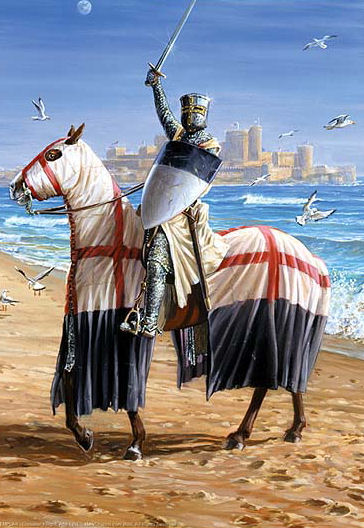
Image:  Richard Lionheart, North Bay seems to have fallen out of love with you...

Saturday, September 10, 2011

Course materials for my students

I have posted course outlines:


Apologies for the ugliness due to the loss of formatting.  HTML is so complicated these days that I am going to need expert help just to find the problems.

A taste of revolution

Football fans taunt the police in Cairo:


Discussed in detail  and translated at Arabist.net. 

Update:  Chanting, voting, and ancient church councils.

Nothing to say but it's ok...

Good morning, good morning!

Friday, September 09, 2011

Egyptian revolutionaries attack Cairo's Israeli embassy

I've called Cairo "Paris, 1791." It may be progressing to Paris, 1792, or even Tehran, 1980--the attack on the US embassy comes to mind, an attack on the hated foreign ally of the Old Regime.

Wednesday, September 07, 2011

What other people were doing on Labor Day weekend

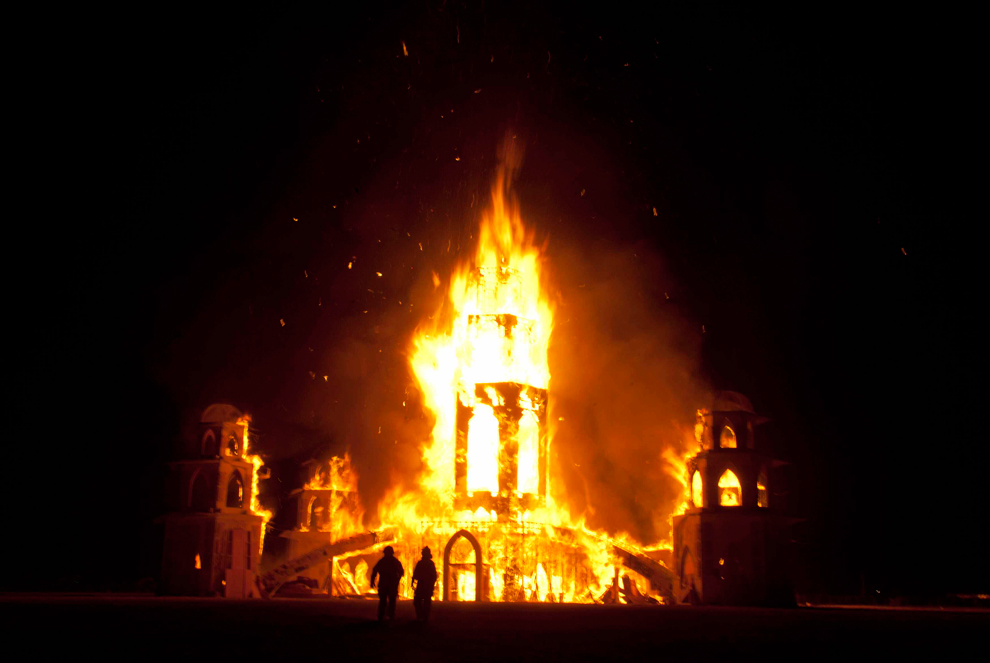
The Temple of Transition blazes at Burning Man (the 25th).


Thanks to the Big Picture.

Tuesday, September 06, 2011

Fighting in the woods


I am there dodging swords.  Thanks again to Kyle Andrews.

Jack Vance's hadaul, done SCA style as "Mordain's Rings"

A little medievalesque fun on my back field.  Thanks to Kyle Andrews.

Phil Paine visits Knossos, at last

His reflections after fulfilling a life-long dream:

I have my owned pref­er­ences about inter­pret­ing Knos­sos, but until now they’ve been based on pho­tographs, writ­ten descrip­tions, and site plans. These second-hand things give lit­tle feel­ing for the three-dimensional real­ity. It was only after exam­in­ing every cor­ner of the real site that I could con­fi­den­tially feel con­firmed in my own inter­pre­ta­tions. I am con­vinced that the “palace” of Knos­sos was no palace. The Minoan state of Knos­sos may or may not have had kings, but if they did, this com­plex was not an expres­sion of it. It is noth­ing like the royal palaces of Mesopotamia.

The most dis­cussed part of the com­plex is the Cen­tral Plaza, which Evans visu­al­ized as a palace court­yard, and the venue for the bull-leaping por­trayed in Minoan art. The plaza seems sin­gu­larly imprac­ti­cal for such an activ­ity, but it is not impos­si­ble. What­ever cer­e­monies were per­formed there, it seems to me unlikely that they were pri­mar­ily for the enter­tain­ment of a king, queen and court. Com­mu­nal feast­ing seems more likely. Per­haps the bull-leaping was done else­where, and the bull brought to the plaza for sac­ri­fice. Large quan­ti­ties of cups have been found, to del­i­cate for nor­mal use, and there are other signs of large-scale cooking.

The most impor­tant alter­na­tive expla­na­tion of the pri­mary pur­pose of the com­plex has been that it might have been a monas­tic com­plex. There are strik­ing analo­gies in its lay­out to monas­tic com­plexes in Tibet (which also focus on a rec­tan­gu­lar plaza), or the medieval Euro­pean monas­ter­ies (which also had exten­sive stor­age and work­shop facil­i­ties). I think this is closer to the truth, but I would take the argu­ment a step fur­ther. At one point, I turned to Filip and said: “This is an Agora.”
Every­thing about the place says “Agora” to me. In my mind’s eye, I can see a mar­ket place (gr. agora), spring­ing up between two or small sacred places that have turned into sanc­tu­ar­ies and places of pil­grim­age. These grad­u­ally evolved into shrines served by priest­esses, and even­tu­ally into a com­plex of monas­tic insti­tu­tions, but always main­tain­ing the cen­tral open space for a mix­ture of com­mer­cial, rit­ual, judi­cial, and polit­i­cal use. There is no one over­whelm­ing sacred place, as with a Cathe­dral or a Mesopotamian tem­ple. There is no one cen­tral audi­ence hall where a king could over­awe his sub­jects. The struc­ture which Evans imag­ined to be a royal throne room is com­pletely inap­pro­pri­ate for such use. It’s a small room, with a small chair set against the longest wall, at floor level. The “throne” faces a nar­row space partly filled with some kind of offer­ing bowl. Nobody ever built throne rooms like that. The aes­thet­ics is over­whelm­ingly inti­mate and reli­gious, not monar­chi­cal. No king who could com­mand the impres­sive resources of so wealthy a state would be con­tent with such a dinky lit­tle room, in which he could impress no one. All over the com­plex, there are no murals con­vey­ing kingly power and author­ity, noth­ing say­ing “look on this, ye mighty, and despair.” There are only pic­tures of flow­ers, chil­dren play­ing games, dol­phins leap­ing in the sea, farm­ers har­vest­ing their crops, ath­letes, ele­gant ladies, pets, and so on. The archi­tec­tural fea­ture are every­where con­sis­tent with domes­tic, com­mer­cial, and small-scale reli­gions uses.
At some points in time, the whole com­plex seems to have been con­sol­i­dated or rebuilt by a uni­form plan, but that is quite pos­si­ble in a non-monarchical con­text. The Agora of Athens under­went such a process under demo­c­ra­tic rule.

Which brings us to the intrigu­ing pos­si­bil­ity that Knos­sos, and the other Minoan cities such as Malia, Phaestos, and Gortyn might have been republics of some kind. Of course, no proof exists for such a hypoth­e­sis, but no proof exists for Evan’s roy­al­ist inter­pre­ta­tion, or sub­se­quent priestly the­o­ries. The level of evi­dence sim­ply does not per­mit any cer­tain­ties. Only the pos­si­bil­ity of deci­pher­ing the Lin­ear A or the hiero­glyphic texts holds any hope for that. But I think that a repub­li­can inter­pre­ta­tion has been resisted by archae­ol­o­gists and his­to­ri­ans under the influ­ence of dubi­ous assump­tions about lin­ear social evolution.

The emer­gence of repub­li­can state insti­tu­tions in the 18th and 19th cen­turies was partly inspired and harked back to Medieval and Renais­sance republics, though the con­ti­nu­ity between them was slim stuff, and largely depen­dent on folk­loric insti­tu­tions below the state level. The Medieval republics sim­i­larly harked back to the Clas­si­cal republics of Greece and Rome, though again the con­ti­nu­ity was ephemeral. It may be that the Democ­racy that emerged in the Greek polis of the fourth cen­tury BC was itself hark­ing back to remote prece­dents in the Bronze Age.

Before com­ing here, I had no clear notion of the broader phys­i­cal set­ting of Knos­sos. The “palace” was sur­rounded by a large (by Bronze Age stan­dards) city, of which we know very lit­tle. There were some large out­ly­ing struc­ture, and prob­a­bly a net­work of vil­lages sub­servient to, or inte­grated with the city. There were roads which led directly to the cen­tral plaza — another fea­ture that sug­gests an Agora. It’s only when you stand in them that you grasp that they were as tech­ni­cally advanced as any­thing the Romans built. The plaza is aligned with the region’s most dra­matic look­ing moun­tain peak. It is in a val­ley of fab­u­lous agri­cul­tural poten­tial. The sur­round­ing hills are ter­raced, and from what I gather the ter­races, con­stantly rebuilt, were there in Minoan times. This val­ley in turn was part of a sys­tem of broad, fer­tile val­leys and plains that dis­sects the island of Crete, with other major Minoan sites scat­tered in it. This area is extra­or­di­nar­ily beau­ti­ful. The Neolithic agri­cul­tural “pack­age” of domes­tic ani­mals and crops would have sup­ported a very high stan­dard of liv­ing, and com­bined with fish­ing and sea trade would have made life very sweet by ancient stan­dards. The murals don’t seem to lie.

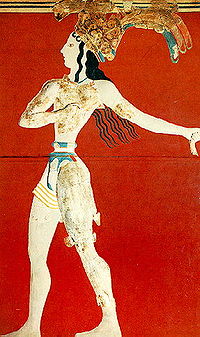
We returned to Irak­lion and vis­ited its Archae­o­log­i­cal Museum. This was almost as great a plea­sure as Knos­sos itself. It con­tains most of the famous arti­facts unearthed at Knos­sos. It’s only when you see them in real life that you can fully appre­ci­ate them. Some are of great beauty. Some are just delight­ful, like the toy or model house, which is so detailed and obvi­ously intended to be real­is­tic that we can con­fi­dently pic­ture what Minoan houses actu­ally looked like. The famous murals are there. You can imag­ine my delight at being pho­tographed in front of the “Prince of the Lilies” mural that adorned my web­site for years.

Image:  the mural.

Thursday, September 01, 2011

More ominously from Syria

Again from Anthony Shadid:
Abdullah represents what the government insists it is fighting. He is a Salafist, an adherent to a puritanical Islam, though he disavows the term. To him, Salafists bear arms, and he understands that the moment he and others fire a bullet in Homs or anywhere else, the regime will have the justification it covets to crush them with even more force. But there was no question of his devotion to a state that adheres to Islam as its foundation, and he dismissed the comparatively liberal rhetoric of some Islamic activists, like the Muslim Brotherhood. “They want to satisfy the West, and they don’t want to satisfy Muslims,” he told me the next morning. “They say, ‘We’re a modern Islam.’ But there’s no such thing as modern Islam. There’s Islam, and there’s secularism.” We debated the imposition of religious law and whether Christians and Muslims could intermarry. For the first time since I met him, Abdullah grew angry at me, when I suggested that no Christian or Alawite would subscribe to his vision of the state he would build in the wake of the revolution. He quickly cooled, aware that he shouldn’t show his emotions. At one point, he even suggested that however he might feel, however draconian he believed religious law should be, he was still a minority in the opposition. As much as the activists here talk of unity in the face of government oppression, I often felt as I did in Iraq in those early months after the American invasion in 2003. The more people denied their differences, the more apparent they became. For Iyad, Abdullah and others, there was deep anger at Hezbollah, the Lebanese Shiite movement that has baldly supported the Syrian regime. That anger had spilled into chauvinism against Shiite Muslims, intensifying the hostility they already felt for Alawites. They understood the importance of nonviolence, but even Abdullah admitted that if Assad fell, sectarian vendettas would erupt in the countryside. One of the young men warned darkly that events “were headed toward violence.”

Wednesday, August 31, 2011

A young Syrian rebel speaks


Anthony Shadid was there
:

As we prepared to leave, Iyad turned to me and said: “We’ve already won. We’re victorious now. I lived a life of terror, fear and killing, and now I’m free.”

Before the uprising, Iyad said, his life had been boring, even suffocating. He had a degree in business and economics, but jobs were scarce. The incentive to revolt was more ambiguous, though; he’d had enough of the humiliations, the propaganda, the hypocrisy, and now, finally, he could do something about it. No one encouraged him to go down to the first protest in Homs in March at the Khalid bin Walid mosque. No one had to. “I’m a person now,” he said. “I can say what I want. I love you if I want to love you, I hate you if I want to hate you. I can denounce your beliefs, or I can support them. I can agree with your position or disagree with it.” We shed the last of our belongings for another ride. “We’re not waiting to live our lives until after the fall of the regime,” he went on. “We started living them the first day of the protests. We began our lives.”

Book alert for students in HIST 4505

Issue resolved: Gregory of Tours:  Glory of the Martyrs will be available at a reasonable price.

Tuesday, August 30, 2011

Young supernova

From Astronomy Picture of the Day.

Battle in the Early Middle Ages: Expertise and controversy


"Historian on the Edge" provides us with an expert summary of his views on early medieval warfare.

I say "expert" rather than "authoritative" because as he points out, there are no authorities on this subject, only controversialists.

Highly recommended for students in my upcoming fourth-year seminar.

Image:  Conan as barbaric warrior.

Monday, August 29, 2011

Qs and Ks and other ways of transliterating Arabic

The Arabist explains:
 I was meeting with a bunch of business people who know no Arabic and little about the Middle East. The conversation turned to Libya and one of them turned to me and asked why there were so many spellings of Qadhafi's name. What follows is what I said, which is very much what Kal of TMND argues, except I put it in laymen's terms, without the phonetics.
In Arabic, Qadhafi's name is spelled القذافي which if you drop the article, means
ق - ذ - ا - ف - ي or q - dh - a - f - i. The "q" letter is almost unique to Arabic (sometimes called "the language of the qaf" — sorry, it's the language of the dhad, not qaf!) and often transliterated as a "k", since its pronounciation can be difficult for non-Arabic speakers. It is standard in classical Arabic and places like Fes in northern Morocco, but northern Egyptians, urban Syrians and others often pronounce this letter as a glottal stop, while southern Egyptians and Bedouins most often pronounce as a "g", as in "go". (This is why in Syria upscale Damascenes call the regime "the government of the Qaf", because pronouncing the letter is a country bumpkin thing to do, and Eastern Sunnis and Alawites — long dominant in the regime — often do it). Hence you see Qadhafi, Kadhafi or Gadhafi. The "dh" sound also has no equivalent in many languages as a standalone letter, and to top it off is made emphatic by a shedda — a kind of accent that indicates the letter should be doubled, which is why academics use the unwieldy "Qadhdhafi." And the "dh" is often not pronounced as such — in most colloquial Arabics, it is pronounced "d". I'm not sure why it might be pronounced "th", but perhaps this was used in Qadhafi's passport because it is close to the English sound in "the", which sounds very much like "dh".
I always write Qadhafi because it's simple and faithful enough without being completely anal, like Qadhdhafi. 


Sunday, August 28, 2011

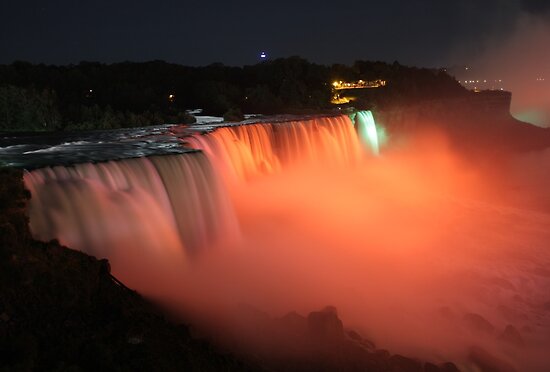
The falls turn orange


There was a time in this fair land when surveyors were national heroes


Not to  mention engineers.

I'm talking Colonel By, children.

There is a World Heritage site in the province of Eastern Ontario that most Canadians are oblivious to -- the Rideau Canal that connects Kingston on Lake Ontario to Ottawa on the Ottawa River.  It was built in the 1820s and 30s as a military route that would be less vulnerable to American attack.  The job was entrusted to an English army engineer who accomplished the task of connecting lakes and rivers with canals and dams, thanks to the efforts of many navvies (= "navigators"), in short order (only to find himself being investigated for overspending).

And it is still all there in all its 19th century glory!

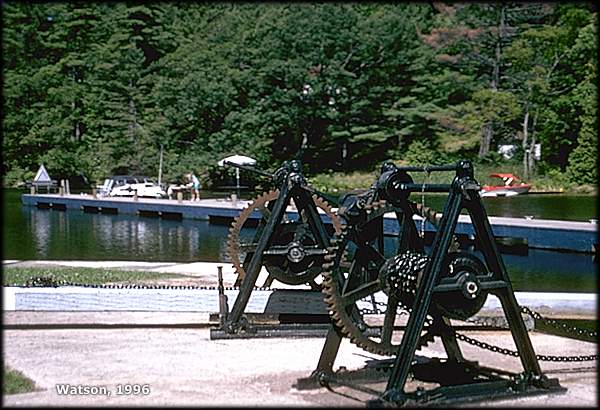
All but three of the locks are worked by human beings turning iron cranks by hand.  One of the explanatory signs canal-side calls this "brute force," but really there is nothing  brute about it.  The locks are so well-engineered that they move quite elegantly, and it really doesn't look like that much work -- though I am sure that it builds core strength in the university-age people who are there for the summer season.

In lovely contrast to the iron, timber and stone tech is the landscape that it goes through.  Parts of the canal system goes through intensively cultivated areas, but lots goes through what almost looks like wilderness.  Only very occasionally do roads cross the canal, and so if you are on a boat you feel like you are in a world apart from busy 21st century Canada.

Image:  Crabs or hand winches at Davis Lock; photo thanks to Paul Watson.

The legend of Jack Layton


People outside of Canada will probably not be aware that Jack Layton, leader of the federal New  Democratic Party (social democrats, pro-labor) and since the recent federal election Leader of the Official  Opposition in Parliament, died this week of prostate cancer.

Layton and his NDP made unprecedented gains in  the election, pushing past the Liberals and nearly destroying the Bloc Quebecois in Quebec.  A lot of the credit seemed to go to Layton, who seemed to appeal to those who could stomach neither Harper's Tories, Ignatieff's Liberals nor the separatist BQ.   The NDP oddly ended up, after decades of near-exclusion from Quebec, with most of its seats in that province.


How much could really  be expected of Layton in these circumstances?  Hard to say, given the Tory majority, the  difficulties of any national party in representing both Quebec and the rest of the country, and other factors.  But Layton and his party were not contemptuous of the grass roots, and that quality inspired an outpouring of grief and celebration.  Including a state funeral that was by normal rules not strictly something he was entitled to.    (I think the PM saw which way the wind was blowing and quickly put himself ahead of it.  More striking in some ways is the fact that the CN Tower and Niagara Falls will be lighted up NDP orange for a limited time.  All I can say about this is "!"

Other people besides me have realized that Jack Layton is now legend.  Struck down at his time of greatest triumph, we'll never know what he might have done or how he might have failed.  This, however, will not prevent some of them from answering those questions with great certainty and even in mythic language.

Thursday, August 18, 2011

Iranian absurdity: "Islamic" ban on waterfights

It appears that water fighting and water guns are becoming sensitive issues in Iran.

Earlier this month, a number of young people were arrested in Tehran after taking part in a water fight in public. They were accused of violating Islamic principles and norms.

A few days later, 17 people were reportedly arrested in Bandar Abbas for splashing water at each other. The young people in Tehran and Bandar Abbas used water guns and bottles.

Following the two incidents, General Ahmad Rouzbahani, head of Iran's morality police, warned that police "will act forcefully" against similar behavior and would not allow such events to happen in public places, or anywhere across the country."

Meanwhile, a woman in the Iranian capital who didn't want to be named told "Persian Letters" that last week in a shopping center in Shahrak Gharb, a shop owner refused to sell her a plastic water gun her 5-year-old daughter had seen in the shop window.

More at RFE/RL

The woman said the shop owner said that they had been ordered not to sell water guns. When she insisted that her daughter would not carry it in public and that no one would know she got it from his shop, the toy-shop owner said, "I don't want my shop to be closed for selling a water pistol.

He added that "the police have got the number of these pistols I have in stock and I am not allowed to take a single one for any of my relatives. They said they would check me every now and then."

"There are bikinis for your daughter and yourself, there are no bans on them but water pistols are another story," the woman quoted the shop owner as saying.

It's not clear why the shop owner had the pistol displayed in the shop window if he didn't want to sell it. It could be that he hadn't had time to remove it.

And as usual, Iranians are using humor to cope with the sometimes absurd situations they find themselves in. Here is a joke that is circulating about the recent incidents:

"A man walks into a shop and asks for a bottle of water. The shop owner wraps it in a newspaper and gives it to him. The man asks: 'Why did you wrap it in newspaper? It's only water, not alcohol or anything. (Alcohol is banned in Iran and when people buy it from dealers on the black market, it's often wrapped in newspaper and put in a dark bag.) The shop owner says: 'I know, but it's becoming very dangerous. You could end up in prison and your sentence could be heavier than for carrying alcohol."

-- Golnaz Esfandiari, Mehrdad Mirdamadi

RFE/RL

Mark Twain, the Middle Ages, and Baton Rouge

A brilliant little essay from Jeff Sypeck.


Wednesday, August 17, 2011

Go away and just see what happens

Often enough when I go away camping in August, and am paying no attention, something dramatic happens.  In 1989, I re-entered the world of news to hear that Hungary was taking down its stretch of the Iron Curtain.  In 1991, the coup against Gorbachev took place, followed quickly by the collapse of  the Soviet Union.

A lot of stuff happened this August, but for all the import of British riots and American Russian roulette with the economy, I think the beginning of the trial of Hosni Mubarak in Cairo wins the prize.

Cairo is the place, it is Paris in 1791.  Mubarak is Louis XVI and his judges are...?

When Louis fled France in rejection of the new constitutional monarchy, and was captured doing so, Thomas Paine told the revolutionaries  that how they treated the ex-king would determine the course of the new  republican regime.  He particularly warned against blood vengeance against the traitor-king, which would lead to more blood, and even more.  He was emphatically right.

Hosni Mubarak deserves to answer to a court for his actions, but the trial has its dangers.  The course and meaning and the consequences of the Egyptian revolution may well be determined in that courtroom.  Whether the Arab Spring keeps its potential for humane progress or descends into vengeance -- we shall see.

For a less hopeful set of developments, see these reports and reflections in Syria Comment.

Tuesday, August 16, 2011

Steve Muhlberger on the Combat of the Thirty -- a Chivalry Today podcast

Earlier this summer Scott Farrell of Chivalry Today interviewed me on the Combat of the Thirty against Thirty of 1351 and the contemporary re-enactments by members of the SCA at its Pennsic War.

Here is that interview.

This year I did not take part, but I did get the T-shirt. Really.

Friday, July 29, 2011

Are you ready for the country?

...cause it's time to go!

I will not be blogging for the next two weeks, unless I post some more today.

Thursday, July 28, 2011

Lowry in Berwick

Long ago, Berwick-on-Tweed was a prize in the Anglo-Scottish wars over old Northumbria. For centuries now it has been English, but the casual visitor (me) has a hard time telling which kingdom it belongs in (Northumbria?). The big social issue seems to be whether dogs should be welcome in pubs.

It is not a flashy place and may never have been, but Berwick had its artistic champion in the mid-20th century, when one L.S. Lowry did many striking paintings of the streets and the people. There is now a downtown "trail" on which you can visit sites he made famous, and which are pretty much the same.


A genealogy site has a good selection of Berwick neighborhoods and the paintings they inspired.

Another review of Noel Fallows' book on jousting in Iberia

This reviewer, writing for the online Medieval Review, also has a high opinion of it.

Fallows, Noel. Jousting in Medieval and Renaissance Iberia.
Woodbridge: Boydell and Brewer, 2010.  Pp. xix, 541.  $99.00.  ISBN:
9781843835943.

  Teofilo F. Ruiz
       University of California, Los Angeles
       tfruiz@history.ucla.edu


In this handsomely-produced and beautifully-illustrated book, Noel
Fallows offers, for the benefit of scholars and general readers alike,
four engaging, valuable, and interrelated contributions to our
understanding of jousting in late medieval and early modern Spain.
More importantly, the author, through a thoughtful deployment of texts
and images, takes us into the complex social and cultural world of
late medieval and early modern chivalry. Having just completed a book
on festive traditions (at the copy-editing stage presently), I can
only bemoan not having read this book earlier. And although I have
tried to incorporate many of Fallows' valuable insights and
information into my own work, his insights into these questions and
capacious treatment of the subject deserve more than just a passing
reference.

Anchored on the close reading of four seminal texts on jousting (plus
a series of other ancillary texts)--Pero Rodríguez de Lena's El
passo honroso de Suero de Quiñones
(1434), Ponç de Menaguerra's
Lo cavaller (1493), Juan Quijada de Reayo's Doctrina del
arte de la caballería
(1548), Luis Zapata de Chaves' "Del justador
(in his Miscelánea, 1589-93), plus short excerpts from Hernán
Chacón's Tractado de la cavallería de la gineta (1551)--Fallows
brings to life the chivalric world of jousting, connecting these texts
to their particular historical contexts. His four distinct and signal
contributions to the scholarship on jousting and other martial games
rest on his careful edition and translation of the above mentioned
works. His edition of the texts of Menaguerra, Quijada de Reayo,
Zapata de Chaves, and short excerpts from Chacón are the first modern
grouping of these works into one book. Although closely related to
each other thematically, they have never been examined as an almost
century and a half long discussion on jousting, warfare, and knightly
values. As such, his editions of these texts--also translated into
English for the first time--allow us to trace changes over time in the
rules, character, and equipment employed in Spanish jousts and
elsewhere in the West in the transition from the Middle Ages to the
early modern period.

Moreover, his new edition of significant portions--the most salient
ones--of Rodríguez de Lena's El passo honroso (the ur-text of
jousting in the Iberian peninsula) offers, once again through his up-
to-date edition and translation, an important source for the study of
fictional warfare in late medieval and early modern Spain, and,
because of the international nature of jousting in this period in
general and of the passo honroso in particular, the rest of
western Europe. His edited and translated short excerpts of Chacón's
Tractado is similarly the first version in English of a very
significant treatise on Spanish equestrian skills.

Second, although the edition and translation of the texts are found in
the second part of the book--almost as a stand-alone monograph--the
introductory study, found in Part One of Jousting in Medieval and
Renaissance Iberia
, expands on the textual evidence, offering to
the reader four diverse perspectives on Spanish chivalrous culture.
His introduction and chapter 1 provides a typology of knightly armed
encounters: mêlée tournaments, tournaments, jousts, and other such
martial games. The introduction also places Fallows' edition of the
texts within a judiciously drawn map of methodological and
historiographical approaches to the topic. His opinions are measured
and sound, dealing as he does with diverse and, often times,
contradictory interpretations. And he does this in a civil fashion,
assessing the worth of each approach, while presenting his own point
of view. Moreover, he allows the texts to guide us through these
discussions, and what can be better than his command of these primary
sources in guiding his readers to a new understanding of the evidence.

While noting the cultural importance of printing in the diffusion of
the new culture and technologies of jousting, Fallows, by deploying
Pedro Cátedra's ideas about "paper chivalry," Martín de Riquer and,
most famously, Huizinga's arguments about late medieval chivalry,
explores the links between literature and armed combat and the
circularity of writing about chivalrous deeds, fictional combat, and
the reality of lived lives. In chapter 1, Fallows turns to a careful
analysis of the three main treatises on jousting, examining how these
texts intersect with the authors' personal experiences, as well as the
different contexts from which they wrote. These brilliant mini-
biographies and case studies allow us to place the three main writers
of treatises on jousting within a long tradition of martial games,
warfare, and court life. For me in particular, the information on two
of these authors, Quijada de Reayo and Zapata de Chaves, and their
role at the great pageantry held at Binche in 1549 and at Philip II's
court is a most welcome revelation.

Although his introduction and chapter one are also in themselves a
small monograph, chapters 2 and 3 offer us a different and as equally
valuable contribution. These two chapters,  erudite and technically
complex, discuss types of armor, helms, saddles, weapons, and every
other piece of equipment used by knights during jousts and
tournaments. Profusely illustrated, technically precise, and with a
myriad of examples and images from the sources, they are a veritable
mine of information and a source for tracing the evolution of armor
and other equipment associated with these martial games from the late
fifteenth century into the sixteenth.

Chapters 4 and 5 shift the inquiry from armors and knightly equipment
to the nature of combat, its rules, and expectations. Fallows notes
the principles or ideals that governed the joust, how scores were
kept, excessive harm prevented, and wounds tended to. In chapter 6, he
turns his attention to war or, far more accurately, to the
relationship between jousting and actual warfare. Fallows, once again,
places his inquiry within the historiographical debate on whether
tournaments were a form of preparation for war or simply a form of
theater and display. Yet, his somber reflections on the actual carnage
found in sixteenth century warfare, the increasing toll taken by
firearms, and by the emphasis (for the sake of victory over the enemy)
on infantry and well disciplined formations over heroic single combat
clearly show the disconnect between the world of jousting and that of
the battlefield. Chapter 7 focuses on other forms of martial
spectacle, with the game of canes and the running of bulls featured
most prominently. These two semi-martial activities came to parallel
the medieval joust, marking a transition that the author describes as
"from sport to spectacle."

Early in his introduction Fallows notes that "chivalry must be seen in
order to be understood."(p. 27) This he has done as best as it could
be done by his vivid textual examples, case studies, and vivid
descriptions, creating a textual portrait of the joust. This he has
done superbly well by his choice of images and by the abundant amount
of visual material included in the book and keyed to the text. When
Spanish images have been lacking, he has borrowed from Italian,
German, French, and English visual evidence to provide us with a clear
idea of what was like to be in a joust. Technical at times, highly
engaging at most other times, this is a book that does many different
things, and it does all of them well. While examining the diverse
social and cultural aspects of fictitious and chivalrous warfare, the
texts that he has so carefully edited and translated remain a thread
that links the book's varied themes into a comprehensive and
compelling vision. I would have liked to see a more careful discussion
of the game of canes and of the role of bulls. I, for one, think that
they occupied an important place in the festive imaginary of early
modern Spain, but this is a very small quibble on what is an
impressive and important achievement. Fallows' super book, beyond
bringing these important treatises to the attention of scholars and
other readers, reintegrates Spain--often neglected in Huizinga's
masterpiece or in Roy Strong's discussions of festivals--into the
general late medieval and early modern European culture of jousting
and chivalric culture.  That in itself is a worthy achievement.

Monday, July 25, 2011

Modern Medieval: (inflammatory) language has consequences

Crusading rhetoric, then and now.

Ideology

Boris Johnson in the Telegraph, on the Norwegian "Templar:"

It is not enough to say he is mad. Anders Breivik is patently mad: no one in their right mind would behave as he has done. Nor is it enough to say that he is evil. If the word evil has any meaning at all, then it must obviously apply to a man who can go to a lake island summer camp, call innocent young people to run towards him – and then shoot 85 of them with an automatic rifle.
We will never be satisfied with simple words like “mad” or “evil”, and for the days and weeks ahead we can expect exhaustive psychoanalysis of this dreary and supercilious 32-year-old sicko. We will summon and interview all the potential hobgoblins of his mind. With the help of the Norwegian investigators, we will try to understand how these demons persuaded him to engage in an act of such premeditated cruelty; and as our guide we will use the 1,500-page manifesto of hate that he (and possibly his accomplices) have posted on the internet.
It is in many ways a preposterous document, with its plan to revive the ancient order of the Knights Templar, with Breivik as “Justiciar Knight”. The idea is to mobilise an army of similar loathsome berks and to liberate Europe of immigrants by 2083. It seems that this is the 200th anniversary of the death of Karl Marx, whom Breivik blames for egalitarianism, feminism, multiculturalism and all manner of other things he dislikes. Breivik’s attempt at Mein Kampf is awash with Wikipedia-generated teenage ruminations about Gramsci, Adorno and Islam, and I must confess I have not slogged all the way through to the end.
But I have read enough to grasp the gist – and there is something both curious and troubling in his obsessions. He goes on and on about the EUSSR and “Eurabia”. He attacks multiculturalism as a “big lie”, and asserts that “political correctness now looms over Western European society like a colossus”. “Can the European Union be reformed?” he asks. “I doubt it. The EU is bound together by a self-serving class of bureaucrats who want to expand their budgets and power, despite the harm they do.” He claims that Europe has been systematically betrayed by mass immigration from Muslim countries, and that the method of this immigration has been concealed from the electorate. He cites a great many British commentators to make his points. Indeed, it is fascinating to see how rooted is this Norwegian extremist in the political discourse of the Anglosphere.
My friends, there is no easy way of saying this: a lot of what this evil nutcase says could be drawn from the blog-post threads that you will find in the media, especially the “conservative” media, in Britain. Some people will read his dismal expectorations and conclude that this inflammatory guff is what really drove him on. They will say that his barbarism was spurred by fury at the EUSSR and immigration, just as the murders of 9/11 were triggered by the various tenets of Islamic extremism.
It is certainly true that on the face of it he has much in common with some recent Islamic suicide bombers. He is disturbed by female emancipation, and thinks women would be better off in the home. He seems to be pretty down on homosexuality. Above all – and in this he strongly resembles an Islamist – he believes that his own religious leaders are deeply decadent and have deviated from orthodoxy. He is repelled, like so many Muslim terrorists, by anything that resembles the mingling of cultures.
People will say that we are looking at the mirror image, in fact, of an Islamic terrorist – a man driven by an identical but opposite ideological mania. There is certainly a symmetry here, and yet in both cases, Breivik and the Muslim bomber, I don’t think that ideology is really at the heart of the problem. Yesterday the television reporters found an acquaintance of his from Norway, a fellow called Ulav Andersson, who said that he had known Breivik pretty well. He was surprised by all the Knights of Templar stuff, because he had never really been religious, and he wasn’t aware that he had been interested in politics.
“He didn’t seem opinionated at all,” he said. He just became chippy and irritable, said Ulav Andersson, when some girl he had a crush on jilted him in favour of a man of Pakistani origin.
It wasn’t about immigration, or Eurabia, or the hadith, or the Eurocrats’ plot against the people. It wasn’t really about ideology or religion. It was all about him, and his feeling of inadequacy in relation to the female sex. The same point can be made (and has been made) about so many of the young Muslim terrorists. The fundamental reasons for their callous behaviour lie deep in their own sense of rejection and alienation. It is the ideology that gives them the ostensible cause, that potentiates the poison in their bloodstream, that gives them an excuse to dramatise the resentment that they feel in the most powerful way – and to kill.
There is an important lesson, therefore, in the case of Anders Breivik. He killed in the name of Christianity – and yet of course we don’t blame Christians or “Christendom”. Nor, by the same token, should we blame “Islam” for all acts of terror committed by young Muslim males. Sometimes there come along pathetic young men who have a sense of powerlessness and rejection, and take a terrible revenge on the world. Sometimes there are people who feel so weak that they need to kill in order to feel strong. They don’t need an ideology to behave as they do.
Michael Ryan had no ideology in Hungerford; Thomas Hamilton had no ideology in Dunblane. To try to advance any other explanation for their actions – to try to advance complicated “social” factors, or to examine the impact of multiculturalism in Scandinavia – is simply to play their self-important game. Anders Breivik may have constructed a portentous 1,500 page manifesto, but like so many others of his type he was essentially a narcissist and egomaniac who could not cope with being snubbed. We should spend less time thinking about him, and much more on the victims and their families.

But then read the comments...

Saturday, July 23, 2011

Crusader

The Norwegian terrorist considered himself a Knight Templar, thought "multiculturalists" were traitors, and expressed admiration for the effectiveness of al-Qaeda.

Another member of the "rivers of blood" gang. And oh so self-righteous with it.
z

Update: An older post on the rivers of blood gang.

The Atlantis mission-- end of an era

Let's hope a new era succeeds it.


Again, brilliant photography from the Big Picture.

Thursday, July 21, 2011

Marinus Green


Seen today on the Detroit River, a ship evidently named after a cousin of Sirius Black.

Wednesday, July 20, 2011

Summer, Park Avenue, 1930


From Ephemeral New York.

An 18th century challenge between the armies

At the historic site called Beamish, in County Durham, there is a gentleman's house recreated to the era of the 1820s. It's not very big or very impressive, but it has pretention. Part of that is mediocre but fashionable -- or maybe just past fashionable -- art in the form of engravings.

One of them is a single sheet illustrated and captioned recording the 18th century military careers of Belgrade and Clumsy. Belgrade was a widow (?) who continued to follow the British army after she lost her husband. The engraving celebrates her role in rescuing and caring for wounded soldiers.

Clumsy was her dog. And what a dog! At the battle of Dettlingen, as French and English armies faced each other, a dog emerged from the French lines and began to berate the English in dog fashion. Clumsy was having none of it. He went out, beat up the French dog, chased him away, and then calmly returned to the English lines.

The English went on to win the battle.

You can't make this stuff up. Well, I didn't. But just as I saw every modern re-creation and restoration at every historical site I visited in Britain, I can't help seeing Deeds of Arms everywhere.

Sunday, July 17, 2011

Beamish and Puffing Billy!

In County Durham there is an amazing outdoor museum called Beamish, where various structures have been relocated and restored.

So there is an Edwardian high street, a coal mine of the 1850s, a "home farm" of the late 19th century, a Georgian-era gentleman's country house of the 1820s, and more.

Somehow I managed to miss this amazing place until now.

One of the best parts for me were the vehicles and the steam engines. The high point, a ride on an 1820s train pulled by Puffing Billy!

Saturday, July 16, 2011

Guy Halsall asks...


Why do we need the barbarians?


My contribution to these sessions is essentially to sum up by asking you one big question: why do we need the barbarians?  For it seems that we really do need the barbarians.  The answer was found, or at least suggested, in 1904 by C.P. Cavafy in his famous, much quoted, poem “Waiting for the Barbarians” (even quoted, inexplicably, in the names of chic jewellery boutiques in the 7me arrondissement in Paris, as left):

“Because night has fallen and the barbarians haven’t come
And some of our men just in from the border say
There are no barbarians any longer.

“Now what’s going to happen to us without the barbarians?
Those people were a kind of solution.”

He was right; the bigger question, a hundred years on from Cavafy, is probably ‘a solution to what?’  As far as I can see, the problem which they solve cannot be ‘why did the Roman Empire fall?’  The barbarians’ role in any analysis of the Empire’s collapse must surely be sought under ‘consequences’ or ‘effects’ or – perhaps better – ‘components’, rather than under ‘causes’.  If one looks at the matter in simple descriptive terms, the number of provinces or amount of territory actually conquered by barbarians during the fifth century is minimal.  Note that the general move, in the colour scheme adopted in these maps [a reference to the PowerPoint Slides, I'm afraid, but they were simply the maps in Barbarian Migrations], is rarely from white to black, from Roman rule to barbarian rule, but from white to some shade of grey, either as a federate kingdom or as an area simply where the write of the Ravennate court did not run.>


Lots more, from what was a contentious paper at the Leeds conference this past week.

Wednesday, July 13, 2011

Teargas poems from Egypt

And the Arabist:

I loved these revolutionary poems, by Egyptian poet Kareem Abdulsalam and translated by Elliott Colla over at Jadaliyya. The first two probably deal with events that took place on January 28. The last one speaks to the longing for Midan Tahrir as a place in which everything seemed possible, and everyone felt purposeful (a longing that as we've seen has led people to return to that square and others in the past week). Enjoy. 

4. What Comes From a Cop

Armored cars
Boxes of perfected fear.
     We thought they were divine creatures come to crush us
          as native Americans first looked at horses. 
     We thought death itself sprang from them.

Armored car
     Went up in flames
     And the policeman inside struggled against the tongues of fire
          Fought against fear.

When we rescued him, 
     He joined the rebellion.


5. He Thought We Were Going to Kill Him

Central security policeman
Peasant who came straight from the village
To fire tear gas at revolutionaries. 
When we grabbed him, 
He thought we were going to kill him
And cried like a child,
     I want my brother. He’s over there
     In that burning armored car.

We took him by the hand
     To his brother—the very one from the last poem. 
He’d taken off his black vest, 
     And was sitting on the ground with the revolutionaries.


6. What Is to Be Done, Now?

What shall we do, now that freedom has dawned over Midan Tahrir?

It would be senseless to go back home,
     To tell tales of the many victories won by the people. 
We will tell the stories often, 
     And listeners will ask us and ask us to repeat them.

In our hearts we might wish that the Dictator had persisted in his stubbornness
     that we had remained in Midan Tahrir forever…
          churning out hurried placards and posters
               sharing food with one another
                    sharing slogans of freedom.

We desire, each one of us, to go on talking about ourselves without end. 
     We dream of sitting,
          all of us together,
               on the ground,
                    singing ballads about our country
                         on cold nights
                              while the tanks protect us.

Sunday, July 10, 2011

Places I didn't visit in or near York

...despite multiple opportunities:

Osbaldwick
Slug and Lettuce Restaurant
Reflex--the 80s Bar

Places I did:

Maltings (a pub)
Victoria Hotel (another pub)
University of York Library
Whip-ma-whop-ma-gate

Saturday, July 09, 2011

Anyone who remembers the Vietnam war won't be surprised by this

From the Globe and Mail's long-time correspondent in Afghanistan.

Miscellaneous York

Most oppresive monument in York: a very fine medieval style pillar commemorating -- the South African (Boer) War. I have passed it many times this week and it bugs me every time. Perhaps because it reminds me of more recent colonial wars? I have found the new statue of Constantine-as-Caligula and its slouching treatment is pretty creepy, but the South African War monument gets under my skin.

New lows in British food: the chip butty. Which is chips on a burger-style bun. Hey, it's cheap and filling! And to think I was once shocked by beans on toast for dinner.

The real steam

No punk about it--the National Railway Museum in York. And free admission!

Thursday, July 07, 2011

Goodricke and Constantine without honor in their own city

Today I went on a free guided tour of York, provided by one of the many volunteers who have been providing this service since 1950 (!). Well worth the time and I'm grateful to the organization and our guide.

However, I must say that he had me biting my tounge more than once with his version of York history (and of his weakness for terrible folk etymologies no more will be said). My faith in his knowledge of his home town's history -- and he called himself a local historian -- was given a shock when he called Athelstan a Viking king. I mean, is there a more (Old) English name? If, dear reader, you were a volunteer guide at York, I believe you would not make this mistake.

Nor, I hope, would you try to be relevant by saying that Henry VIII used the loot from the Dissolution of the Monasteries "to found the Oxbridge Consortium." Would you?

It's odd what people include, and don't. Maybe there was no archaeological or architectural hook to bring in the Pilgrimage of Grace, but I bet I could find one. (Just sitting here I now have one.) But how can you say that the late Roman HQ was found under the Minster in the late 1960s, and not mention that Constantine was elevated to the emperorship in York? This has got to be one of the most important things, on a world-historical scale, to ever happen in the city. But it went unmentioned.

And about the same time Constantine was being ignored, we were standing in front of the Treasurer's House in the old ecclesiastical enclave, also ignoring a sign that said John Goodricke worked there in the 1780s on Cepheid variables, the discovery of which eventually provided an astronomical yardstick to estimate the size of the universe. Talk about world-historical.

I should study up and volunteer myself...

Challenge: look up Henrietta Swan Leavitt, who should have got a Nobel Prize. No York connection.

Advice to Arab democrats

Juan Cole lists ten mistakes made by the USA that he hopes can be avoided by the young revolutionaries of the Arab world. In the course of it he says what must not be said:

5. Make a bill of rights central to your new constitutions, and be specific about what rights people have and what actions infringe against those rights. Include electronic rights to privacy, such as freedom from snooping in private emails or warrantless GPS tracking. You have suffered from intensive secret police spying on your populations, and should know that rights to freedom of speech, worship, press and publication, privacy, a fair and speedy trial, and protection from torture are hallmarks of any democratic system. We have given up most of these essential rights to our secret police, without admitting we have done so and without calling them secret police. But you have lived through domestic surveillance and would easily recognized the violations of individual rights that have become routine in the United States and which are defended by our increasingly corrupt judicial authorities, including a whole series of attorneys-general.

And:
The blood of your martyrs for revolution is too recent and too precious, and too often belonged to young people who sacrificed a bright future, for you to squander this once-in-a-century opportunity to put liberty and democracy on a firm foundation in your countries. You are young, and you still weep at the thought of freedom, and of those who died for it. You are having your weddings at Tahrir Square to celebrate a new beginning. Be careful. Be very careful. In my lifetime I have seen the American state spiral down into a brutal tyranny that tortures, spies, union-busts, engages in illegal wars, and plays dirty tricks on dissidents. We used to have something much more like a democracy. Maybe we can learn from you how to safeguard something so precious.

Who would have thought in January that the world would look so different in July?

Wednesday, July 06, 2011

The churches of York


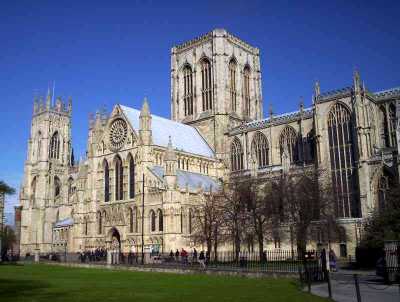
The last time I was in York it was 1972. The town, with its medieval walls and street layout, overpowered me. I was particularly impressed by the cathedral, York Minster, the biggest piece of medieval architecture I had seen yet. But as a budding medieval historian I was seriously taken with the number of other medieval churches there were in the immediate vicinity. It spoke to me of the tangible presence of the church in the city which was the capital of the north. I mused on the revolt against that presence during the Reformation (in an unsophisticated way).

This time what strikes my eye is how the people of York kept doing it -- building churches in medieval style in the vicinity of the Minster and those other real medieval churches. There are an awful lot of churches from, say, the last two centuries crowding into the Minster neighborhood, demanding attention.

Image: the Minster, from which a "clerk in holy orders" told me you can see a distant brewery tower. Ask me in person.

Sunday, July 03, 2011

On the waterfront, Windsor

Seen: The Peter R. Cresswell out of St. Catharines, going upriver.
(on another occasion)

Saturday, July 02, 2011

Yoga on TV

Last night while watching one hour-long crime show, I saw three different ads where yoga was used to stand for a healthy lifestyle. Two of them I'd never seen before.

It's everywhere.

And if you want a truly hypnotic yoga TV experience, try Namaste Yoga. An amazing piece of cinematographical design and quite inspiring yoga. And of course the yogis are something else.

Big spending liberals/social democrats?

Brian Topp in the Globe and Mail sees it another way, taking off from the Greek crisis:

The details have been well covered here on globeandmail.com. It is Papandreou's conclusions about the future that merit thinking about next. “Are we too weak to deal with the financial and banking system?” he asked. “Are we too weak to deal the need for transparency in the financial markets? Are we too weak to deal with the ratings agencies? Are we too weak to fight tax havens?” He noted that bond rating agencies could destroy Greece's financial plan with a single additional downgrade. They have more power over the future of Greece than its people or its Parliament, “and that is totally unacceptable.”

Precisely so – which is why responsible social democrats in all jurisdictions are, and should be, allergic to excessive reliance on debt to finance government.

This is in stark contrast to conservatives in their modern form, eager as they are to finance tax cuts for their friends and other reckless spending through public debt. Doing so provides a perfect pool shot from their perspective. The rich get richer, and government is destroyed. Perfect!

But what we are seeing on our television screens from Athens is the inevitable consequence.

Certainly in Canada it has been the Conservatives who have been most irresponsible with deficits. But no one beats the champion George W. Bush, jr.

Read the whole article.